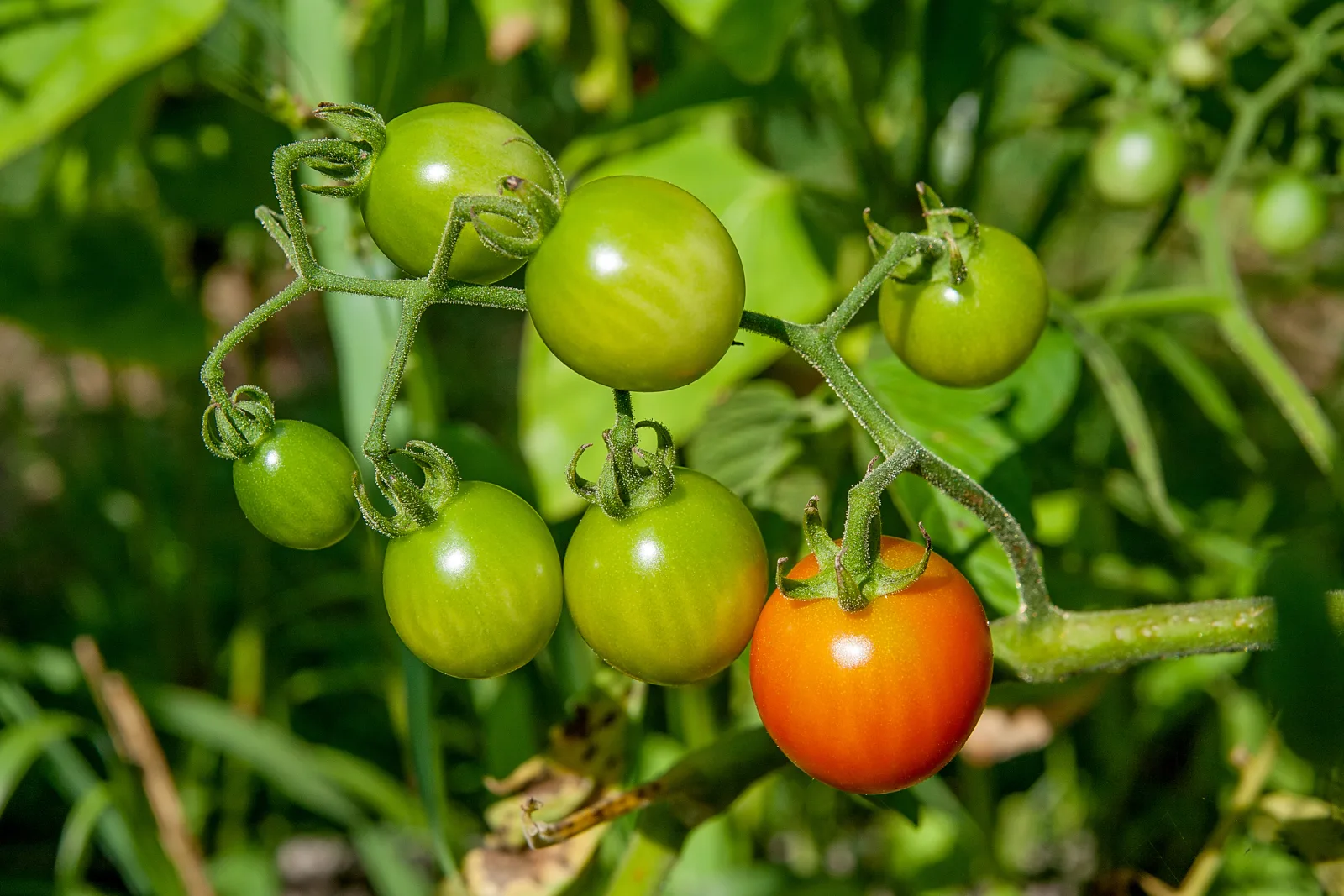
When the May sun starts streaming across the balcony, the cherry tomato seedling you tucked into a single pot quietly unfurls its first yellow flowers. Green fruit forms where each blossom fades, and from June onward those fruits ripen to red one by one. A cherry tomato is the small-fruited type of tomato, bite-sized and notably sweet, and it ranks as the easiest fruiting vegetable to grow in a pot. Difficulty: easy, which makes it a great pick for anyone bringing home their very first crop for a small balcony.
Planting — April to May, seedlings over seeds
Rather than starting cherry tomatoes from seed, it's safer to buy a seedling in April or May and transplant it. Choose a pot at least 25 cm across with plenty of depth, and fill it with well-draining soil. Tomatoes send their roots down deep, so in a shallow pot the water dries out fast in midsummer and the fruit stays small.
Set the seedling where it gets at least six hours of sun a day. On a balcony, a south-facing window is best. Right after planting, water it well so the soil settles, and since this is a variety that grows tall and lanky, push in a support stake from the very start.
Care — pinching suckers and watering
The most hands-on part of growing cherry tomatoes is pinching off the suckers. The small shoots that sprout in the joints between the main stem and the leaves will, if left alone, send the plant branching every which way and scatter the energy meant for the fruit. Pinch them off early, before they reach the thickness of a finger, and the nutrients concentrate in the single main stem, giving you plump, sweet fruit.
For watering, the best approach is to soak the pot thoroughly once the soil surface has dried out. Rather than a little every day, water deeply all at once after the soil dries, which encourages the roots to grow deep. Once the fruit begins to ripen, watering too often dilutes the sweetness, so cut back a bit during harvest season. As the plant grows taller, loosely tie the stem to the stake to keep it from toppling.
Harvesting — June through September
Cherry tomatoes generally give a long harvest, from June into September. The fruit on a single stem ripens from the bottom up, so pick the ones that have reddened evenly all the way around the stem cap, giving them a gentle twist by hand. A fully ripe fruit separates easily from its stem. Don't strip the plant all at once; gather them as they ripen, every few days, and you can enjoy them fresh all summer long.
How to eat them — lycopene absorbs better cooked
Lycopene, the red pigment in cherry tomatoes, is an antioxidant, and your body absorbs more of it when the tomatoes are cooked than when they're eaten raw. They also contain vitamin C and potassium, which support antioxidant activity and help with blood pressure. Because lycopene is fat-soluble, eating tomatoes together with olive oil boosts absorption even further.
The simplest approach is a caprese: cherry tomatoes with fresh mozzarella and basil, drizzled with olive oil. They're also great rinsed and dropped whole into a lunchbox or salad. Toss freshly picked cherry tomatoes in olive oil, sauté them lightly, and stir them into pasta to capture both the sweetness and the lycopene.
Today, clear a spot by a south-facing window for one pot, and this weekend bring home a single seedling and plant it.