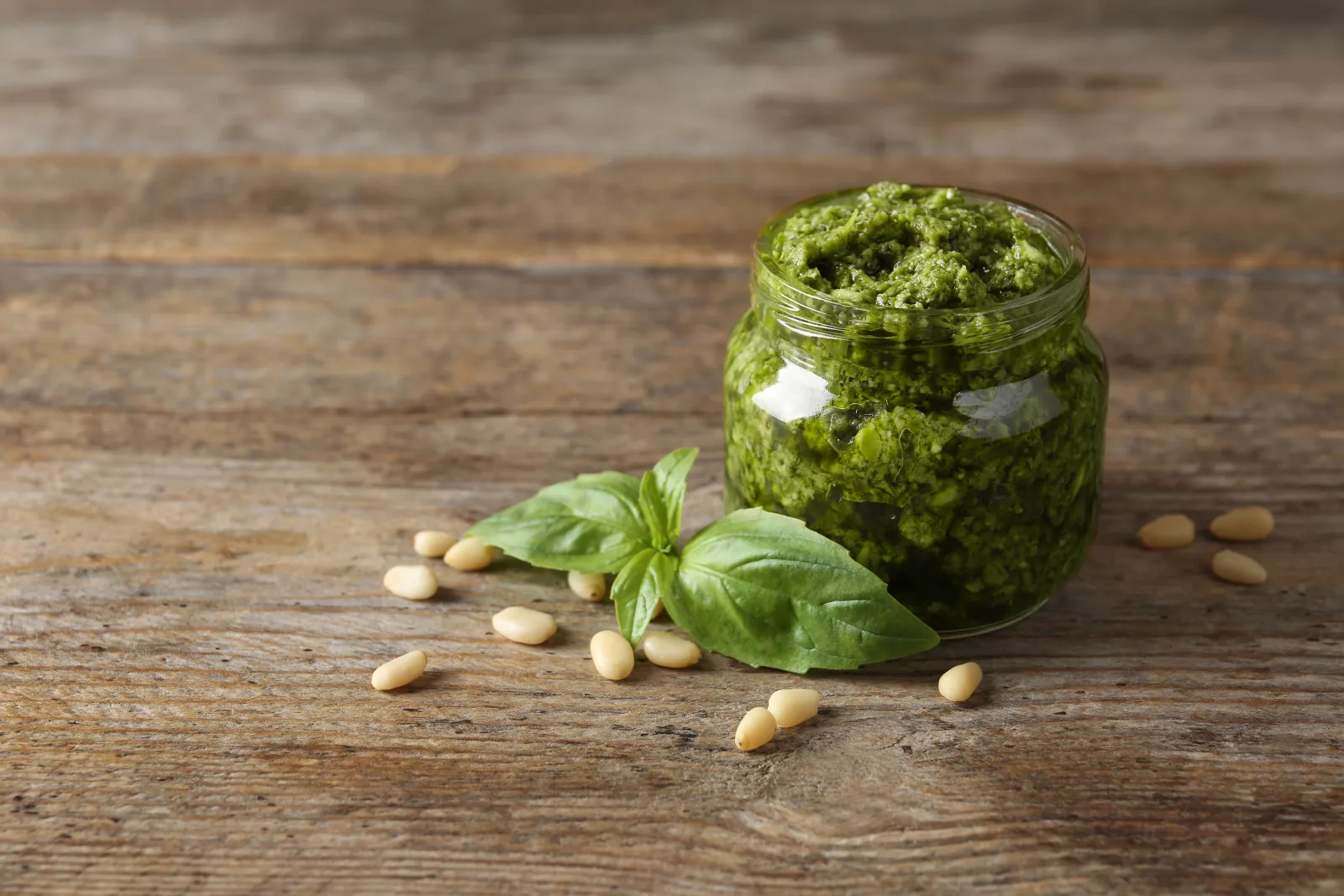
As summer deepens, the basil in your balcony pots grows so fast you can barely keep up. It's best to pinch off the top shoots before the leaves turn tough and woody, but once you've gathered a fistful, you're left wondering how to use it all. This is exactly when a pesto that comes together in five minutes with a single blender is the easiest answer. Just-picked leaves carry the most concentrated aromatic oils, so the fragrance is in a different league from anything off the shelf.
Ingredients — Whatever's on Hand
As long as you remember the basic ratio, you can eyeball the amounts and still come out fine. Two handfuls of basil leaves (about 50g), half a cup of olive oil, one clove of garlic, a handful of nuts, and a pinch of salt with a squeeze of lemon juice.
- Basil leaves: The stems taste harsh, so use only the leaves. Using them the moment they're picked gives you the best aroma.
- Nuts: Traditional Genovese pesto calls for pine nuts, but if those feel too rich (or pricey), pumpkin seeds make a fine swap. They're lighter and cheaper.
- Olive oil: Fat boosts your body's absorption of basil's aromatic oils, so it brings out both the fragrance and the nutrition at once.
- Garlic and lemon juice: One clove of garlic is plenty, and the acidity of the lemon slows the aromatic oils from evaporating, so the scent lingers longer.
Blending — Five Minutes Is Plenty
Start with the firmest ingredients. Drop the garlic and nuts into the blender first and pulse them to a coarse grind. Then add the basil leaves and salt, and blend again while drizzling in the olive oil a little at a time.
The trick to preserving the aroma is not to over-blend. The heat from the blades drives off the aromatic oils, so stop while the leaves are still coarsely crushed. Blend it too fine and the color turns muddy and dark. Finish with a spoonful of lemon juice to balance the flavor, and you're done. How salty it needs to be depends on what you're serving it with, so it's safest to keep the seasoning light and adjust later.
Spoon any leftover pesto into a small jar and cover the surface with a film of olive oil to keep the color from fading. Store it in the fridge and use it within a week.
Pairings — Where to Spoon It
The easiest route is to toss it straight into hot, drained pasta. Drain the noodles, turn off the heat, and stir in the pesto so less of the aroma escapes. Because basil's aromatic oils cook off with prolonged heat, leaving the flavor faint, it's best added as a finishing touch on top of hot dishes.
- Spread it on toasted bread and top with a slice of tomato for a light meal.
- Serve it with fresh mozzarella and tomato for a twist on the Mediterranean caprese. The lycopene in the tomato, the protein in the mozzarella, and the polyphenols in the basil all come together on one plate.
- A spoonful over grilled chicken or shrimp lets the aroma mask any fishy edge in lean white protein.
- In summer, a light drizzle over a watermelon or strawberry salad works beautifully. The sweetness of the fruit plays off the scent of the basil.
Why Just-Picked Leaves Are Different
Basil is an herb whose aromatic oils are known to aid digestion and act as an anti-inflammatory and calming agent. It also contains antioxidants like beta-carotene and vitamin K. The antioxidant and anti-inflammatory activity of basil's rosmarinic acid and eugenol has been reported consistently across a number of lab and animal studies. Polyphenols have been shown to be absorbed even at dietary levels of intake, which means that simply adding it to your everyday meals carries real benefit.
That said, these aromatic oils are fragile in heat. Tossing pesto in raw is the surest way to preserve both the fragrance and the beneficial compounds. Plant a few seedlings in May and you can harvest leaves well into October, from June onward. Give one pot over to basil and spend the whole summer blending up just-picked leaves.