
- Type
- Herbs & Aromatics
- Difficulty
- Easy
- Season
- Spring·Fall
- Sowing
- From seed
Cilantro (Coriander)
Coriandrum sativum
Aromatic essential oils and vitamin K, in a strongly scented leaf herb
Cilantro, also known as coriander, is a strongly aromatic leaf herb. The scent of the leaf and the scent of the seed are quite different, so the leaves are scattered fresh over a dish while the seeds are dried and ground as a spice. It contains vitamin K and polyphenols, though the amount used at a time is small, which makes it a plant grown for aroma rather than for nutrition. A non-negotiable garnish for pho and other heavily spiced dishes, it famously divides eaters into devoted fans and firm avoiders. It grows quickly in the cool weather of spring and fall.
Year-Round Calendar
- 1
- 2
- 3
- 4
- 5
- 6
- 7
- 8
- 9
- 10
- 11
- 12
- 3
- 4
- 8
- 9
- 5
- 6
- 10
- 11
Where It Grows
-
Main producer
It accounts for most of the world's coriander seed production and exports. In Rajasthan, Madhya Pradesh, and Gujarat, seed is sown in October–November and grown as a winter crop. Harvest March, April
- 3
- 4
- Major producer Grown extensively for seed in the south, around Stavropol and Rostov.
- Major producer It ranks among the countries producing the most coriander seed in Europe.
- Major producer Grown for seed, relying on the winter rains of its Mediterranean climate.
- Major producer This is a region that produces leaves (cilantro) rather than seed. Shipments go out to the North American market year-round.
- Major producer Known there as xiangcai, coriander is grown for its leaves across wide areas.
Its native range stretches from the eastern Mediterranean to Western Asia, so no single country can be pinpointed as its origin. Growing regions divide into those that produce seed (India, Russia, Bulgaria, Morocco) and those that produce leaves (Mexico, China, Southeast Asia), and the statistics for the two uses are compiled differently. Because the FAO counts coriander in a single category together with anise, cumin, fennel, and the like, other spices get mixed into the rankings.
- Optimum
- 15~22℃
- Range
- 5~30℃
- Hardiness
- Half-hardy
- Day length
- Long-day
The leaves grow best in a cool climate. Once temperatures climb above 25℃ and the days lengthen, the plant bolts — sending up a flower stalk right away instead of producing leaves — and the leaves turn thin. Young plants can withstand light frost.
In Korea Nationwide
Seed is sown in spring (March–April) and autumn (August–September) and harvested in the cool seasons. In midsummer the plants bolt, sending up flower stalks and leaving no leaves. Commercial cultivation is small-scale, and it also does well in pots.
How to grow
- Light
- Somewhere sunny; part shade in high summer
- Soil and depth
- 20cm deep. The taproot runs straight down and hates being moved
- Spacing
- 15cm
- Watering
- When the surface dries
- Feeding
- The base dressing is enough
- Harvest
- Outer leaves from about 20cm. Flowering cuts the leaf right back
What makes the difference. Sow seed rather than buy plants. Transplanted coriander bolts almost immediately
This page describes how a crop is grown and used. It does not claim health effects for any food, nor is it intended to prevent or treat disease. Component and study notes are references only and do not mean the same result occurs in people. Consult a medical professional about health concerns.
Health Benefits
Aroma compounds, as seen today. Chemical analysis has confirmed that the scent of the leaf and the scent of the seed are not the same. Aldehydes of the decanal group lead the leaf aroma, while linalool is the main component of the oil obtained from dried seed. That identifies the aroma; it says nothing about what the plant does in the body.
The word 'detox', as seen today. Reports that cilantro extract binds heavy metals come from test-tube and animal work. Those studies used an extract, a different condition from eating the herb as food, and there is no confirmation that eating cilantro removes heavy metals from a person.
Human research, as seen today. Human trials are limited to small studies in which coriander seed was ground and taken in capsules. That is research on a supplement, a different condition from using the herb as a seasoning. What can be stated now goes no further than the composition of the plant.
Growing conditions and safety. Cilantro has been reported to accumulate heavy metals in its leaves when grown with contaminated water. It is better grown where the water and soil are clean, and better bought where the source is known.
Nutrition
- Essential oils (aroma compounds) (Aroma of leaf and seed) — Aldehydes in the leaf, linalool in the seed
- Vitamin K and polyphenols (Present in the leaves) — Compounds found in green leaves
Essential oils The scent of cilantro leaves is led by aldehydes such as decanal and (E)-2-decenal, while the oil obtained from dried seed has linalool as its main component. Leaf and seed come from the same plant but carry different aroma compounds.
Flavonoids Flavonoids such as quercetin and kaempferol are present. Antioxidant activity is reported for this class of compounds in laboratory work, though the amount used as a garnish is small enough that its share of a day's intake stays modest.
Beta-carotene, vitamin K & C Cilantro leaves contain beta-carotene and vitamins K and C. Since it is a herb eaten in small amounts, a day's requirement is hard to meet from this plant alone.
Coriander seed (spice) The oil obtained from dried coriander seed is dominated by linalool, which makes its aroma quite different from the leaf. The seed goes into curry powders and pickling spice.
Chlorophyll Chlorophyll is the pigment behind the deep green of the leaves. Human research is scarce, so what can be said for now goes no further than its role as the pigment that makes the color.
Pairings
○ Cutting fishy and gamey odors in meat and seafood — Cilantro's strong aroma does an almost perfect job of masking the fishy and gamey smells of meat and seafood. That is why it shows up as a finishing handful in Vietnamese pho, Thai tom yum, and Mexican tacos.
○ Lime and lemon — The vitamin C and acidity of lime and lemon play off cilantro's aromatic oils to brighten the overall flavor. It has become a signature pairing across Southeast Asian and Latin American cooking.
○ Garlic, chili, and ginger — Pairing cilantro with garlic, chili, and ginger is practically the standard formula for spicy seasoning in Southeast Asian and Latin American food. The allicin, capsaicin, and gingerol in these aromatics combine with cilantro's essential oils to add antibacterial and digestive benefits. Chili Pepper (Gochu) · Garlic · Ginger
○ Avocado — Guacamole, made by mashing avocado with cilantro, lime, and salt, is a Mexican classic. The fat in the avocado boosts absorption of the carotenoids in cilantro leaves, while the aroma and texture fall into natural balance.
○ Yogurt — Cilantro is essential to Indian raita, where it is combined with yogurt. The dairy gently tempers the sharpness of the essential oils, and the added protein, calcium, and probiotics round out the nutritional balance.
△ The genetic "soap taste" — It's well documented that people with a variant of the OR6A2 gene perceive cilantro's aldehyde compounds as tasting like soap or detergent. If that's you, there's no need to force it—skipping cilantro is perfectly natural.
△ Apiaceae (carrot-family) allergies — Cilantro belongs to the Apiaceae family, alongside celery and carrots. If you're allergic to carrot-family plants, cross-reactions are possible, so avoid it.
△ Warfarin and other blood thinners — Cilantro leaves are rich in vitamin K, so if you take warfarin or another anticoagulant, a sudden increase or decrease in how much you eat can destabilize your medication's effect. Keeping your intake steady is the safe approach.
Varieties
- Standard leaf types (Seed) — The common form. It grows fast in the cool of spring and autumn and can be cut for leaves several times.
- Slow-bolting types (Seed) — Sends up flower stalks later in the heat, which stretches the leaf harvest and suits late-spring sowing.
- Seed (coriander) types (Seed) — Grown for the seed rather than the leaf. Let the plant flower and collect the seed once it turns brown.
Source: Food and Nutrition Information
Stories about Cilantro (Coriander)
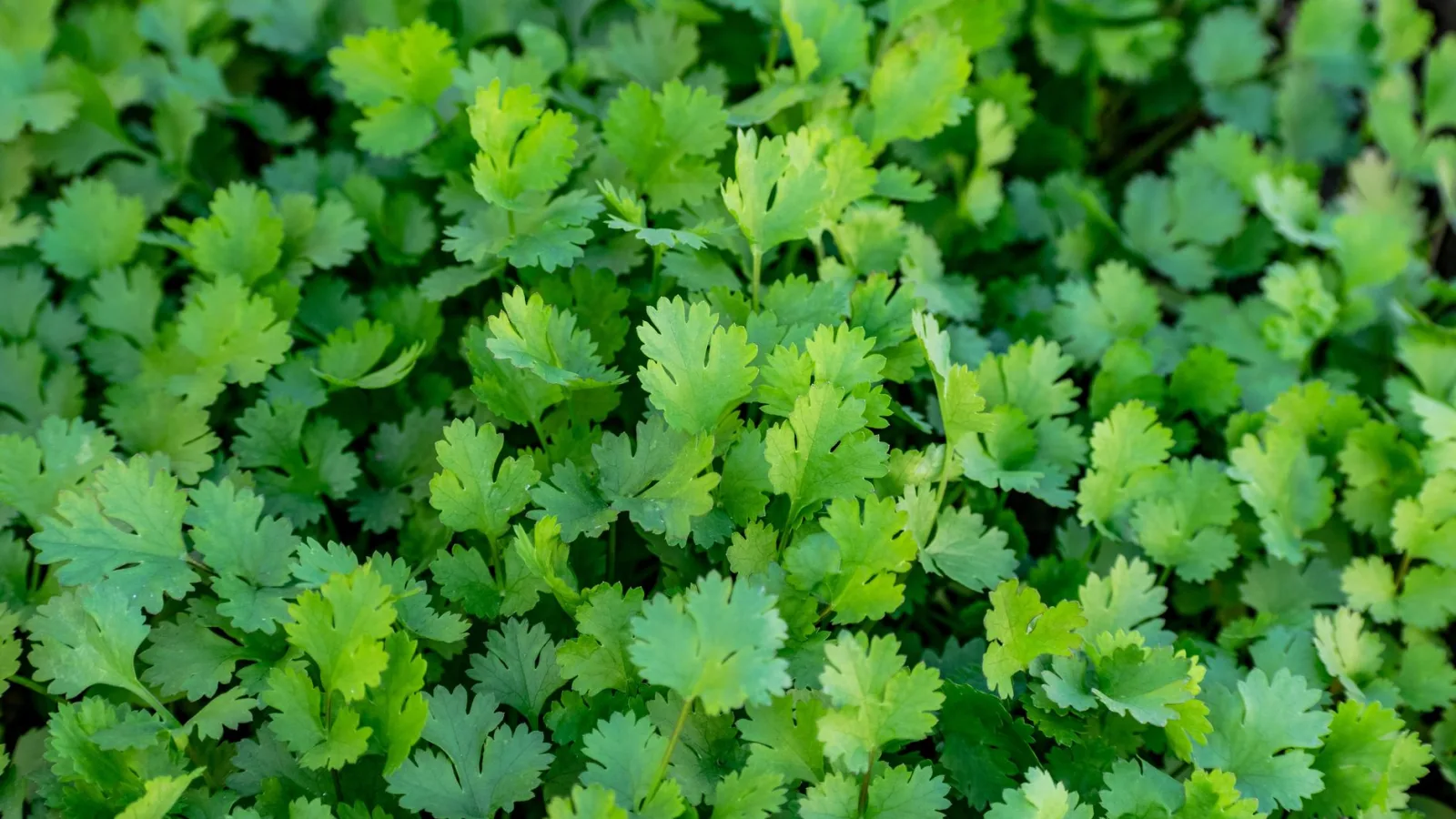
Cilantro, and What the Dongui Bogam Saw in It
Cilantro divides the dinner table like few other herbs, and the Dongui Bogam — Korea's 17th-century medical compendium — had plenty to say about it: warming the gut, cutting fishy odors, even coaxing out a rash. Here's how those old notes line up with what we know today.
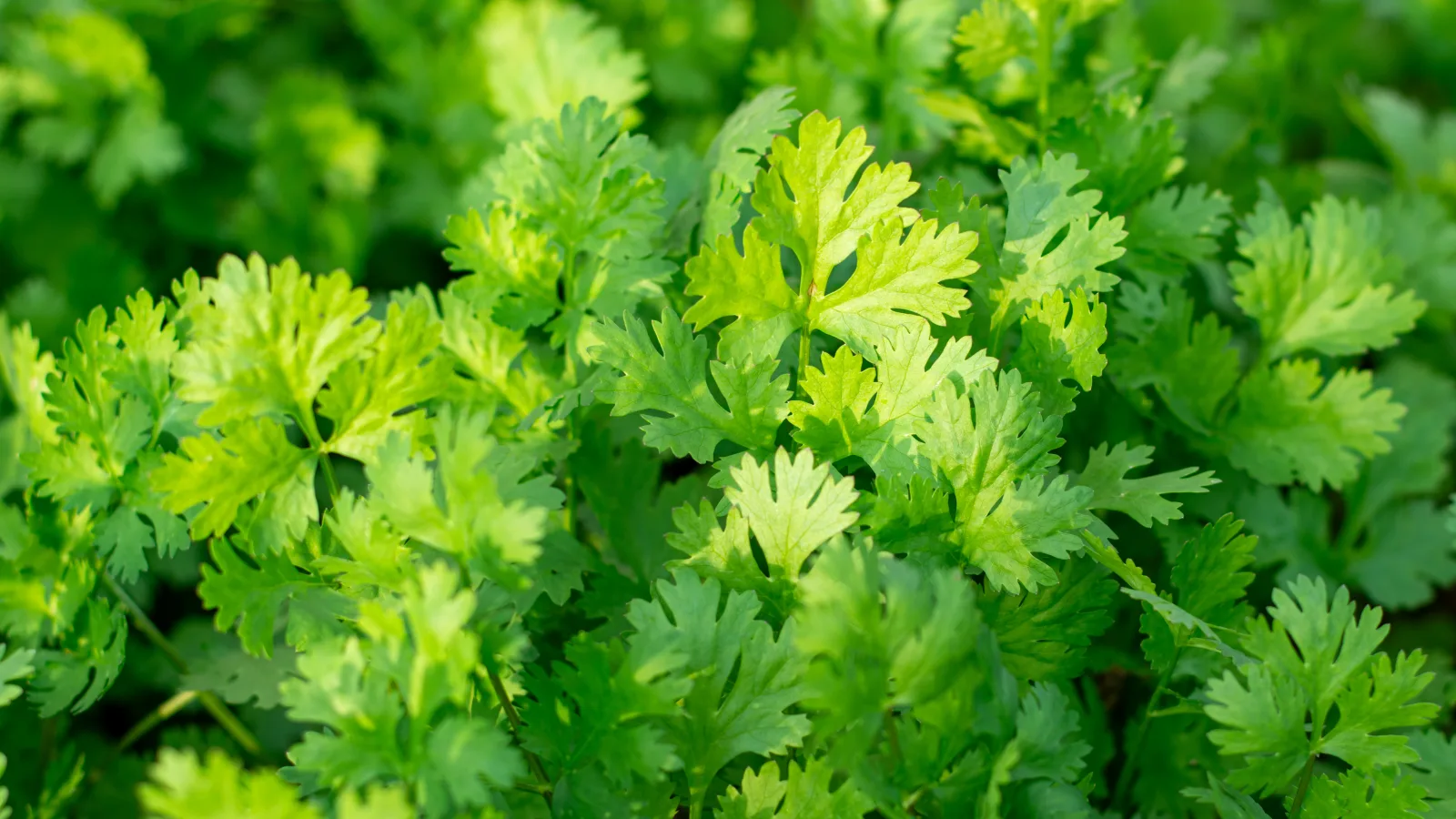
A Handful of Rice Husk Ash Can Transform Your Cilantro
Thin stems and pale, flavorless leaves are a common frustration for cilantro growers — and the culprit is often a hidden silicon shortage. A simple handful of rice husk ash, especially paired with a beneficial soil microbe, can restore vigor, yield, and even nutritional density.