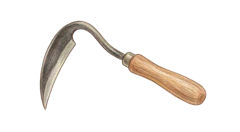

- Type
- Leafy Greens
- Difficulty
- Easy
- Season
- Spring·Fall
- Sowing
- From seed
Lettuce
Lactuca sativa
Folate and lactucin — the easiest leafy green to grow
Lettuce is the urban gardener's classic first crop — nearly impossible to fail. Cut a stem or a leaf and a white sap runs out, carrying the sesquiterpene lactones lactucin and lactucopicrin, which give the leaf its faintly bitter edge. The old nickname for lettuce, the vegetable that brings on drowsiness, is handed down alongside that sap. Research on sleep has mostly used extracts drawn from the leaves of particular cultivars, so it cannot be carried straight over to lettuce eaten fresh in a wrap. The leaves are comparatively high in vitamin K and beta-carotene and carry folate as well, with anthocyanins added in the red-leaf types. Sow in March or April and again in August or September, and about a month later the outer leaves can be picked one at a time.
Year-Round Calendar
- 1
- 2
- 3
- 4
- 5
- 6
- 7
- 8
- 9
- 10
- 11
- 12
- 3
- 4
- 8
- 9
- 5
- 6
- 10
- 11
Where It Grows
- Major producer Accounts for more than half of world production.
- Major producer In the irrigated desert land of California and Arizona, summer and winter growing districts are split so that supply runs year-round.
- Major producer A top producer, though the statistics also capture chicory-type crops.
- Major producer Murcia and Almería supply Europe's winter lettuce.
- Major producer Open-field cultivation continues over a long season in the Mediterranean climate.
Lettuce originates from the Mediterranean coast and West Asia, and since it cannot be pinned to a single country, no country-of-origin row has been included. It is an ancient crop — stem lettuce appears in Egyptian tomb paintings — and today it is grown throughout the irrigated temperate and subtropical zones. The list above is not a list of countries where lettuce grows, but a selection of the largest producers. The FAO counts lettuce and chicory as a single item, so chicory is mixed into the rankings.
- Optimum
- 15~20℃
- Range
- 5~25℃
- Hardiness
- Half-hardy
- Day length
- Long-day
Lettuce prefers cool weather. Above 25℃, with long days, it bolts: the leaves turn tough and a strong bitterness sets in.
In Korea Nationwide
Open-field growing is normally done twice, in spring and autumn, with midsummer handled by the highlands (cool upland farming) of Gangwon. Most winter volume comes from protected cultivation.
- 2
- 3
- 9
- 10
- 4
- 5
- 11
- 12
- 3
- 4
- 8
- 9
- 5
- 6
- 10
- 11
- 4
- 5
- 6
- 6
- 7
- 8
- 9
How to grow
- Light
- Four hours is plenty. In midsummer it actually prefers part shade
- Soil and depth
- 15cm deep or more. A balcony pot or a styrofoam box both work
- Spacing
- 20cm. Crowd it and the lower leaves go slimy
- Watering
- Soak it when the surface dries. Let a leaf crop dry out and it turns tough fast
- Feeding
- From two or three weeks after planting, a weak feed every fortnight
- Harvest
- Take the outer leaves one at a time and a single plant feeds you for two months. Leave the heart alone
What makes the difference. Sow a new batch every fortnight. Then nothing bolts on you all at once
Common problems
- Aphids You will see New growth curls and feels sticky What to do Wash them off with a jet of water; if they keep coming back, use a soap or oil spray
- Slugs You will see Holes appear in the leaves overnight What to do Pick them off in the evening, or ring the pot with coffee grounds or diatomaceous earth
This page describes how a crop is grown and used. It does not claim health effects for any food, nor is it intended to prevent or treat disease. Component and study notes are references only and do not mean the same result occurs in people. Consult a medical professional about health concerns.
Health Benefits
The old record — wageo (萵苣). The Donguibogam, in its Tangaekpyeon volume on materia medica, lists lettuce under the name wageo (萵苣). Baekgeo (白苣) and saengchae (生菜) are also handed down as old names for it. The name and the fact of that entry are what can be confirmed; what an old medical text wrote differs from how it is judged today.
The lactones in the sap. Compositional analysis confirms that the white sap running from a cut stem or leaf carries sesquiterpene lactones such as lactucin and lactucopicrin. They account for the faint bitterness, which grows stronger as the plant bolts and sends up a flower stalk.
The scope of the sleep research. Studies that pair lettuce with sleep were run on extracts drawn from the leaves of particular cultivars such as Heukharang, a different set of conditions and quantities from lettuce eaten as food. Studies in people are scarce, so what can be stated today goes only as far as the composition.
Nutrition
- Lactucin (Found in the milky sap) — A sesquiterpene lactone behind the faint bitterness
- Folate (Present in the leaves) — One of the water-soluble B vitamins
- Anthocyanins and beta-carotene (Leaf pigments) — Anthocyanins color the red leaves; beta-carotene runs high in the deep green ones
Water content 95%+ Lettuce is around 95% water, high even among vegetables. A full bowl carries almost no calorie burden, and most of the crispness comes from that water.
Lactucin & lactucopicrin The white sap that flows when a lettuce stem is cut holds the sesquiterpene lactones lactucin and lactucopicrin. They account for the faint bitterness, and the old story that eating lettuce brings on drowsiness is handed down alongside that sap. The related research, though, has mostly used extracts drawn from the leaves, so it cannot be carried straight over to lettuce eaten fresh in a wrap.
Luteolin, kaempferol & quercetin Flavonoids such as luteolin, kaempferol and quercetin are found in lettuce leaves. Their capacity to neutralize reactive oxygen species is something laboratory assays address; it does not mean the same thing happens in the body when a person eats lettuce.
Vitamin K, A, folate & C Lettuce is comparatively high in vitamin K and beta-carotene, and carries folate and vitamin C as well. The deeper-colored leaves of romaine or green leaf lettuce hold more, supplying more micronutrients than the same weight of head lettuce.
Potassium & dietary fiber Potassium and dietary fiber are present. Nutrition research discusses potassium in connection with sodium excretion, and fiber with bowel movement. With so much water, the vegetable stays low in calories for its bulk.
Pairings
○ Pork belly and beef — Wrapping grilled pork belly (samgyeopsal) or beef in a lettuce leaf — ssam — is a cornerstone of Korean food culture. The fat and protein of the meat meet the fiber, water, and calming effect of the lettuce, turning a heavy meal into a balanced, lighter finish.
○ Garlic, chili, and doenjang — Ssamjang, the dipping paste that goes inside the wrap, is built on garlic, chili, and doenjang (fermented soybean paste). Its heat and fermented depth balance the soft lettuce leaf, delivering several flavors in a single bite — the heart of Korea's ssam tradition. Chili Pepper (Gochu) · Garlic
○ Kimchi, cucumber, and chili — Add a piece of kimchi, a fresh green chili, and a clove of garlic to a single lettuce leaf and you complete both nutrition and flavor. Fermented foods meet fresh vegetables, supplying probiotics, vitamin C, and sulfur compounds all at once. Chili Pepper (Gochu) · Cucumber
○ Olive oil and balsamic — In a Western salad, lettuce dressed with olive oil and balsamic vinegar is the most basic pairing of all. The fat in the olive oil helps the body absorb lettuce's fat-soluble vitamins, while the acidity of the balsamic crisply offsets the softness of the leaves.
○ An evening meal — Finishing dinner with lettuce lets lactucin's calming effect help ease you toward sleep. Traditionally it has been used to lighten the heaviness of a late meal while gently preparing the body to fall asleep naturally.
△ Large amounts right before driving or operating machinery — Lactucin, a compound in lettuce, has a mild sedative effect, so it's best to avoid eating large amounts right before driving or operating machinery. A normal serving with a meal is rarely an issue, but sensitive individuals may feel drowsy.
△ Weak digestion or a cold constitution — Lettuce is considered a "cooling" food, so people with weak stomachs or chronically cold hands and feet should avoid eating it in large quantities. Pairing it with warming seasonings like garlic or gochujang (Korean red-pepper paste) to restore balance is part of the wisdom behind Korea's ssam (lettuce-wrap) tradition.
△ Anticoagulants — Lettuce is relatively high in vitamin K, so anyone taking anticoagulants like warfarin should keep their intake consistent. Suddenly eating much more or much less can throw off the medication's effectiveness.
Varieties
- Green leaf lettuce — The most common, everyday lettuce
- Red leaf lettuce — Red-tinged leaves rich in anthocyanins
- Romaine — Crisp texture; the classic Caesar salad green
- Butterhead — Soft, mild, slightly nutty leaves
- Heukharang — 124x the lactucin and a deep sleep aid (developed by the Jeonnam Agricultural Research and Extension Services)
Source: Rural Development Administration (Nongsaro) · Agri-Food Information
Stories about Lettuce
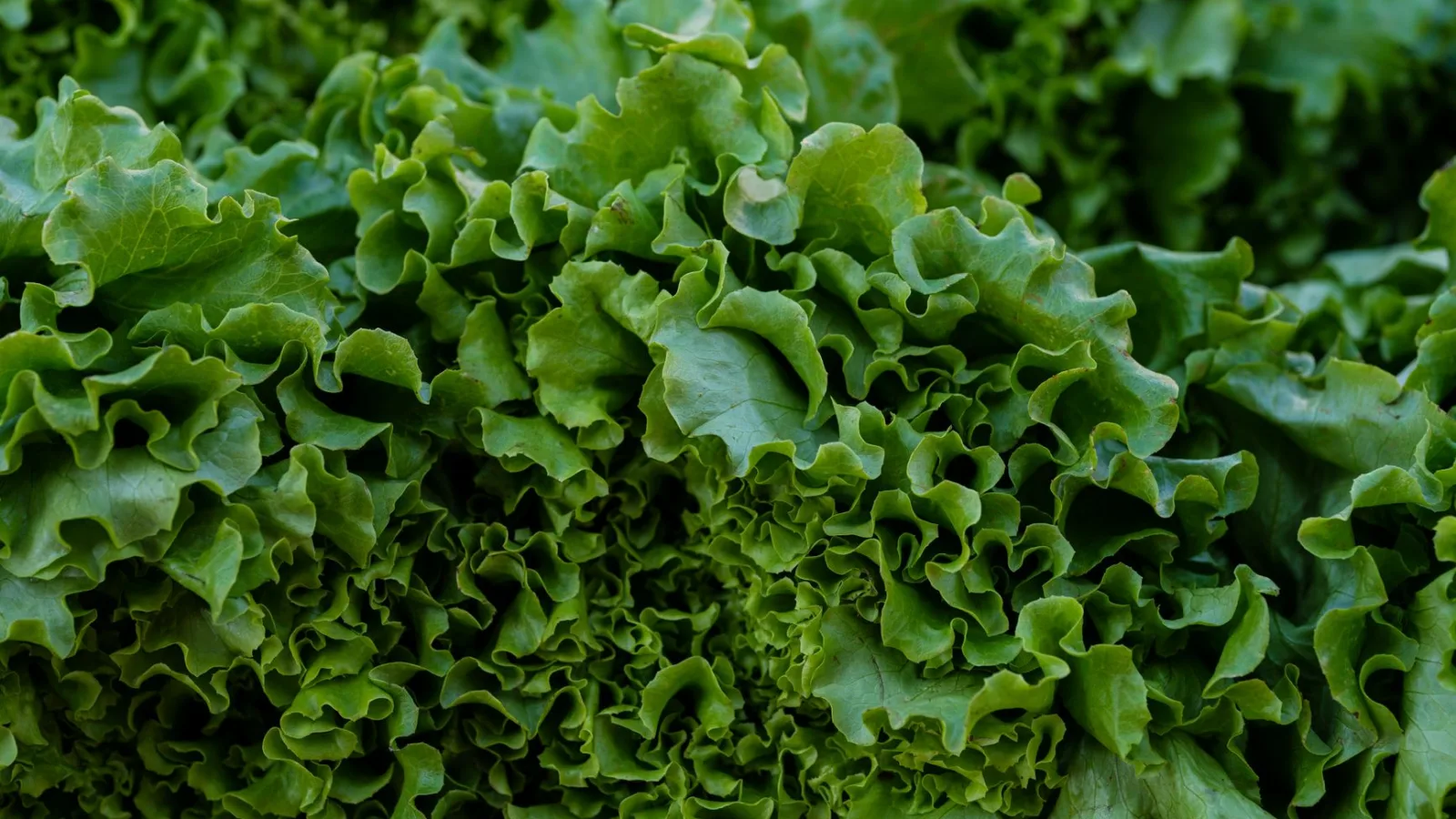
AI Comes to Farming, Right Down to Your Garden Bed
Researchers at the University of Missouri are using AI to work out how densely to plant each part of a field, so the same land produces more. The same idea works in a backyard garden, too.
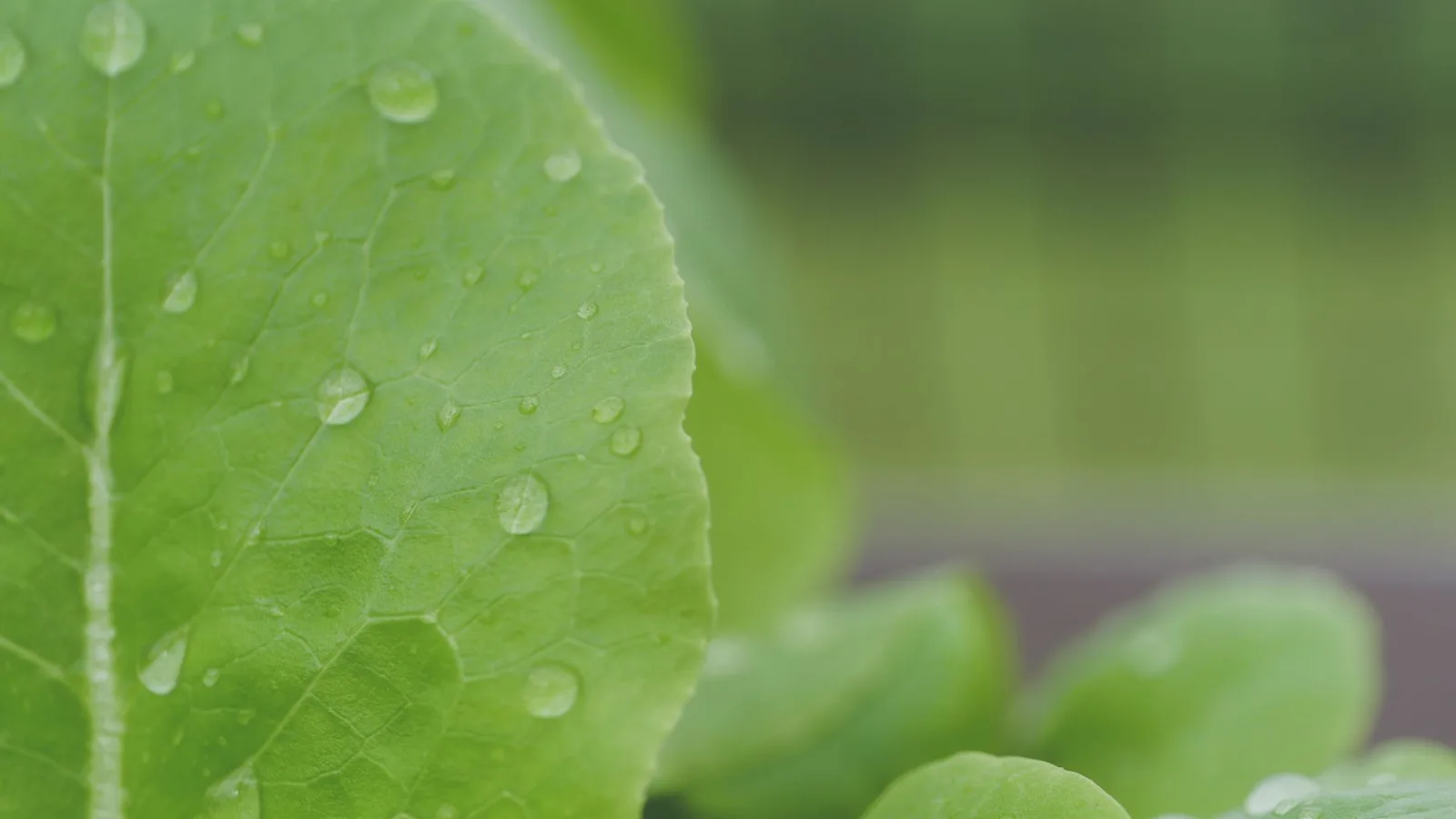
You Side-Dress Today, It Rains Tomorrow — Where Does That Water Go?
Fertilizer spread the day before a storm doesn't stay in the garden — it runs down the furrows and out toward the nearest stream. An eleven-year plankton record from a river in southern China shows how aquatic life shifts closer to the city, and what a home gardener can do about their own runoff.
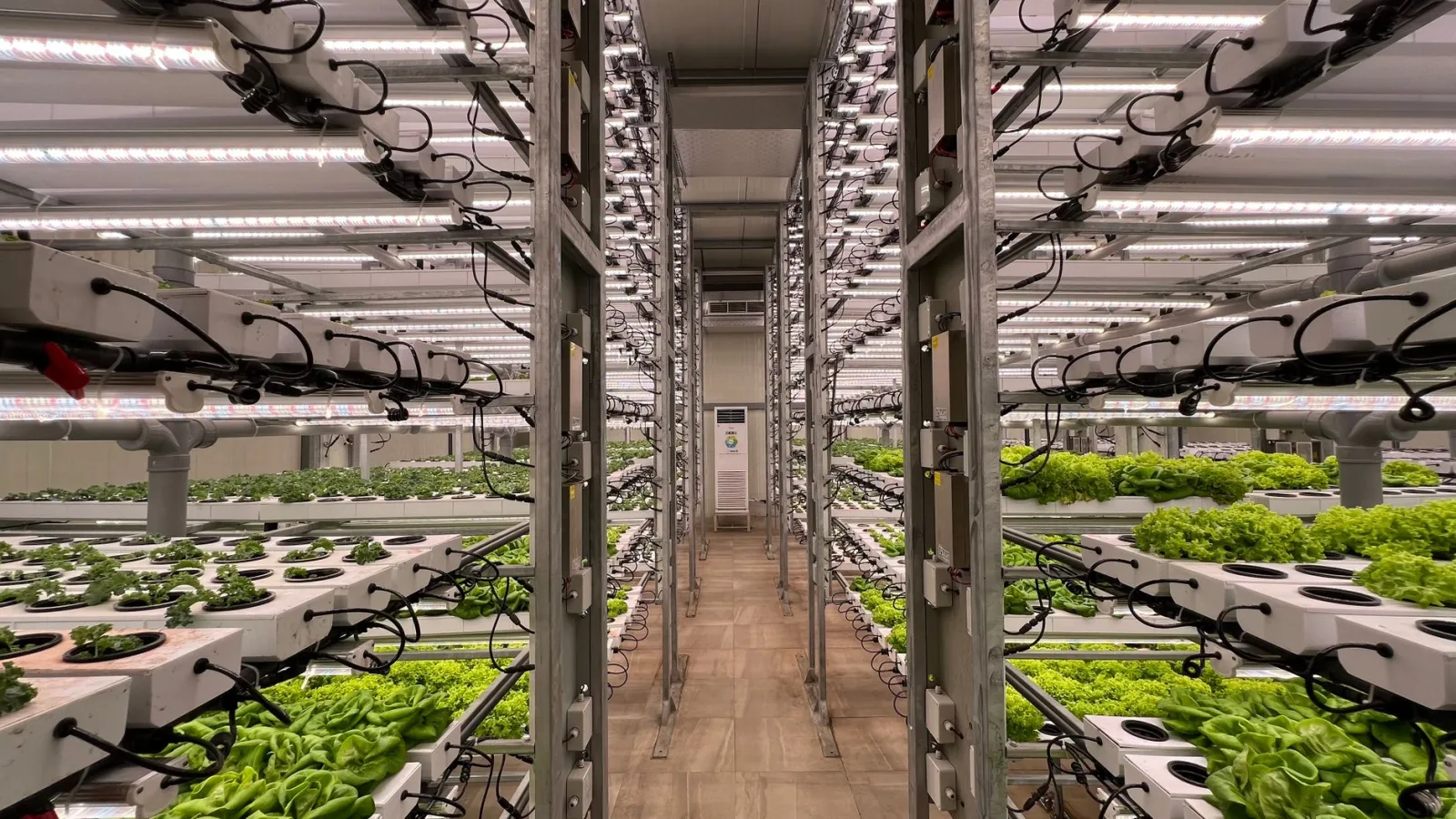
What Light Did Your Lettuce Grow Under?
New research on Batavia lettuce found that the LED spectrum and the watering method both change a head of lettuce from the inside out — its sweetness, its vitamin C, its antioxidants, even its yield. No single setup won on every count, which means the light you choose depends on what you're growing for.
I've Never Smoked. Why Am I Being Told to Worry About Lung Cancer?
A preliminary study found higher lung cancer rates among young nonsmokers who ate the most produce, and researchers pointed to pesticide residue on conventionally grown crops as one possible thread. The science is far from settled, but reducing your exposure is something you can do tonight at the kitchen sink.