
- Type
- Legumes
- Difficulty
- Easy
- Season
- Spring
- Sowing
- From seed
Pea
Pisum sativum
Plant protein and fiber from a cool-season legume
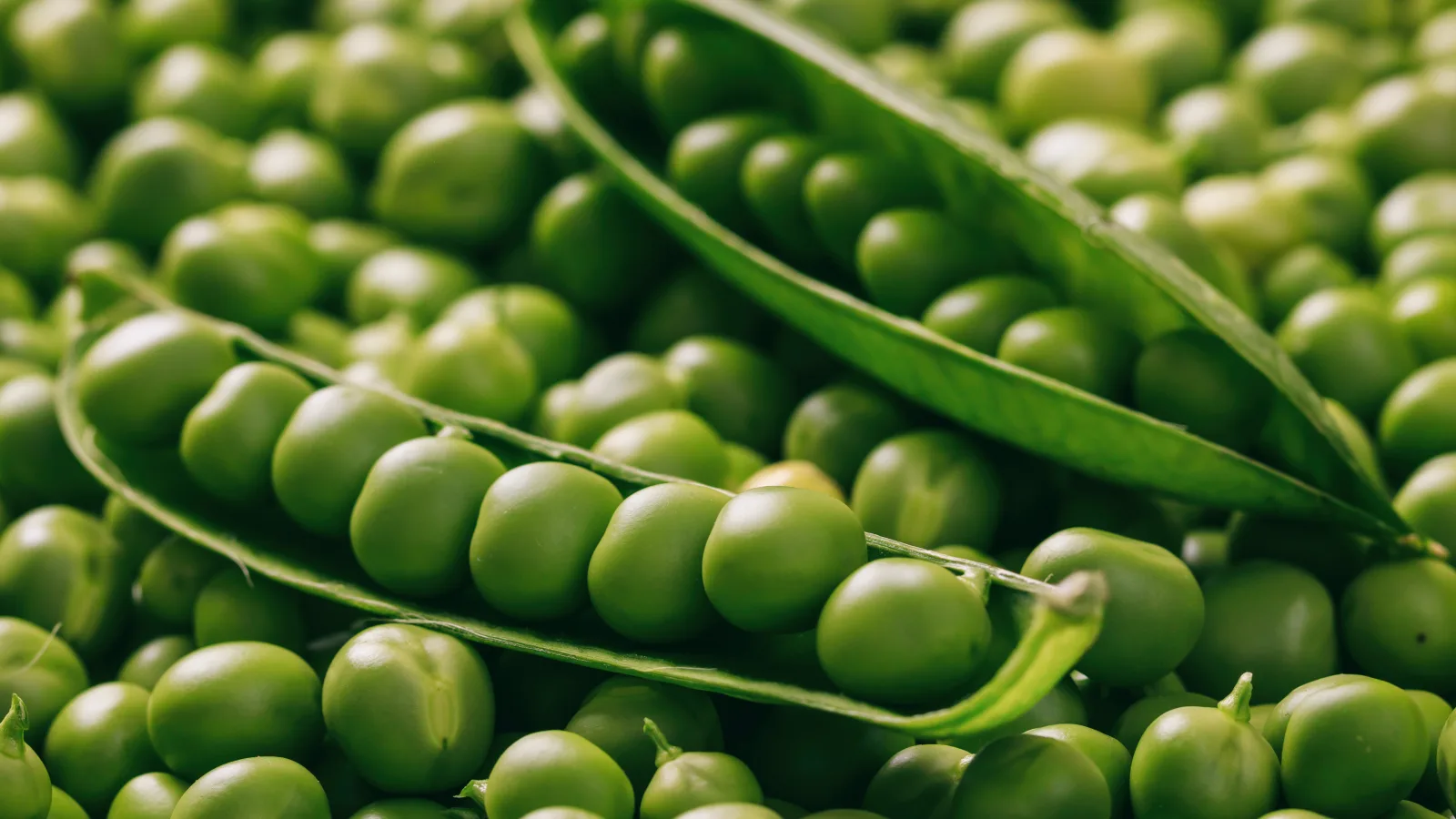
Peas are a legume that carries plant protein and dietary fibre together. They also supply folate and vitamin K, so a single vegetable brings several micronutrients at once. Being a legume, the pea hosts nitrogen-fixing root bacteria that lock atmospheric nitrogen into the soil, which benefits the bed it grows in. It is a cool-season crop: where winters are mild, in the south, it is sown in October or November, overwinters, and is harvested the following May or June; where winters are hard, it is sown in March and harvested in July.
Year-Round Calendar
- 1
- 2
- 3
- 4
- 5
- 6
- 7
- 8
- 9
- 10
- 11
- 12
- 3
- 10
- 11
- 5
- 6
- 7
Where It Grows
- Main producer The world's largest producer of green peas. Cultivation divides between the cool winter season of central and southern China and the spring season in the north.
-
Main producer
The world's leading producer and exporter of dry peas. The cool, dry prairies of Saskatchewan and Alberta are the centre of production. Harvest August, September
- 8
- 9
-
Major producer
Grown in the cool winter season of Uttar Pradesh and Madhya Pradesh. Summers are hot, so the crop is planted in the dry season. Harvest January, February, March
- 1
- 2
- 3
- Major producer Dry peas are grown in the Volga and Central Black Earth regions.
- Major producer Production is concentrated in the cool-summer areas of Washington, Idaho and North Dakota.
- Major producer The northern plains produce both dry peas and green peas for canning.
The crop originated in the Fertile Crescent, stretching from West Asia to the eastern Mediterranean, so it cannot be pinned to a single country and no country-of-origin row has been given. It is an ancient crop, grown alongside wheat and barley since the Neolithic, and today it is cultivated throughout the temperate zone wherever springs and autumns are cool. One caution when reading the statistics — international figures count dry peas, harvested after drying, and green peas, harvested while still immature, as separate items, so the rankings split in two. Canada and Russia lead in dry peas; China and India lead in green peas.
- Optimum
- 13~18℃
- Range
- 4~25℃
- Hardiness
- Half-hardy
- Day length
- Long-day
Peas are a cool-season crop. Above 25℃ the pollen is damaged, pods set poorly, and the seeds turn hard. Young plants tolerate around −5℃, so in the south, where winters are mild, they are sown in autumn and left to overwinter. Peas are long-day plants, flowering earlier as the days lengthen.
In Korea Nationwide
In the south, where winters are mild, peas are sown in October–November, overwinter in the field, and are picked the following May–June. The sowing month and the harvest month do not fall in the same year. In the colder central and northern regions, they are sown in March and picked in June–July. Green peas are grown in the open field on Jeju and along the South Jeolla coast.
- 10
- 11
- 5
- 6
- 3
- 6
- 7
How to grow
- Light
- Somewhere sunny. A cool-season crop
- Soil and depth
- 25cm deep
- Spacing
- 20cm
- Watering
- Moderate; generous while the pods fill
- Feeding
- A legume, so it asks little. The base dressing is enough
- Harvest
- When the pods are plump and you can see the peas. Late and they go starchy
What makes the difference. The tendrils need something to hold. Autumn sowing and an overwinter give a far better crop
Common problems
- Aphids You will see Clusters on new growth What to do Wash them off
This page describes how a crop is grown and used. It does not claim health effects for any food, nor is it intended to prevent or treat disease. Component and study notes are references only and do not mean the same result occurs in people. Consult a medical professional about health concerns.
Health Benefits
What the composition shows. Peas are a legume that carries protein and dietary fibre together, and composition tables confirm that they are relatively rich in lysine, the amino acid grains lack. That is a statement about composition; it does not mean eating peas prevents any particular disease.
Studies carried out on pea protein supplements. These studies used isolated, purified pea protein supplements, which differ from peas boiled and eaten in the pod in both form and amount. Randomised controlled trials pairing supplementation with resistance training have reported changes in strength and muscle mass in the pea-protein group similar to those in a whey-protein group. Because the work was done on supplements, the result cannot be read across to peas eaten as food.
What can be said today. Studies that feed whole peas to people and measure vascular outcomes or body weight are scarce, so what can be said today reaches only as far as composition. Peas carry no gluten and fix their own nitrogen through root-nodule bacteria, which is why pea protein is widely used as a raw material in plant-protein manufacturing.
Nutrition
- Plant protein (5~6 g per 100 g of fresh peas) — protein relatively rich in lysine and arginine
- Dietary fibre (5~6 g per 100 g of fresh peas) — cell-wall material, soluble and insoluble mixed
- Folate and vitamin K (present) — vitamins carried together in fresh peas
Plant protein Fresh peas hold 5~6 g of protein per 100 g, which makes them an excellent source of plant protein among vegetables. Lysine and arginine are especially abundant, complementing the amino acids that grains lack, so peas carry high value as a post-exercise recovery food or a vegetarian protein source.
Dietary fiber Peas contain 5~6 g of dietary fiber per 100 g, with soluble and insoluble forms distributed in balance. They are a fiber source in which the water-soluble and the insoluble portions are evenly mixed.
Resistant starch Part of the starch in peas is not digested in the small intestine and passes to the large intestine, where it ferments and short-chain fatty acids are formed. That much is established, but it does not mean peas prevent any particular bowel disease. Analyses also report that the resistant-starch share rises when boiled peas are cooled.
Vitamin K, B vitamins (folate & thiamine) & C Vitamin K, the B vitamins folate and thiamine, and vitamin C are all present in generous amounts. Even among legumes the range of vitamins is unusually wide, so a single food supplies several micronutrients at once.
Minerals Potassium, magnesium, zinc, and iron are present in balance. Plant iron is absorbed at a higher rate when taken together with vitamin C, and since peas carry vitamin C themselves, that absorption efficiency is naturally supported.
Carotenoids Deep-green peas contain lutein and zeaxanthin. It is established that these two pigments accumulate in the macula of the retina, but that does not mean eating peas keeps any particular eye disease away. The amounts fall short of leafy greens, so peas are best read simply as a vegetable that supplies carotenoids alongside protein.
Saponins Saponins, common across legume plants, are present in peas as well. Isoflavones, by contrast, are prominent in soybean rather than shared broadly among legumes, so peas are not a meaningful source of them.
Pairings
○ Brown rice and multigrain rice — Pea rice rounds out the amino acid profile of grains: peas supply the lysine that grains lack, creating a combination close to a complete protein. It's a piece of traditional Korean food wisdom that raises both the quantity and quality of protein in a single bowl.
○ Beef, pork, and chicken — Pea soup or pea curry brings animal and plant protein together for a synergistic effect. The amino acids of the two protein sources complement each other, boosting nutritional value while adding flavor and satisfaction.
○ Carrots and potatoes — Peas are a classic match for carrots and potatoes in curry. The three vegetables make a colorful, satisfying dish, and the balance of protein, carbohydrates, and carotenoids falls naturally into place. Carrot · Potato
○ Garlic and onion — Adding garlic and onion to peas creates synergy between their sulfur compounds and pea protein. In particular, the allicin in garlic binds with the vitamin B1 in peas to form allithiamine, which is more readily absorbed. Garlic · Onion
○ Perilla oil and olive oil — The carotenoids in peas are fat-soluble, so eating them with perilla oil or olive oil aids absorption. Adding a moderate amount of oil to a seasoned or stir-fried dish steps up how efficiently these nutrients are absorbed.
△ Large portions with a sensitive stomach — Eating a lot of peas can leave people with weak digestion feeling bloated and gassy. Keeping portions moderate and cooking the peas thoroughly helps ease the digestive load.
△ Kidney failure and protein-restricted diets — People with kidney failure or anyone on a medically restricted protein intake need to limit peas. Even plant protein counts toward total protein load, so guidance from a medical team is essential.
△ Legume allergies — Anyone allergic to legumes should avoid peas. Cross-reactivity with soy allergy is possible, so approach them with caution.
Varieties
- Shelling pea (Seed) — Pods are discarded and only the peas eaten; the longest wait of the three, since the seeds must swell first.
- Snap pea (Seed) — Eaten pod and all, crisp and sweet; picked while the pod is plump but the peas inside are still small.
- Snow pea (Seed) — Picked while the pod is still flat and eaten whole; the earliest to harvest and a staple of stir-fries.
- Dwarf (bush) type (Seed) — Short vines that need only a low support; suits pots and small beds, but the picking window is shorter.
Source: Food and nutrition references