Tangaek — Decoctions · Herbs
白附子 Huinbagot (흰바곳)
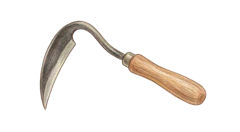
Baekbuja is a pale tuberous root; its old Korean name, huinbagot, means 'white bagot'. The shoot resembles that of buja, the dark aconite root, but the flesh is white, which is how it got the name. Dongui Bogam calls it poisonous, has it roasted over fire before use, and cites an old record placing it in Silla — Korean ground.
Original, read line by line 東醫寶鑑 · Tangaek — Decoctions vol. 3
-
性溫, 味甘辛, 有小毒.
Its nature is warm, its flavor sweet and pungent, and it carries a slight toxicity, so it must be used with care.
-
主中風失音, 一切冷風氣.
It treats loss of speech from wind-stroke and all illnesses arising from cold-wind qi, dispersing chill-born wind disorders.
-
止心痛, 除陰囊下濕, 療面上百病, 去瘢痕.
It eases chest pain, clears damp from beneath the groin, heals the hundred ailments of the face, and erases scars—long prized as a skin remedy.
-
色白, 苗似黑附子.
Its color is white and its sprout resembles that of the black aconite, which is why it is called white aconite.
-
三月採根, 暴乾.
The roots are dug in the third lunar month and sun-dried, harvested when spring qi has gathered into the root.
-
入藥炮用. 《本草》
Before use it must be roasted to temper its toxicity—never employed raw. 《Bencao》
-
本經云, 生新羅, 卽我國所産, 今在處有之. 《俗方》
The Shennong Bencao states it grows in Silla—that is, our own country—and even today it is found in many places, recorded with pride as a native medicine. 《Sokbang》
Herbs — more entries
This is a cultural and historical record from a classical text, not a claim about any food’s effects. Nothing here is a health supplement or intended to prevent or treat disease. Consult a medical professional about health concerns. · Text: Korean Medicine Classics DB · Reading: Homiclub