Tangaek — Decoctions · Herbs
夏枯草 Self-heal
 Related Crop · Self-heal →
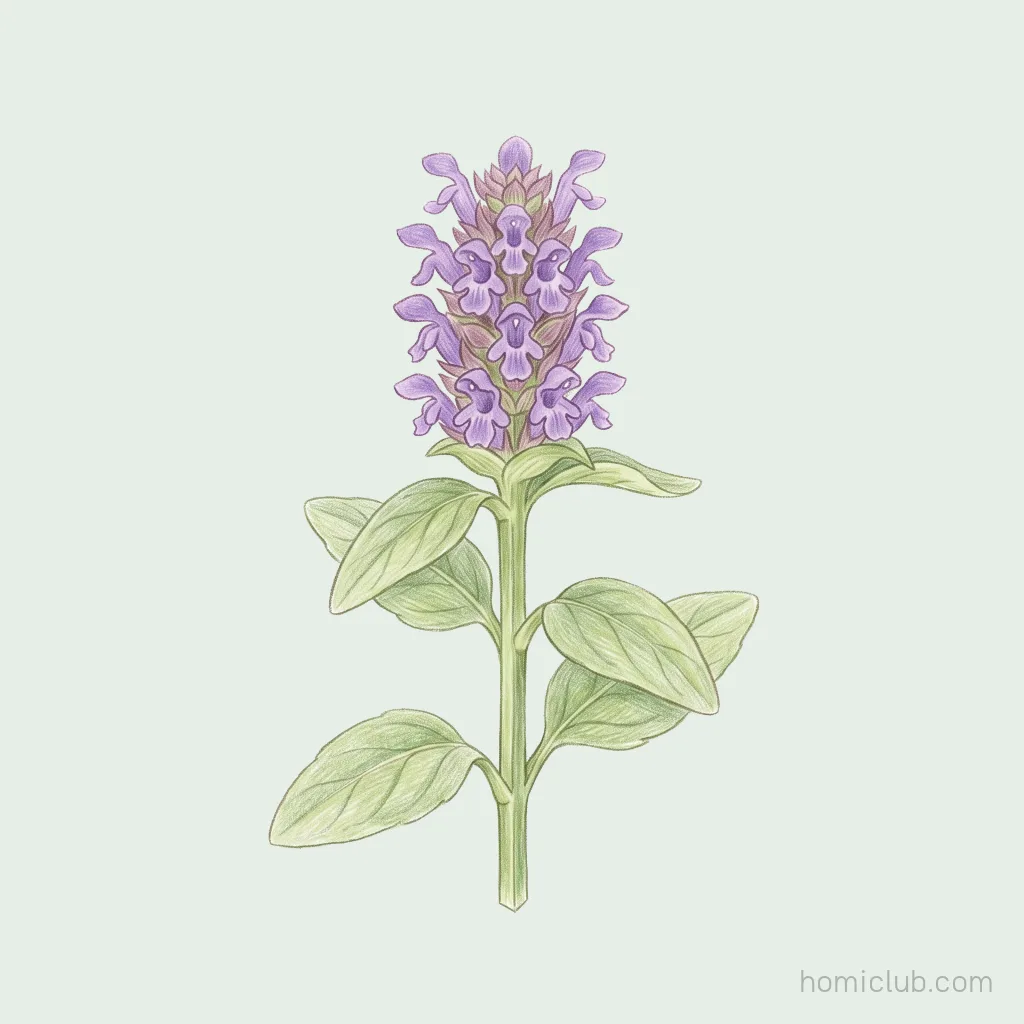
Hagocho is the dried flower spike of prunella. The name records what the plant does in summer — the flower spike withers as the heat comes — and the Donguibogam set the harvest in the fourth month, ahead of the fifth. Koreans call it kkulpul, honey grass, for the nectar in its flowers.
Original, read line by line 東醫寶鑑 · Tangaek — Decoctions vol. 3
-
性寒, 味苦辛, 無毒.
Its nature is cold, its taste bitter and pungent, and it is non-toxic. It is classified as a herb that clears heat and disperses stagnation.
-
主寒熱, 瘰癧, 鼠瘻, 頭瘡.
It treats alternating chills and fever, scrofula (lumps along the neck), chronic draining fistulas, and sores on the head. It is one of the principal herbs used to soften and disperse swollen lymphatic nodules in traditional medicine.
-
破癥, 散癭結氣, 治目疼.
It breaks up hardened abdominal masses, dissipates goiter and bound qi in the neck, and relieves eye pain, being especially valued for sharp aching in the eyes.
-
處處有之. 冬生不凋, 春開白花, 至五月枯. 四月採. 《本草》
It grows everywhere. Its leaves stay green through winter, white flowers open in spring, and by the fifth month the plant withers, so it is gathered in the fourth month before it dries out. Recorded in the Bencao.
-
月令云, 靡草死, 得金氣而生, 至夏火盛而死.
The Yueling states that the slender grass dies; this is explained as a plant that sprouts on receiving the metal qi of autumn and withers when the fire qi of summer reaches its peak. The passage describes its nature of being born of yin energy and dying as yang reaches its zenith.
-
四月採, 陰乾. 《入門》
It is harvested in the fourth month and dried in the shade, since shade-drying rather than direct sun preserves its potency. The method is recorded in the Ru men.
-
此草稟純陽之氣, 得陰氣則枯, 有補養厥陰血脉之功.
This herb is endowed with pure yang qi, so it withers upon meeting yin qi, and is therefore considered to nourish and replenish the blood vessels of the Jueyin channel associated with the liver.
-
故治目疼如神者, 以陽治陰也. 《綱目》
Its near-miraculous effect on eye pain is explained as using a yang medicine to treat a yin disorder, illustrating, from the traditional view that the liver opens into the eyes, how yang governs yin. The interpretation appears in the Gangmu.
Related Crop
Self-heal →
Herbs — more entries
This is a cultural and historical record from a classical text, not a claim about any food’s effects. Nothing here is a health supplement or intended to prevent or treat disease. Consult a medical professional about health concerns. · Text: Korean Medicine Classics DB · Reading: Homiclub