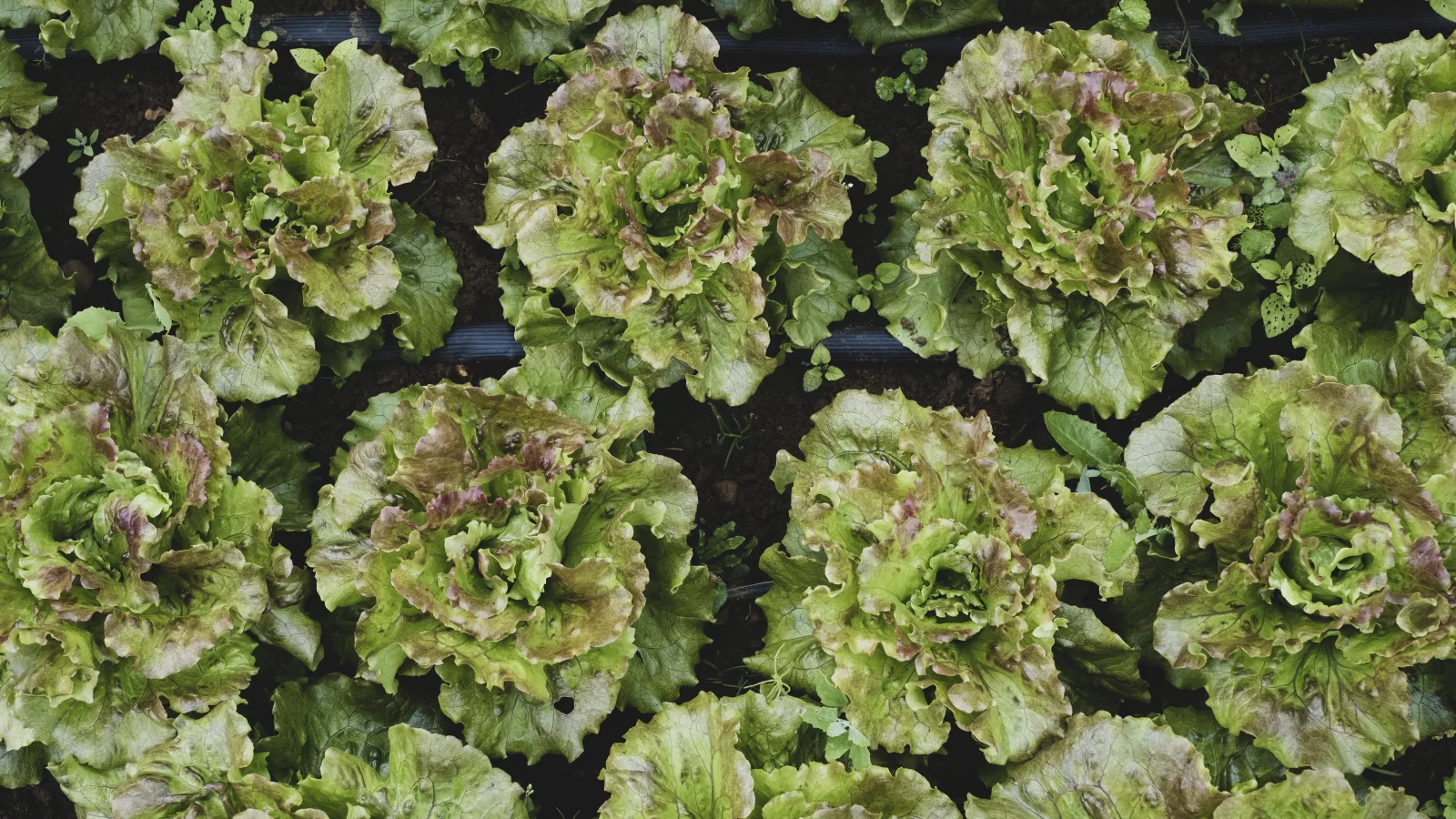
A jug of water tucked into a corner of the balcony, with pale green leaves stacking up above it: for the city gardener who finds soil-filled pots a bit of a hassle, it's the most welcoming way to begin. That's exactly what lettuce grown in a hydroponic kit gives you. With no soil at all, just water, a small pump, and a little light, a single head of leaf lettuce will grow. Lettuce is the city gardener's first crop precisely because it almost never fails, and, as it turns out, it's also a healthy green that helps you sleep.
From Seed to Kit
With hydroponics, it's cleaner to start from seed than to buy seedlings. Set one or two lettuce seeds on a sponge or growing plug, let it soak up some moisture, and within a few days they'll sprout. The best months to sow lettuce are March and April in spring, and September in fall. Because a hydroponic kit keeps the indoor temperature steady, you can get started during these windows without being too tied to them, as long as you avoid the peak of midsummer heat.
Once a seedling has two or three leaves, move it into the kit's planting hole. The rule of thumb for settling it in: the roots should touch the water while the base of the stem stays in the air. If your kit comes with nutrient solution, follow the concentration on the instructions and dissolve it into the water.
Caring for It With Water and Light
The two things that matter most in growing lettuce hydroponically are water and light. Change the water every three or four days, and top it off as the level drops. If the standing water turns cloudy or the roots turn brown, swap the water out entirely and rinse the container. If your kit pumps air into the water, the roots will grow even healthier.
When light is short, the leaves stretch and grow thin and leggy. Set the kit on a windowsill that gets five or six hours of sun a day, or, if your space is dim, shine a plant LED (light-emitting diode) close to the leaves. Leaf lettuce needs no side-shoot trimming, so it asks almost nothing of you.
Harvest the Outer Leaves First
Rather than pulling the whole plant at once, it's best to pick lettuce one outer leaf at a time, starting from the largest. Leave the inner leaves at the center and new ones will keep coming up, letting you harvest from a single plant again and again. Pick from the outer leaves and one plant will keep yielding for several weeks. The harvest months are May and June from a spring planting, and October and November from a fall planting.
When the leaves start to taste bitter or a flower stalk shoots up from the center, that plant's harvest is winding down. If you've started a fresh batch of seeds ahead of time, you can hand off to the next plant without leaving an empty spot.
From Harvest to Table
Freshly picked lettuce is best of all as ssam, eaten as a wrap. Wrap a piece of grilled pork belly or beef in a lettuce leaf and the fat and protein of the meat meet the fiber and moisture of the lettuce, bringing a heavy meal to a light finish. Add a dab of ssamjang, a dipping sauce built on a base of garlic, chili, and doenjang (fermented soybean paste), and its heat and fermented depth balance the soft, tender leaf.
Lettuce is also known as a sleep-friendly green. The lactucin in the milky sap of the stem has a mild calming effect, and in a 2025 randomized, double-blind, placebo-controlled trial of 91 Korean adults, an extract of Heukharang lettuce leaf was reported to meaningfully improve sleep quality. Total sleep time as measured by actigraphy rose by about 35 minutes (p=0.0023). Lettuce also contains antioxidants such as folate, anthocyanins, and beta-carotene. Try adding a lettuce leaf to round out your supper.
Today, start by setting two lettuce seeds afloat in a jug of water.
Source: Rural Development Administration, Nongsaro and Agri-Food Information