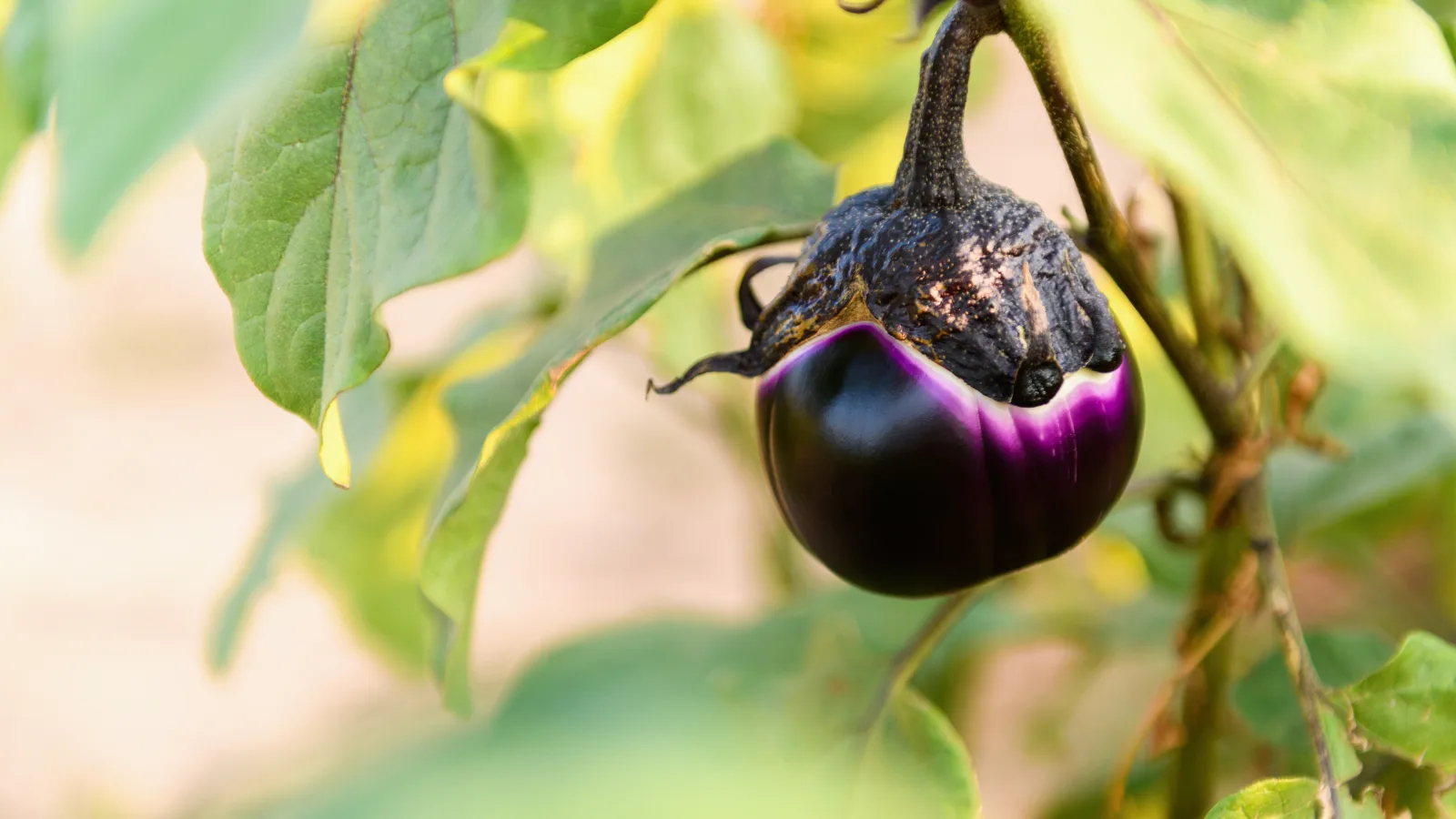
In the August midday heat, the eggplants in the garden hang heavy on their stems, bowing under their own weight. Their purple skins catch the sunlight and gleam, and when you run a fingertip across one, you feel the smooth surface giving way to firm flesh inside. Anyone who has stood in a garden senses, however faintly, that this purple is not merely a color but a pigment the plant created to protect itself. The skin of an eggplant contains an anthocyanin pigment called nasunin, and that same pigment plays a similar protective role inside our blood vessels.
What Makes the Purple
Nasunin drives an eggplant's color. It is a type of anthocyanin, and even within a single eggplant, the deeper the color, the higher the concentration. The general rule that deeper color means stronger antioxidant activity holds true for eggplant as well. Gene-regulation studies have confirmed that purple eggplants, rich in anthocyanins, carry greater nutritional value.
That's why it matters to choose eggplants with deep, fully ripened skin. A soft or faded eggplant has lost some of its pigment, and you can assume its antioxidant content has dropped along with it. When harvesting straight from the garden, look for eggplants with a fresh, living stem cap and taut, glossy skin.
What Happens Inside the Blood Vessels
True to its nature as an anthocyanin pigment, nasunin supports vascular health through strong antioxidant action. Studies that evaluate the eggplant's full nutritional profile—spanning antioxidant capacity, cytotoxicity, and even wound-healing potential—report a versatile activity that bridges both food and medicine. Anthocyanins and chlorogenic acid work together as the key active compounds.
At the same time, eggplant also contains bioactive compounds such as glycoalkaloids, so depending on the dose, beneficial effects and irritation can appear side by side. Quantitative research continues in an effort to define a safe range of intake. In everyday terms, the ordinary habit of eating an eggplant or two per meal alongside a variety of other vegetables poses no concern.
Why You Should Eat the Skin
Many people peel the skin when prepping an eggplant. But nasunin is concentrated in the skin, so peeling means throwing away the most valuable part the moment you do it. Cooking with the skin on lets you hold on to more of those antioxidants.
An eggplant's anthocyanins and carotenoids behave in a largely fat-soluble way. That means cooking them with the fat in olive oil or sesame oil improves absorption. This is exactly why fried and grilled eggplant have earned their place as cooking methods that strike a good balance—not just in flavor, but in nutrition too. Researchers are even exploring ultrasonic extraction to pull the polyphenols from eggplant skin for use in functional foods. You can't go that far at home, of course, but simply cooking in a way that keeps the skin lets you make a choice in the same spirit.
Good Partners on the Plate
Eggplant is traditionally considered somewhat "cooling" in nature, so pairing it with warming seasonings brings it into balance.
- Garlic and ginger — Adding warming seasonings, as in garlic-stir-fried eggplant or braised eggplant, softens its cooling character.
- Olive oil and sesame oil — The fat boosts the absorption of nasunin and carotenoids.
- Doenjang (fermented soybean paste) and soy sauce — In dishes like seasoned eggplant namul, eggplant muchim, and miso-grilled eggplant, the savory depth of fermented seasonings deepens the vegetable's mild flavor.
- Tomato and basil — In ratatouille and eggplant pasta, lycopene, rosmarinic acid, and nasunin all come together.
Salting an eggplant lightly before cooking draws out bitterness and excess moisture and firms up the texture. This single step of prep refines both flavor and texture, so try it when time allows.
From the Summer Garden to the Table
Eggplant stands up well to heat, so the harvest carries on all summer long. Transplant the seedlings in May, and you can keep picking from July through October. High in water and dietary fiber and low in calories, eggplant fills out a meal without weighing you down, even on hot days when your appetite fades.
Tonight, try splitting a whole eggplant lengthwise. Lay it skin-side up in a pan slicked with olive oil, cook it slowly, then toss it simply with soy sauce and minced garlic. It's a place for a summer meal—where the purple gathered from the garden doesn't end on the table, but reaches all the way to your blood vessels.