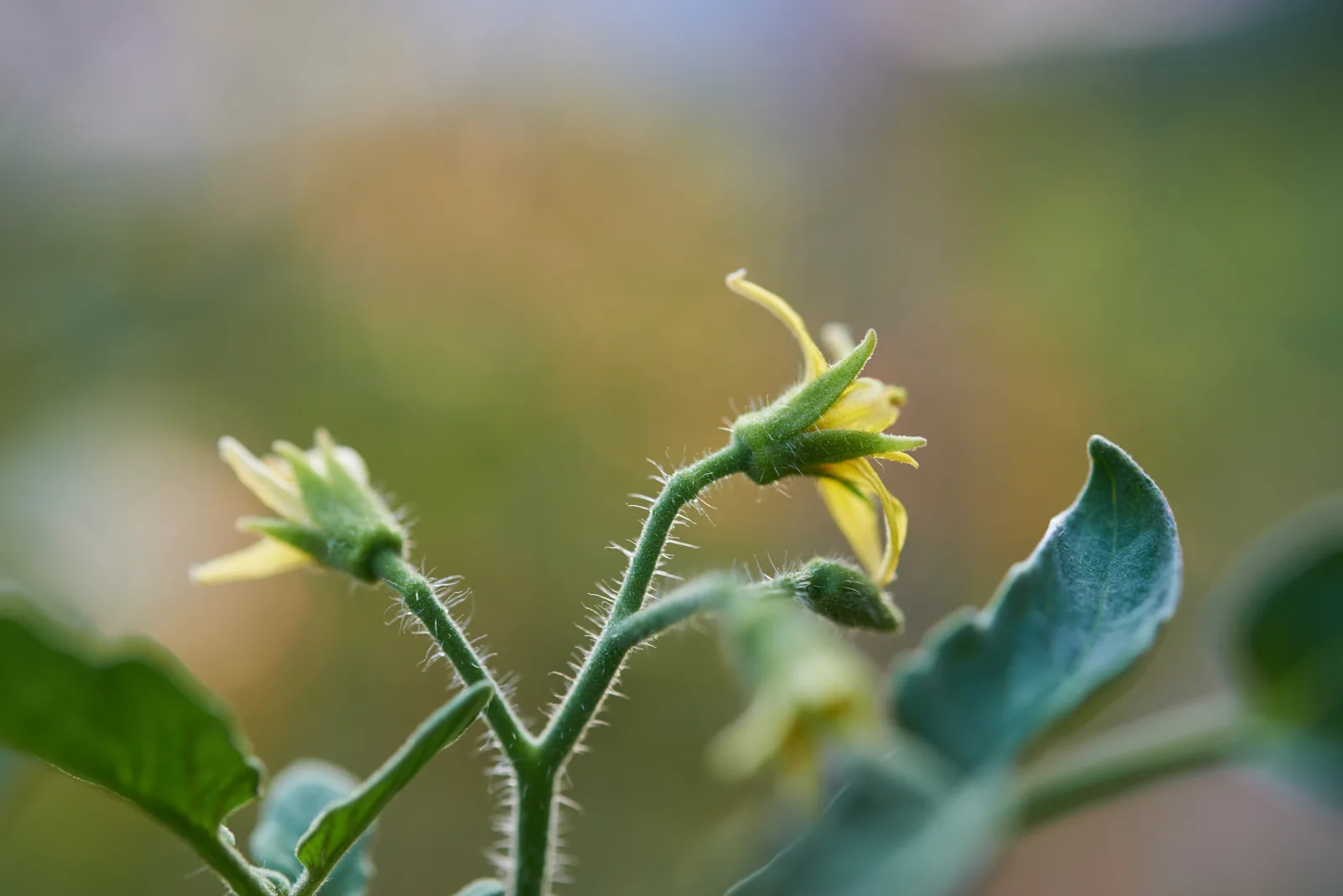
Once the cherry tomato you moved into a balcony pot back in May grows to about knee height, small new shoots start poking out wherever a leaf meets the main stem. These shoots are called suckers. First-time tomato growers often just leave them be, but the timing of when you pinch that first sucker has a surprisingly big effect on how much a single plant produces. Cherry tomatoes are a small-fruited variety of tomato (Solanum lycopersicum) — bite-sized, extra sweet, and easy to grow in a container. Once you learn to read the stems, even a balcony plant can keep you in fruit from June all the way through September.
What a sucker is, and why you pinch it
A sucker is a new stem that springs up in the crotch where a leaf stalk joins the main stem. Left alone, it grows as thick as a second main stem, throwing out a tangle of leaves and branches. When a plant gets that crowded, sunlight can't reach the interior and air can't move through it. Most important of all, the nutrients the roots pull up get diverted into leaves and side branches instead of fruit.
In a container garden, there's only so much soil, so nutrients are always in short supply. That's why clearing the suckers — and channeling those nutrients toward the fruit — translates directly into a bigger harvest. Cherry tomatoes do best in a pot when grown as a single stem, with just one main leader trained upward.
The first sucker: when and how to pinch it
The right moment to take the first sucker is when it has grown to about the length of one finger joint, roughly 5 cm. Pinch too early and it's hard to tell which shoot is the sucker; let it get too big and the stem thickens, leaving a large wound on the main stem when you pull it off. As the first flower cluster begins to set, start pinching the sucker that has come up just below it, then work your way along.
Here's how to do it:
- Look in the angle between the leaf stalk and the main stem for the new shoot rising from inside that joint. So you don't confuse it with a flowering branch, remember: the sucker is the one with no flower buds at its tip.
- On a clear morning, snap it off by hand with a gentle side-to-side motion. Pinching by hand rather than with scissors lets the wound heal faster.
- Avoid pinching on rainy days or in the evening, when moisture can get into the wound and invite disease.
Don't strip them all at once — tidy up the new suckers as they appear, once or twice a week. When the main stem outgrows the pot and starts to sway, set a stake and tie the stem to it loosely with twine.
Care and harvest
Once you've cleared the suckers, sunlight reaches evenly between the leaves. Cherry tomatoes need at least six hours of sun a day to sweeten up, so place the pot in the spot that gets the longest stretch of sunlight. Water thoroughly whenever the soil surface dries out, but ease back a little once the fruit starts to ripen — that's what deepens the sweetness. The first fruit begins to redden around June, about two months after you set out the seedling, and with good care the harvest carries on into September.
Pick fruit that has ripened red right up to the cap, twisting it off by hand. Even as you're eating your way through the lower clusters, the tip of the main stem keeps growing and pushing out new flower clusters — so as long as you stay on top of pinching suckers, a single plant will keep producing for a long time.
How to enjoy them
The red in a cherry tomato comes from lycopene, a carotenoid pigment. Lycopene is an antioxidant, and your body absorbs more of it from cooked tomatoes than from raw ones. Cherry tomatoes also deliver vitamin C and potassium. Because lycopene is fat-soluble, how you eat it changes how well it's absorbed.
- A light drizzle of olive oil helps your body take up the fat-soluble lycopene. A quick toss in a hot pan works well too.
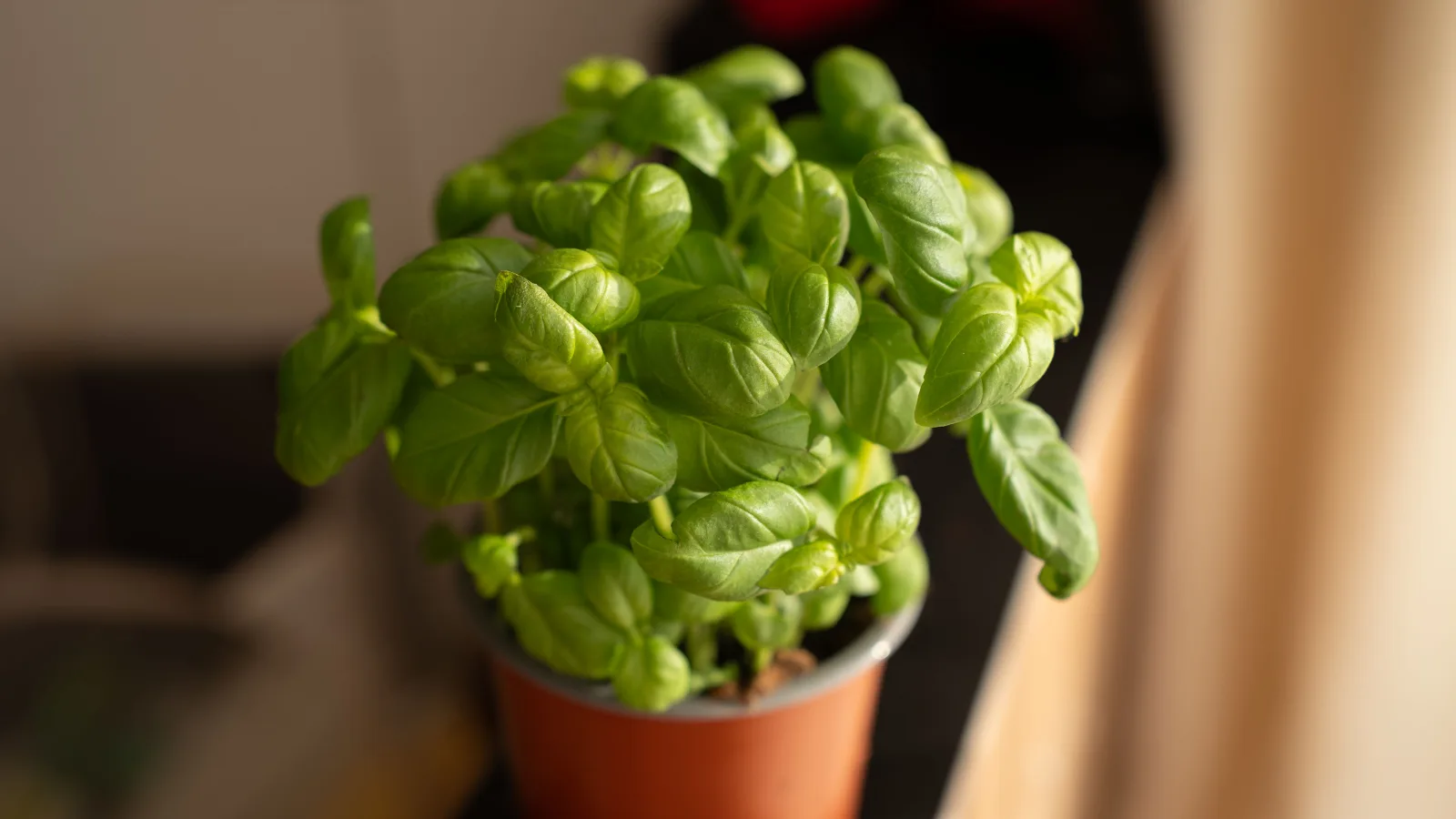
- Serve them caprese-style with fresh mozzarella and basil to bring out their sweetness and bright acidity.
- Rinsed and left whole, they're perfect tossed into a salad or packed in a lunchbox.
Take a look at your pot today, find that first sucker tucked in a leaf axil, and pinch it off. This one small bit of upkeep changes how much fruit you'll be picking all summer long.
Source: Rural Development Administration, Nongsaro