- Type
- Leafy Greens
- Difficulty
- Easy
- Season
- Spring
- Sowing
- Root division
Butterbur (Meowi)
Petasites japonicus
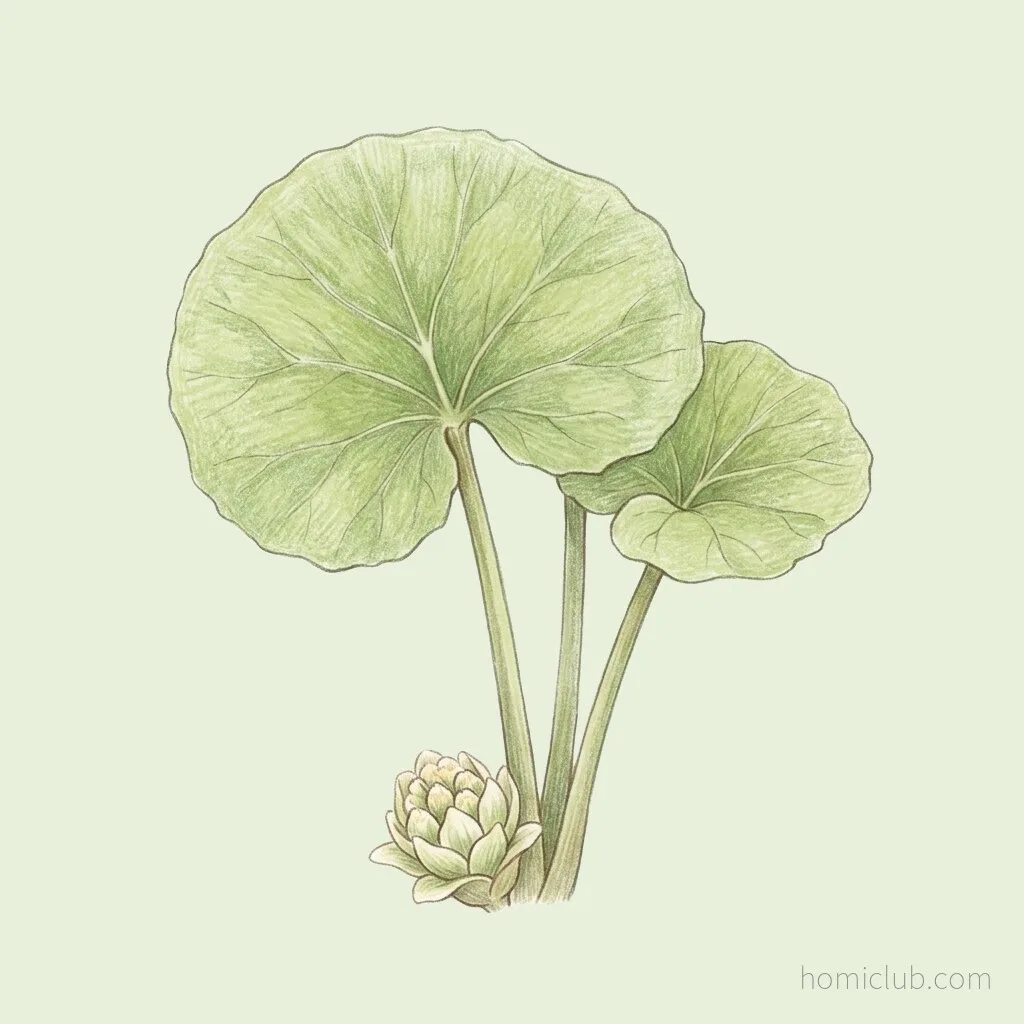
A bitter spring green for inflammation and coughs
Butterbur (meowi in Korean) is a bitter spring green prized for its broad leaves and crisp leaf stalks, called meowit-dae, which Koreans cook into namul side dishes and perilla-seed soup. In traditional Korean medicine it is known as bongduchae and was used to break up blood stasis, calm inflammation, and quiet coughs. Note that it is a different plant from the coltsfoot flower (gwandonghwa), another cough remedy, so the two should not be confused. To tame its characteristic bitterness, blanch the stalks and leaves and soak them before cooking.
Year-Round Calendar
- 1
- 2
- 3
- 4
- 5
- 6
- 7
- 8
- 9
- 10
- 11
- 12
- 3
- 4
- 5
Health Benefits
Anti-inflammatory and cough relief (traditional). Known as bongduchae in Korean herbal medicine, butterbur was used as a spring medicinal green to break up blood stasis, ease inflammation, and suppress coughs. It is a distinct plant from coltsfoot flower (gwandonghwa), another traditional cough remedy.
Safety and active compounds (preliminary). Compounds such as petasin are credited with anti-inflammatory activity, but because butterbur contains trace amounts of pyrrolizidine alkaloids, it is safest to blanch and soak it and eat it in moderate amounts.
Nutrition
- Petasin (A sesquiterpene) — Reputed anti-inflammatory and pain-relieving action
- Vitamins and minerals (In the bitter leaves and stalks) — Antioxidant support
Pairings
○ Perilla seed (butterbur perilla soup) — Meowit-dae stalks simmered with ground perilla seeds make deulkkae-tang, a springtime favorite in which the bitterness of the butterbur balances the nutty richness of the perilla.
○ Doenjang (butterbur namul) — Tossing blanched butterbur leaves with doenjang, Korean fermented soybean paste, mellows their bitter edge.
○ Blanching (to draw out bitterness) — Blanch in boiling water and then soak in cold water to reduce the bitter, astringent taste and make the greens more palatable.
△ Go easy on raw or large servings — Butterbur and some of its botanical relatives can contain trace amounts of pyrrolizidine alkaloids. Rather than eating it raw in large quantities, the safer approach is to blanch it, soak it in water to draw out the compounds, and enjoy it in moderation.
Source: Rural Development Administration (Nongsaro) · traditional herbal texts (bongduchae, the herbal name for butterbur)