
- Type
- Root Vegetables
- Difficulty
- Moderate
- Season
- Spring·Fall
- Sowing
- From seed
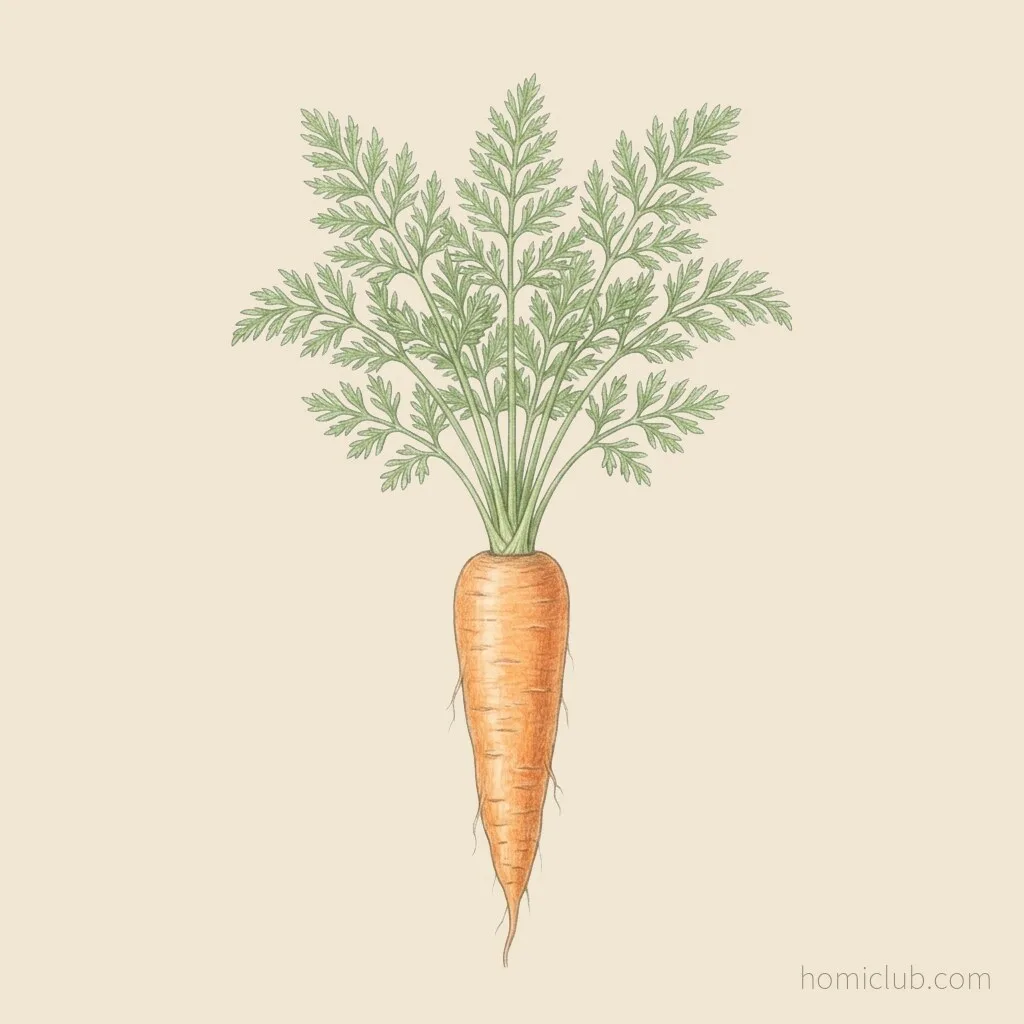
Carrot
Daucus carota
Beta-carotene for eye and skin health
Few vegetables pack more beta-carotene than the carrot. Once eaten, that beta-carotene converts to vitamin A in the body, supporting vision and helping with night blindness, while its antioxidant activity contributes to cancer prevention and healthy skin. A quick saute in a little oil boosts how much of that beta-carotene your body can absorb. Carrots are direct-sown in spring and fall and prefer cool weather.
Year-Round Calendar
- 1
- 2
- 3
- 4
- 5
- 6
- 7
- 8
- 9
- 10
- 11
- 12
- 4
- 8
- 7
- 11
Health Benefits
Vision and eye health (vitamin A and carotenoids). It is well established that the beta-carotene in carrots converts to vitamin A in the body, playing a key role in preventing night blindness and maintaining retinal health, a consensus shared by the WHO, the USDA, and standard nutrition textbooks. The lutein and zeaxanthin in carrots also help protect the macula of the retina.
Cardiovascular. Numerous cohort studies have reported that a diet rich in carotenoids is associated with reduced LDL oxidation and a lower risk of cardiovascular disease. Carrots have become an everyday, easily accessible source of these carotenoids.
Cancer (preclinical and epidemiological). Many epidemiological studies consistently report that eating beta-carotene-rich vegetables is associated with a lower risk of lung and stomach cancer. That said, trials giving smokers high-dose beta-carotene supplements have in some cases found an increased risk, which is why getting beta-carotene from whole foods has become the safer recommended approach.
Gut health. The soluble fiber in carrots, such as pectin, increases the diversity of the gut microbiome and promotes the production of short-chain fatty acids. Regular consumption broadly helps build a foundation for gut health and immunity.
Nutrition
- Beta-carotene (Among the highest of any food) — Converts to vitamin A in the body, supporting vision, night blindness, and cancer prevention
- Dietary fiber (Abundant) — Gut health
Pairings
○ Olive oil, sesame oil, perilla oil — Because carrot carotene is fat-soluble, cooking it with oil can boost absorption by up to sixfold, a well-known fact. Oil-based preparations such as stir-fried carrots, carrot rapee (a French grated-carrot salad), and carrot cake are nutritionally sound choices.
○ Meat (beef, pork) — Dishes that bring protein, carotene, and iron together, like curry, stew, and gomtang (Korean beef-bone soup), make the most of the carrot's nutrition. Fat from the meat enhances carotenoid absorption, and pairing iron with vitamin C raises absorption further.
○ Cabbage, onion, potato — Pairing carrots with the cabbage, onion, and potato that form the base of curries and stews creates a naturally balanced mix. The fiber and minerals of several vegetables come together in one dish for a satisfying, well-rounded meal.
○ Apple and ginger — Blended with apple and ginger, a variation on ABC juice, carrots deliver antioxidant synergy and balanced flavor. The sweetness of apple and the warm bite of ginger smooth out the carrot's raw, grassy note and make it easy to drink.
○ Lemon and vinegar — Marinating carrots in lemon or vinegar, as in carrot rapee, adds vitamin C and lets the acidity balance the flavor. The acidity also helps stabilize the carotenoids, so the color holds longer.
△ Smokers + beta-carotene supplements — Clinical trials (CARET and ATBC) found that smokers who took high-dose beta-carotene supplements actually had an increased risk of lung cancer, making this a recognized medical contraindication. Carrots themselves are safe as a whole food, so getting beta-carotene from the diet alone is recommended.
△ Apiaceae (carrot-family) allergy — People allergic to Apiaceae plants—celery, carrots, parsley, and the like—should avoid carrots due to the possibility of cross-reactivity. Cross-reactions with birch pollen allergy have also been reported.
△ Large amounts of raw carrot on an empty stomach — Eating a lot of raw carrot on an empty stomach can irritate the stomach lining with its coarse fiber. People with weak digestion should eat carrots cooked or in moderation alongside other foods.
Source: Rural Development Administration · Food and Nutrition Information