- Type
- Leafy Greens
- Difficulty
- Easy
- Season
- Fall
- Sowing
- From seed
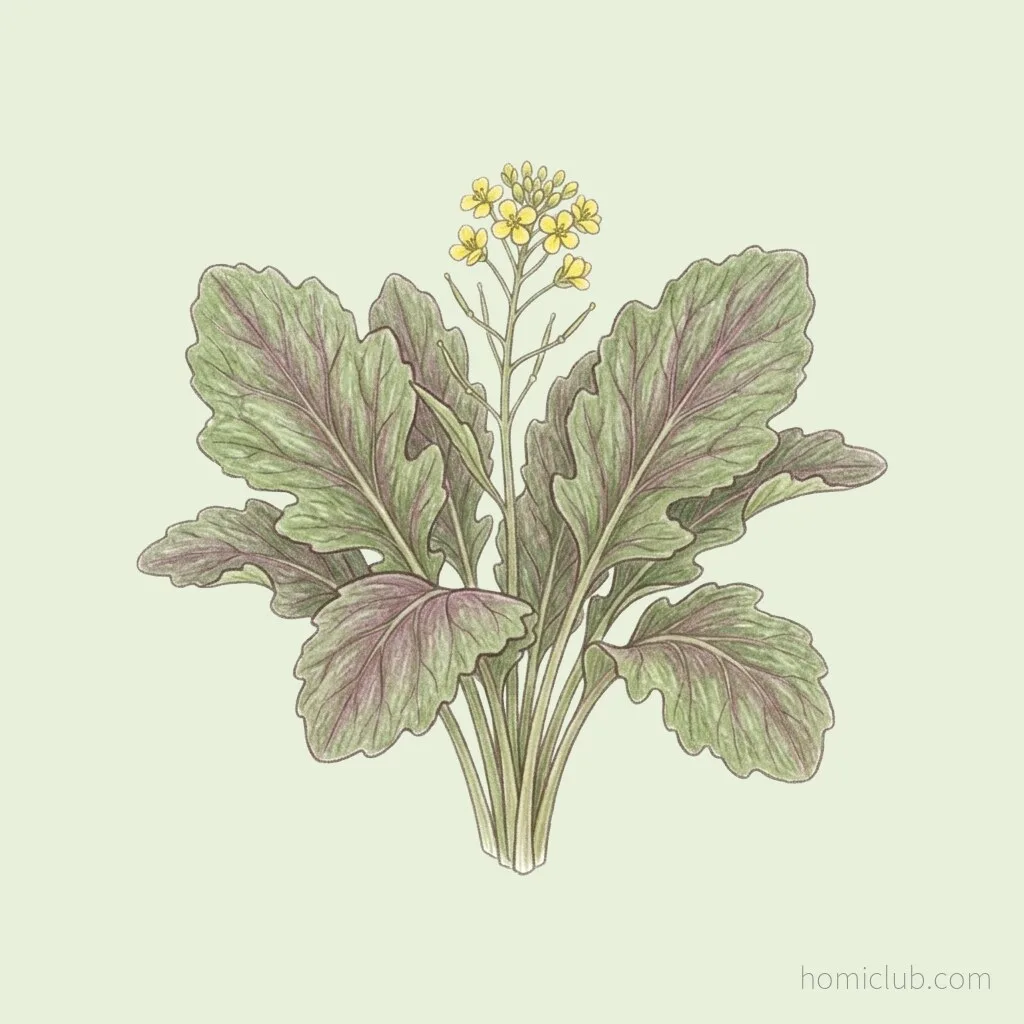
Mustard Greens (Gat)
Brassica juncea
Glucosinolates and sinigrin: a pungent, antioxidant-rich leafy green
Mustard greens, known in Korea as gat, get their sharp, peppery bite from glucosinolates and sinigrin, compounds that support the body's antioxidant, detoxifying, and anti-inflammatory systems. The leaves are rich in vitamins A, C, and K, which benefit eye, immune, and bone health. In Korea, gat is most often fermented into kimchi, such as gat-kimchi or the prized Dolsan gat variety from Yeosu, which preserves its distinctive aroma and nutrition for the long term. Fall is the ideal time to sow, and the flavor deepens as the weather turns cooler.
Year-Round Calendar
- 1
- 2
- 3
- 4
- 5
- 6
- 7
- 8
- 9
- 10
- 11
- 12
- 8
- 9
- 10
- 11
Health Benefits
Antioxidant and anti-cancer potential. Comprehensive research confirms that dietary intake of glucosinolates from cruciferous vegetables is linked to a range of health benefits. Mustard greens are a key member of this cruciferous family, and the antioxidant and anti-cancer activity of their isothiocyanates is identified as the main mechanism at work.
Liver health and fatty liver. Studies report that glucosinolates extracted from mustard greens show potential for improving the symptoms of non-alcoholic fatty liver disease. The proposed mechanism is that they act as a Phase II inducer of the liver's detoxifying enzymes, producing a protective effect on the liver.
Value as a fermented food. Gat-kimchi, the fermented form of mustard greens, has been comprehensively evaluated for its vitamin, mineral, and glucosinolate content, as well as its flavor and health value within East and Southeast Asian food cultures. Notably, the fermentation process increases the bioavailability of these active compounds.
Phytochemical profile. Comprehensive reviews characterize mustard greens as a rich source of multifunctional bioactive substances, including glucosinolates, phenolic compounds, and erucic acid. Beyond their use as food, their potential as a functional-food ingredient is also being evaluated.
Cruciferous intake and multi-site cancer risk (dose-response meta-analysis). A 2025 dose-response meta-analysis pooling 226 case-control and cohort studies found that high intake of cruciferous (Brassicaceae) vegetables, the family to which mustard greens belong, was significantly associated with reduced risk of cancers at multiple sites, including colorectal, kidney, reproductive, and prostate cancers (OR 0.77, RR 0.96). Recommended intake was given as roughly 3 to 7.4 servings per week depending on the cancer site, providing a basis for specific dietary guidance.
Nutrition
- Glucosinolates and sinigrin (Source of the pungent flavor) — Antioxidant, detoxifying, and anti-inflammatory
- Vitamins A, C, and K (Abundant) — Eye, immune, and bone health
Pairings
○ Radish, napa cabbage, chili flakes, and salted seafood (jeotgal) — Adding mustard greens to winter kimchi (gimjang) is a Korean culinary tradition, and among these the Dolsan gat-kimchi from the Jeolla region is considered a premium delicacy. The pungency of the mustard greens brings out the sweetness of the cabbage and radish, and the flavor deepens further through fermentation.
○ Raw fish (sashimi) and meat — A piece of gat-kimchi alongside raw fish or meat cuts through fishiness and richness with its peppery heat. Its strong aroma breaks up the monotony of plain protein, making it easier to enjoy larger portions.
○ Pork — Serving gat-kimchi with bossam (boiled pork wraps) is a classic Korean pairing. The pungency and fiber of the mustard greens help break down the fat of the pork, lightening up a heavy meal.
○ Salt and vinegar — Pickled in salt and vinegar, mustard greens become gat-jangajji (a savory pickle). This improves shelf life and deepens the greens' peppery aroma, while fermentation develops new layers of flavor.
○ Garlic and ginger — Combining mustard greens with garlic and ginger reinforces their warming nature. This pairing creates a respiratory-tonic synergy and has traditionally been used to ease chills, coughs, and phlegm.
△ Gastritis and acid reflux — People with gastritis or reflux esophagitis should go easy on heavily seasoned mustard-green kimchi (gat-kimchi). The greens' pungent bite combined with fermentation acids can irritate the stomach lining and worsen symptoms.
△ Hypothyroidism — In large amounts, the glucosinolates in mustard greens can partially interfere with thyroid hormone synthesis. Normal dietary amounts are fine, but high-dose supplement forms are not recommended for people with hypothyroidism.
△ Heavy, long-term use of mustard seed oil — Mustard seed oil is high in erucic acid, which can strain the cardiovascular system with heavy, long-term consumption. Small amounts as a seasoning are fine, but it's not recommended as your everyday cooking oil.
Source: Food and nutrition references