
- Type
- Grains
- Difficulty
- Moderate
- Season
- Summer
- Sowing
- From seed
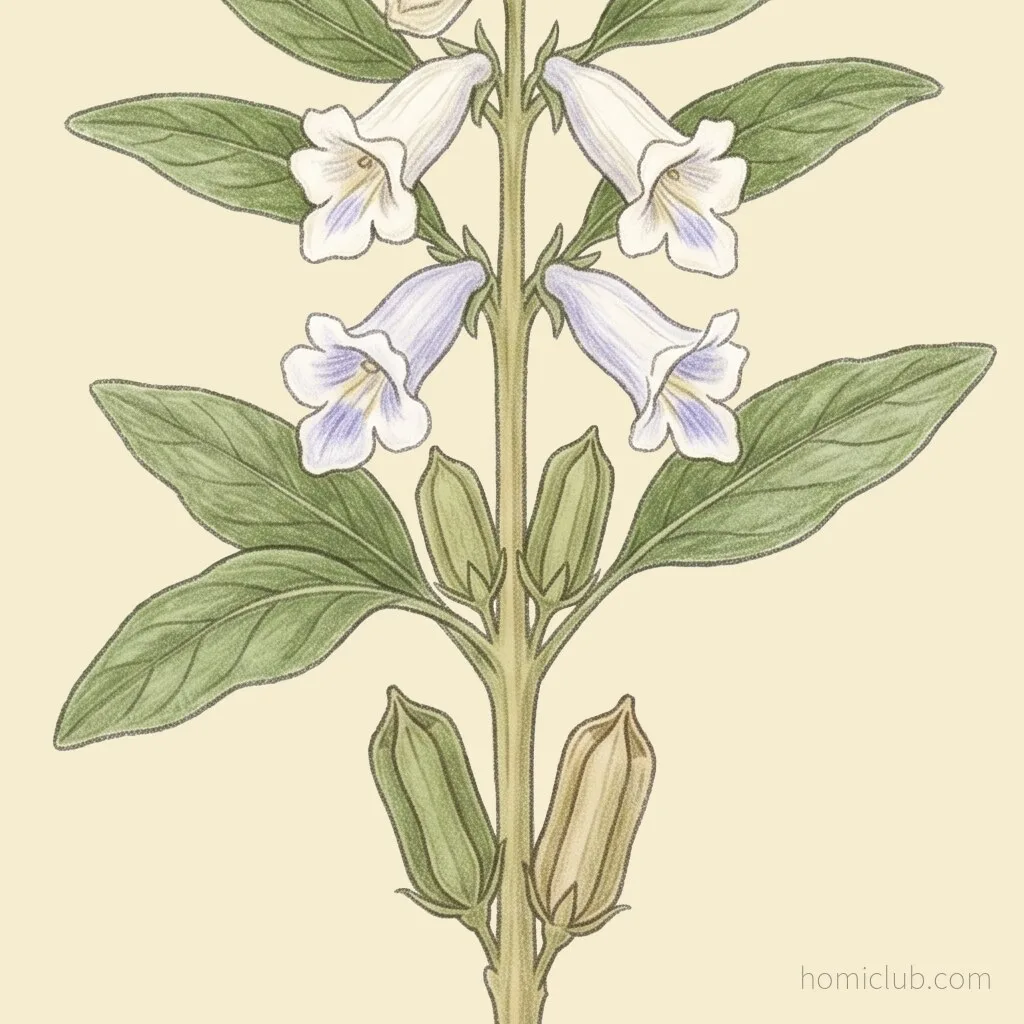
Sesame
Sesamum indicum
Sesamin and lignans for LDL and antioxidant support
In traditional Korean and Chinese medicine, sesame is known as homa (胡麻) and was listed in the ancient Shennong Bencao Jing among the "superior" tonic remedies said to nourish the five organs and restore vitality. The source of both its rich, nutty aroma and its nutritional punch is its lignans, especially sesamin and sesamol, powerful antioxidants that also explain why sesame oil resists going rancid. Modern human meta-analyses report that sesame and sesamin supplementation tends to lower total cholesterol, LDL, and systolic blood pressure, though results vary from study to study, so it's best read as a supportive rather than primary effect. If perilla (deulkkae) is about the leaf and its oil, sesame is the toasty seed and the sesame oil that anchor the foundational flavor of the Korean table.
Year-Round Calendar
- 1
- 2
- 3
- 4
- 5
- 6
- 7
- 8
- 9
- 10
- 11
- 12
- 5
- 6
- 9
- 10
Health Benefits
Blood lipids and pressure (human studies). Meta-analyses from 2022 and 2025 report that supplementation with lignans such as sesamin tends to lower total cholesterol, LDL, and systolic blood pressure. However, there is no consistent effect on HDL or triglycerides, and outcomes vary widely depending on study design and duration, so the benefit is regarded as supportive.
Antioxidant. Sesamin, sesamol, and sesaminol are antioxidant lignans that inhibit lipid peroxidation, which is also linked to the oxidative stability of sesame oil.
Nutrition
- Sesamin and lignans (Antioxidant lignans) — Inhibit lipid peroxidation; supportive effect on LDL and blood pressure
- Unsaturated fats and vitamin E (Oleic acid, linoleic acid, tocopherol) — Antioxidant and vascular support
Pairings
○ Spinach and namul (sesame-dressed greens) — Tossing blanched greens with kkaesogeum (toasted ground sesame salt) and sesame oil adds nutty flavor while helping the body absorb fat-soluble nutrients. It's the basic dressing for Korean namul, seasoned vegetable side dishes.
○ Seaweed and sea vegetables — Adding sesame oil and seeds to miyeok-guk (seaweed soup) or seasoned miyeok deepens the flavor and pairs the minerals of the sea vegetables with the fats in sesame.
○ Salt (kkaesogeum) — Kkaesogeum, made by grinding toasted sesame seeds with salt, is a staple Korean seasoning that delivers a lot of nutty flavor from just a small amount.
Source: Rural Development Administration (Nongsaro) · Shennong Bencao Jing (Divine Farmer's Classic of Materia Medica)