- Type
- Leafy Greens
- Difficulty
- Easy
- Season
- Spring·Fall
- Sowing
- From seed
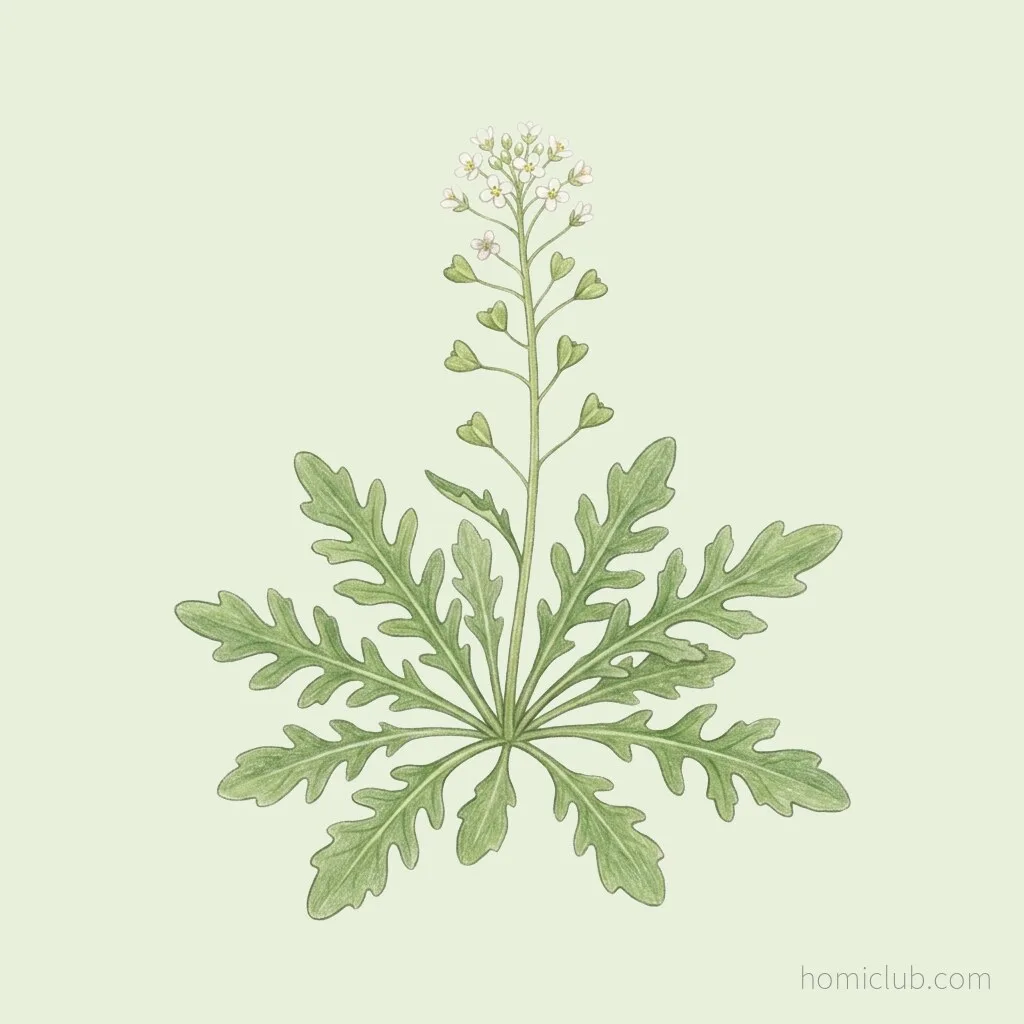
Shepherd's Purse (Naengi)
Capsella bursa-pastoris
Spring wild green - brightens the eyes, restores vigor
Shepherd's purse (naengi) is one of Korea's signature spring wild greens, prized because both its fragrant root and its leaves are eaten together. In traditional Korean medicine it is known as jechae, and the classic medical text Donguibogam holds that, made into a porridge, it enters the liver and brightens the eyes. As a restorative spring vegetable that revives the appetite and builds up energy, it is rich in vitamins and minerals such as iron and calcium. Cooks trim it carefully, root and all, and enjoy it in doenjang (soybean-paste) soup or as a seasoned side dish.
Year-Round Calendar
- 1
- 2
- 3
- 4
- 5
- 6
- 7
- 8
- 9
- 10
- 11
- 12
- 3
- 9
- 3
- 4
Health Benefits
Brightening the eyes and restoring vigor (traditional). Jechae (shepherd's purse) is recorded in the Donguibogam as a restorative spring green that benefits the liver, brightens the eyes, and nourishes the five viscera.
Nutrition (preliminary). It is rich in vitamins A and C, iron, and calcium, which are said to help restore energy in spring, though clinical evidence in humans is limited.
Nutrition
- Vitamins and minerals (iron, calcium) (Spring restorative) — Supports blood-building and overall nourishment
- Dietary fiber and choline — Aids digestion; traditionally credited with staunching bleeding
Pairings
○ Doenjang (naengi doenjang-guk) — Adding shepherd's purse to doenjang-guk, a soybean-paste soup, makes a classic spring soup in which the green's aroma and the paste's savory depth come together.
○ Tofu — Simmered or tossed with mild tofu, it balances out with a good dose of protein.
○ Sesame oil and doenjang dressing (muchim) — Blanched shepherd's purse tossed with doenjang and sesame oil makes a fragrant spring-green side dish (muchim).
Source: Rural Development Administration (Nongsaro) · Donguibogam (classic Korean medical text)