- Type
- Root Vegetables
- Difficulty
- Moderate
- Season
- Spring·Fall
- Sowing
- From seed
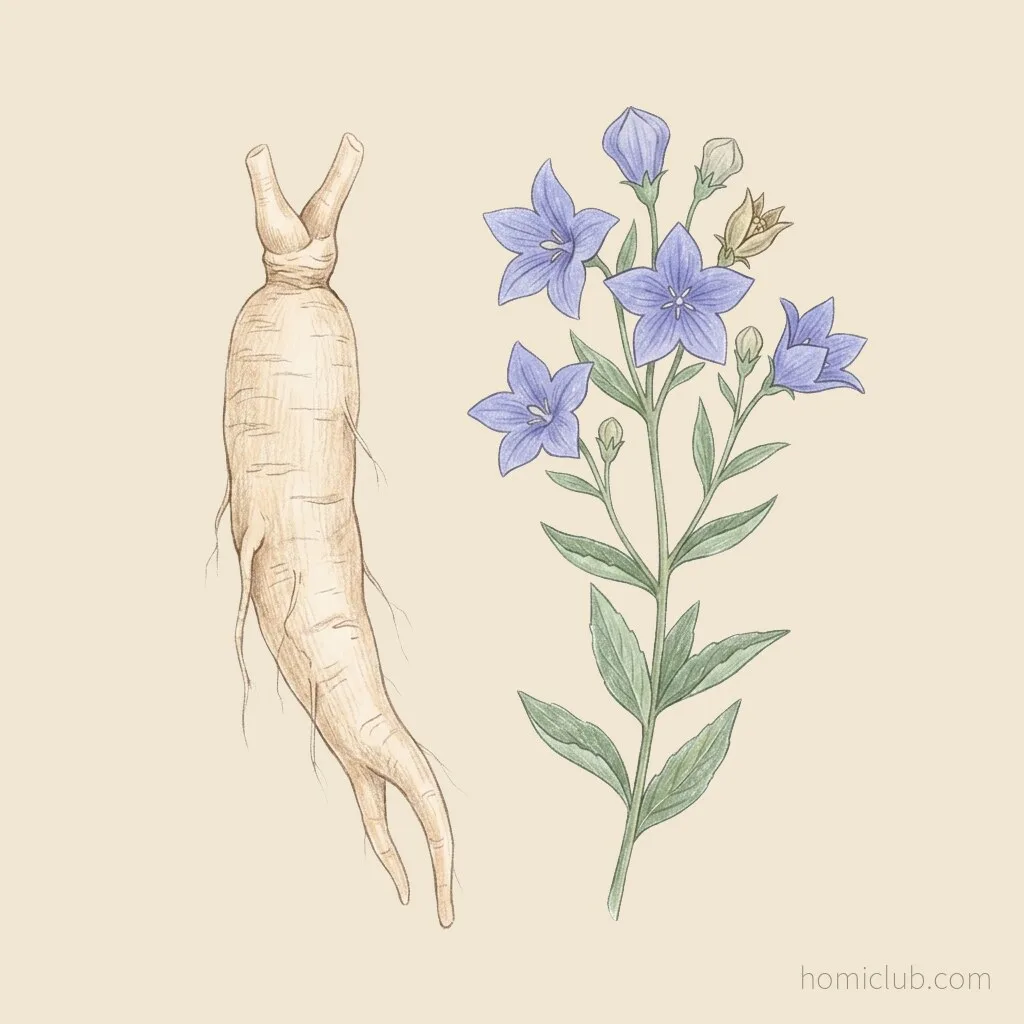
Balloon Flower Root (Doraji)
Platycodon grandiflorus
Platycodin saponins for the bronchial tubes and phlegm
In traditional Korean and East Asian medicine, the root of the balloon flower, known as doraji and called gilgyeong (桔梗) in herbal texts, has long been one of the go-to remedies for breaking up phlegm in the lungs and throat. Its distinctive bittersweet bite comes from platycodin, a triterpenoid saponin, and that saponin is thought to increase mucus secretion in the bronchi, thinning phlegm and easing coughs. It's worth keeping perspective, though: much of the modern research is still at the animal and cell-culture stage, and human clinical evidence remains limited. As food, the roots are soaked to draw out the bitterness and then dressed as a side dish, candied in honey as doraji-cheong syrup, or simmered with Korean pear into doraji-baesuk, a soothing throat drink.
Year-Round Calendar
- 1
- 2
- 3
- 4
- 5
- 6
- 7
- 8
- 9
- 10
- 11
- 12
- 3
- 4
- 10
- 11
Health Benefits
Respiratory relief and expectorant use (traditional). As gilgyeong, balloon flower root has been a leading expectorant herb for clearing phlegm from the lungs and throat, used for coughs, sore throat, and chest tightness since the Shennong Bencao Jing, the classic Chinese materia medica. Folk preparations such as doraji-cheong (honey-cured syrup) and doraji-baesuk (simmered with Korean pear) grow out of this same tradition.
Modern research (preliminary). The saponins in doraji (platycodins) have been reported to show expectorant, anti-inflammatory, and antiviral activity, along with possible benefits for blood sugar and cholesterol. However, most of this work has been done at the animal and cell level, and human clinical evidence is still limited.
Nutrition
- Platycodin (Triterpenoid saponin) — Expectorant, cough-suppressing, and anti-inflammatory; the key compound behind its traditional use as an expectorant herb
- Inulin (Soluble dietary fiber (polysaccharide)) — Supports gut environment and promotes a feeling of fullness
Pairings
○ Honey (doraji-cheong) — Curing doraji in honey to make doraji-cheong syrup gently masks the bitterness of the saponins while soothing the throat. It's a traditional favorite for a scratchy throat or nagging cough.
○ Korean pear (doraji-baesuk) — Simmering doraji together with Korean pear, which adds moisture and fiber, makes a folk beverage that moistens the throat and loosens phlegm. It's a common remedy for caring for the bronchial tubes in winter.
○ Dressed in chogochujang — Doraji that has been soaked to mellow the bitterness, then tossed in chogochujang, a tangy-sweet vinegared red-pepper paste, balances the root's slight bitterness against the bright dressing for a dish that's good for both texture and appetite.
Source: Rural Development Administration (Nongsaro) · Shennong Bencao Jing (Divine Farmer's Classic of Materia Medica)