- Type
- Herbs
- Difficulty
- Easy
- Season
- Year-round
- Sowing
- Transplant
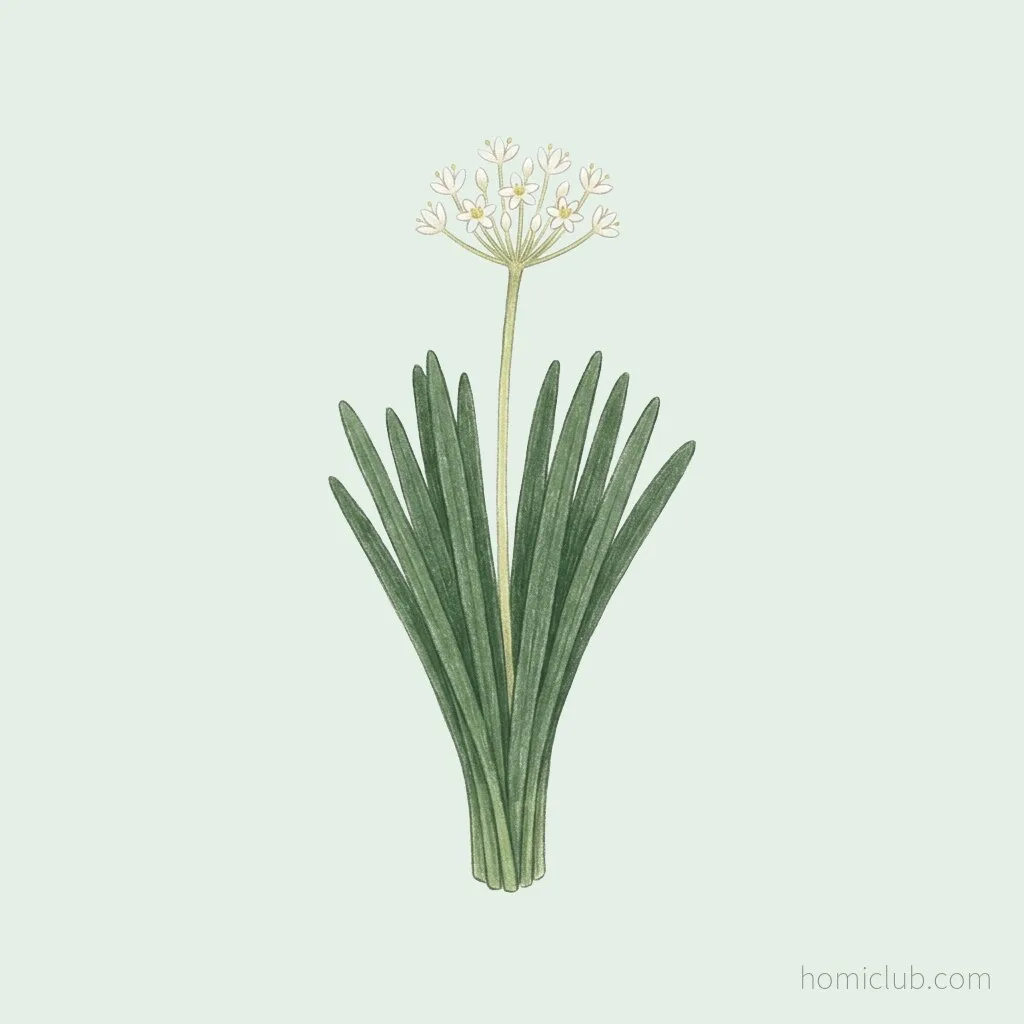
Korean Chive (Buchu / Garlic Chive)
Allium tuberosum
Allicin and beta-carotene, with a cut-and-come-again habit
Korean chive (buchu), also known as garlic chive, is rich in allicin, which supports circulation and helps the body recover from fatigue while keeping it warm. It has long been regarded in Korea as a stamina vegetable, and its beta-carotene and vitamin C add antioxidant and immune support. Best of all, it is a true cut-and-come-again crop: plant it once and it regrows after each cutting, giving you harvest after harvest from a single corner of the garden bed. It is a kitchen workhorse, used in savory pancakes (jeon), seasoned salads, and soups alike.
Year-Round Calendar
- 1
- 2
- 3
- 4
- 5
- 6
- 7
- 8
- 9
- 10
- 11
- 12
- 4
- 5
- 6
- 7
- 8
- 9
- 10
Health Benefits
Nutrition and bioactives overview. A comprehensive review covering Allium vegetables such as garlic, onion, and leek rated Korean chive as a nutrient-dense vegetable containing a range of bioactive compounds, including organosulfur compounds and flavonoids. It offers modern nutritional support for the medicinal and culinary value the plant has long held in Korean tradition.
Antioxidant and antimicrobial activity. A comprehensive analysis of the nutritional, bioactive, antioxidant, and antimicrobial activity of Korean chive (Allium odorum) found meaningful antioxidant and antimicrobial effects even at dietary intake levels. The findings underscore that everyday consumption of the chive itself, rather than a supplement, can be expected to deliver real health benefits.
Cancer risk assessment (Allium vegetables overall). A 2022 systematic review and meta-analysis pooling 22 studies found that high consumers of Allium vegetables showed neither a significant decrease nor a significant increase in cancer risk (RR 0.97, 95% CI 0.92-1.03). The result confirms that an Allium-rich diet does not, at minimum, raise cancer risk, and it is cited as evidence of safety.
Nutrition
- Allicin (aroma compound) — Supports circulation, antimicrobial activity, and recovery from fatigue
- Beta-carotene and vitamin C (abundant) — Antioxidant and immune support
Pairings
○ Pork and beef — Eating buchu pancakes (jeon) or a quick buchu salad (geotjeori) alongside meat creates synergy: it aids protein digestion and cuts the gamey smell of the meat. The allicin in Korean chive binds with vitamin B1 to form allithiamine, which is absorbed more readily, so it pairs especially well with pork, a food rich in B1.
○ Egg — Buchu pancakes or buchu egg custard (gyeranjjim) balance protein, minerals, and organosulfur compounds nicely. The complete protein of egg complements the fiber and vitamins of the chive, so a single dish covers a broad nutritional base.
○ Oysters and shellfish — In Korean tradition, Korean chive is a established partner for oysters and clams because it tames their fishy smell and aids mineral absorption. Oyster-buchu pancake (gul-buchujeon) is the classic example, where the distinctive aroma of the chive heightens the briny sweetness of the seafood.
○ Garlic and ginger — Korean chive, garlic, and ginger are all considered warming, so using them together reinforces their effects. Traditionally, all three are combined in remedies for the chills of a cold or for back pain brought on by exposure to cold.
○ Salted shrimp (saeujeot) — Salted shrimp (saeujeot, a Korean fermented shrimp condiment) is the go-to seasoning for buchu pancakes. Its salty umami lifts the aroma of the chive a notch, while the protein in the salted shrimp gently rounds off the chive's pungency.
△ Honey — The Donguibogam, the classic Korean medical text, explicitly lists eating large amounts of Korean chives and honey together as a taboo. The traditional reasoning is that the pungency of the chives combined with the sweetness of honey burdens the stomach, potentially causing indigestion or abdominal pain.
△ Large amounts with beef (traditional claim) — Some herbal texts associated with the Donguibogam consider chives and beef an incompatible pairing, but at everyday dietary levels it's perfectly fine. In fact, traditional dishes like chive salad (buchu muchim) and chive japchae that combine the two are well established in Korean cuisine—worth keeping in mind.
△ Patients on anticoagulants — Korean chives are high in vitamin K, so people taking anticoagulants like warfarin should keep their intake steady. Suddenly eating much more or much less can throw off the medication's effect, so watch for changes in your diet.
Source: Food and Nutrition Information