탕액편 · Vegetables
黃秋葵 오크라 (황추규)
 Related Crop · Okra →
Notes
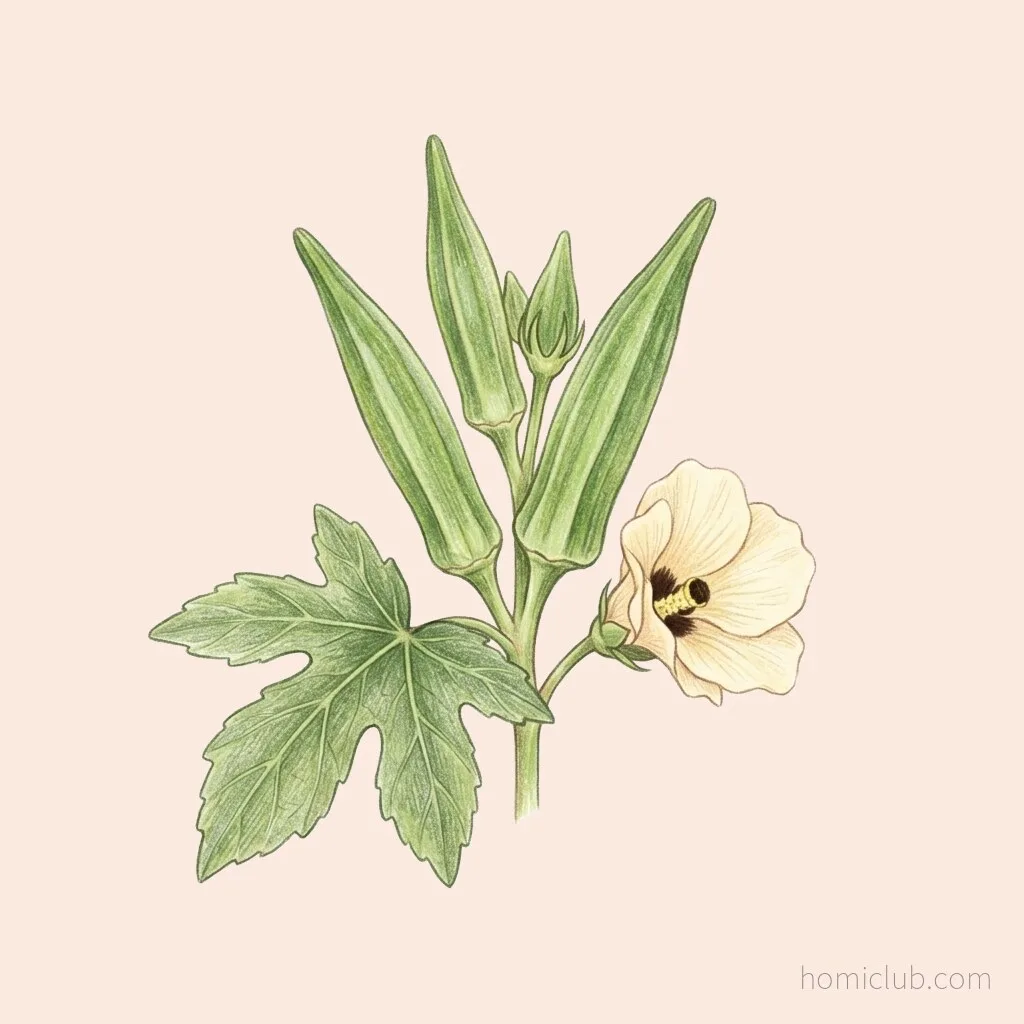
# Okra (Abelmoschus esculentus)
Okra is an African native in the mallow family (the same botanical family as Korea's aukkae/mallow greens). Unlike most plants in the Dongui Bogam, okra has no entry in Korea's classical medical texts — it is a relatively recent arrival to the Korean table, so the traditional framework of seongjil (nature: warming, cooling, or neutral), mat (flavor), and gwigyeong (meridian tropism — which internal organ-systems a food is thought to enter and act upon) was never assigned to it.
Nature and flavor: Not recorded in classical sources.
Meridian tropism: Not recorded in classical sources.
What it is known for: The defining feature of okra is the slippery mucilage released when the pod is cut — a mixture of mucin-like glycoproteins and pectin. This soluble fiber is the basis for okra's modern reputation as a food that supports gut health and helps soften the post-meal blood-sugar curve.
How it is used: As a vegetable rather than a remedy. Lightly blanched, stir-fried, added to soups and stews, or sliced raw into salads. Brief cooking preserves both the mucilage and the crisp texture.
A modern, honest reading: Because the classical record is silent, the most truthful way to place okra is nutritionally — a fiber-rich vegetable — rather than dressing it in traditional-medicine language it was never given. Human clinical evidence for specific health claims remains limited, and okra is best thought of as part of a varied vegetable-forward diet rather than as a targeted therapeutic food.
Related Crop
Okra →
Readings are Homiclub’s own. Consult a professional for medical decisions. · 동의보감(자체 풀이)