
탕액편 · Vegetables
蔥 대파 (총)
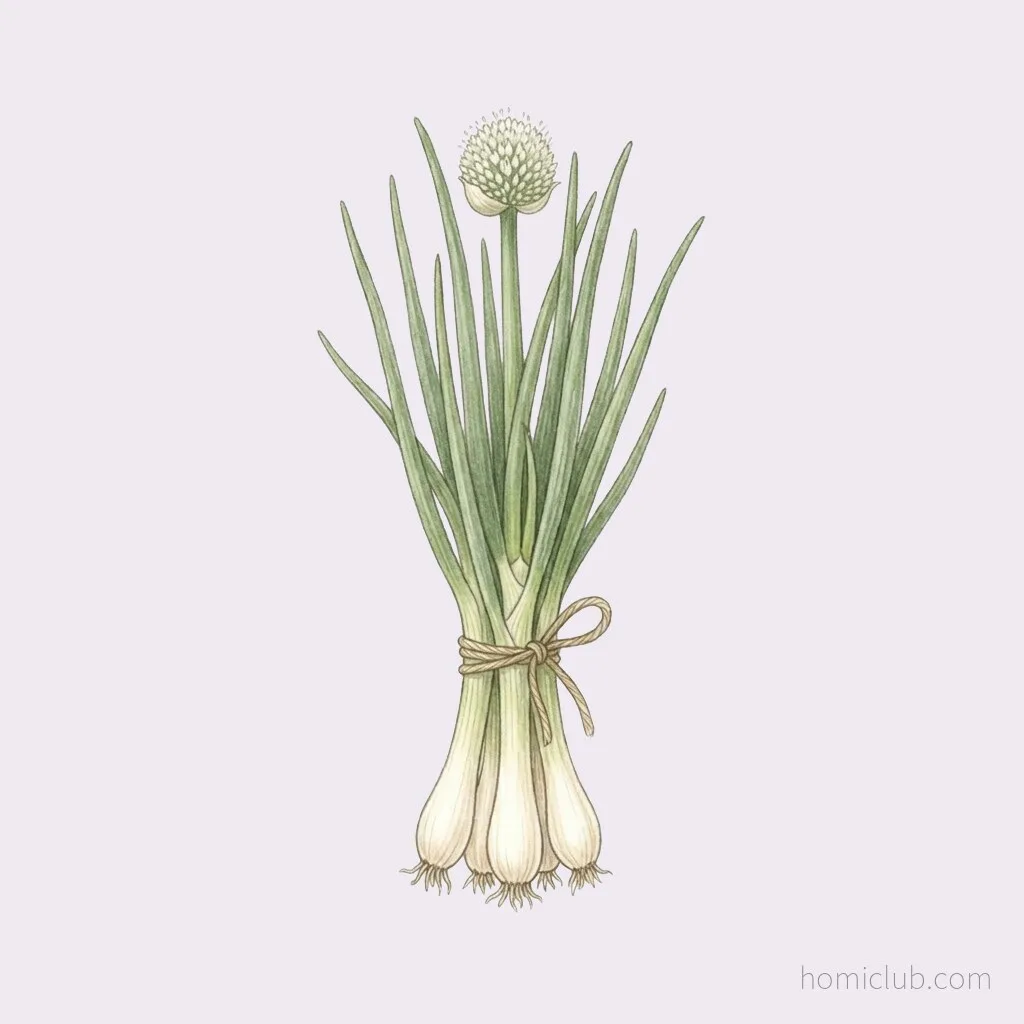 Related Crop · Welsh Onion (Daepa) →
Notes
Nature and flavor. In Korean traditional medicine, every food and herb is classified by its "nature" (warming, cooling, or neutral) and its "flavor" (pungent, sweet, sour, bitter, salty) — qualities believed to shape how the body responds to it. The Dongui Bogam (1613) describes the white bulb of the scallion, called chongbaek (蔥白), as pungent in flavor, cool to neutral in nature, and non-toxic.
Main uses. Scallion white was prized as a diaphoretic — a remedy that opens the pores, induces sweating, and disperses cold lodged in the surface of the body. Korean medicine attributes the chills, fever, and body aches of early-stage colds to "wind-cold" (punghan), an external pathogenic influence that invades through the skin; scallion white was a first-line treatment for this condition. The text also credits it with clearing throat blockages, restoring communication among the five viscera (the heart, liver, spleen, lungs, and kidneys, understood here as functional systems rather than mere organs), and neutralizing the toxicity of other medicines.
How it was used. The classic preparation is Chongbaek-san — scallion white decocted together with fresh ginger and drunk hot to drive out wind-cold at the first sign of a chill.
Modern perspective. The sulfur compounds responsible for the scallion's sharp aroma have drawn interest for possible antimicrobial and circulatory effects, but human clinical evidence remains limited.
Related Crop
Welsh Onion (Daepa) →
Readings are Homiclub’s own. Consult a professional for medical decisions. · 동의보감(자체 풀이)