탕액편 · Vegetables
黃瓜 오이 (황과)
 Related Crop · Cucumber →
Notes
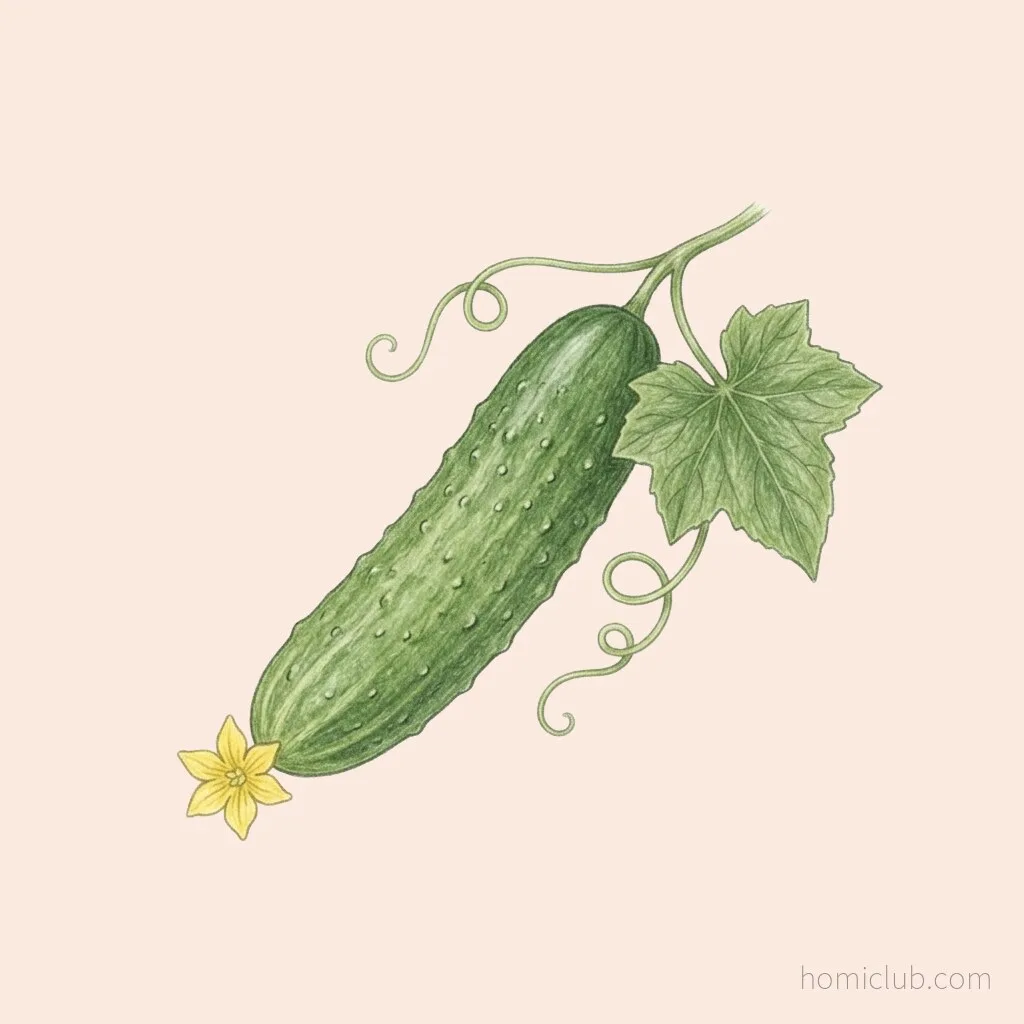
# Cucumber (黃瓜)
Nature and flavor: Cooling in nature, sweet in taste, with a slight bitterness concentrated near the stem end.
In traditional Korean medicine (TKM), every food and herb is classified by its "nature" (성질) — whether it warms or cools the body — and its "flavor" (맛), which signals how it acts internally. A cooling, sweet food gently clears heat and replenishes fluids without being harsh.
Meridians it enters: Stomach, Bladder, and Large Intestine.
"Meridian tropism" (귀경) describes which organ systems a substance preferentially acts on. Cucumber's affinity for these three explains why it both cools digestive heat and promotes urination.
Primary effects:
- Clears heat and quenches thirst (解熱止渴). A classic remedy for summer heat, dehydration, and the early signs of heat exhaustion. More than 95% water, with generous potassium to replace what sweat carries off.
- Promotes urination. Helps relieve mild edema, difficult urination, and supports recovery from urinary tract irritation.
- Topical use. The pressed juice soothes burns, boils, acne, and sunburn when applied to the skin.
- Aids digestion. The crisp, clean flavor stimulates appetite and balances heavy, oily meals.
How to use: Eat raw, juice it, or prepare it as one of the many Korean cucumber dishes — oi-sobagi (stuffed cucumber kimchi), oiji (brined pickled cucumber), seasoned salads, and chilled cucumber soup. For skin care, apply the juice or sliced flesh directly as a calming pack.
Cautions: Because cucumber is strongly cooling, people with a weak or "cold" stomach and those prone to loose stools should eat it in moderation. Large amounts are not advised in late pregnancy. Some people find raw cucumber irritating to the stomach — pairing it with vinegar or ginger, both warming, restores balance.
Related Crop
Cucumber →
Readings are Homiclub’s own. Consult a professional for medical decisions. · 동의보감(자체 풀이)