탕액편 · Vegetables
蘿葍 무 (나복)
 Related Crop · Korean Radish (Mu) →
Notes
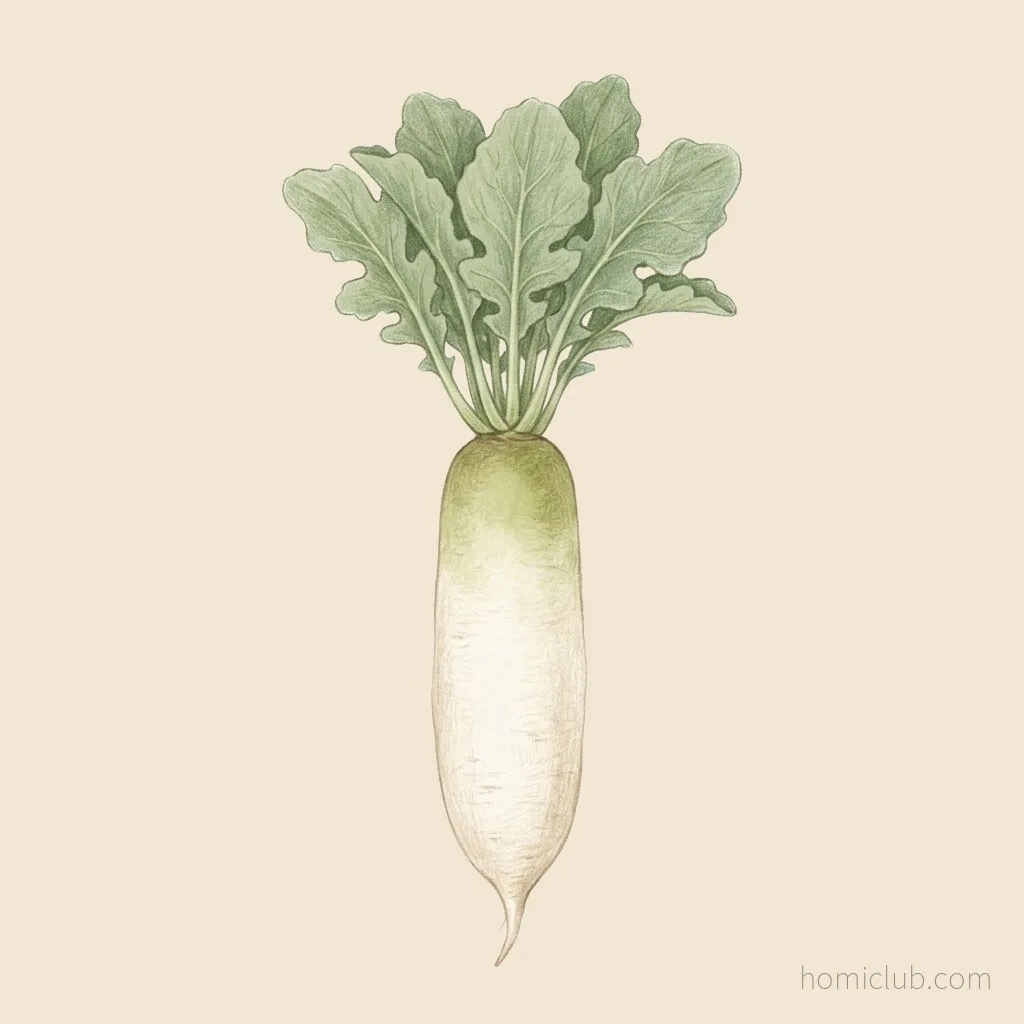
# Radish (무, 蘿葍 na-bok)
Nature and flavor. In Korean traditional medicine, every food and herb is classified by its "nature" (seongjil — its warming or cooling tendency in the body) and its "flavor" (mat — taste categories that predict how it acts). Radish is debated: classical sources describe it as warming, while others place it on the cooling side. Its flavor is both pungent and sweet. Cooking softens its cooling quality; eaten raw, it sits slightly cooler on the system.
Where it acts. Korean medicine maps each substance to the organs whose energy it enters — the meridian tropism (gwigyeong). Radish travels to the Lung (the respiratory system in this framework) and the Stomach (digestion). This is why it sits at the center of treatments for phlegm and food stagnation — undigested food that lingers and weighs down the middle.
Main effects.
- Aiding digestion (sosik). Radish helps break down heavy, oily meals and starchy foods such as rice cakes (tteok), dumplings, and wheat-flour dishes. This is the traditional reason Korean cooking pairs tteok and mandu with radish in some form.
- Descending qi (haqi). It relieves a bloated, distended abdomen, belching, and hiccups — symptoms understood as qi that has risen or stalled when it should move downward.
- Resolving phlegm (hwadam). It thins watery phlegm and eases cough. The seed in particular, naebokja (萊菔子), is a cornerstone of traditional respiratory formulas.
- Counteracting toxins. Fresh radish juice was used as an emergency remedy for adverse reactions to tofu, wheat-flour foods, fish, and alcohol.
- Preserving hair color and skin. The Dongui Bogam holds that eating radish daily slows premature graying and supports the complexion.
How it is used. Eaten raw, pressed for juice, or fermented in kimchi, dongchimi (a clear winter water-kimchi), and kkakdugi (cubed radish kimchi). Also cooked in radish soup, sun-dried as mumallaengi, prepared from the seeds as pills or powders, and eaten as fresh radish sprouts (musun).
Cautions. The Dongui Bogam explicitly warns against eating radish together with ginseng or rehmannia (jihwang), as it cancels their tonifying effect. Those with a weak, cold stomach who tend toward loose stools should avoid raw radish and fresh juice, taking it cooked instead.
Related Crop
Korean Radish (Mu) →
Readings are Homiclub’s own. Consult a professional for medical decisions. · 동의보감(자체 풀이)