탕액편 · Grains
胡麻 참깨 (호마)
 Related Crop · Sesame →
Notes
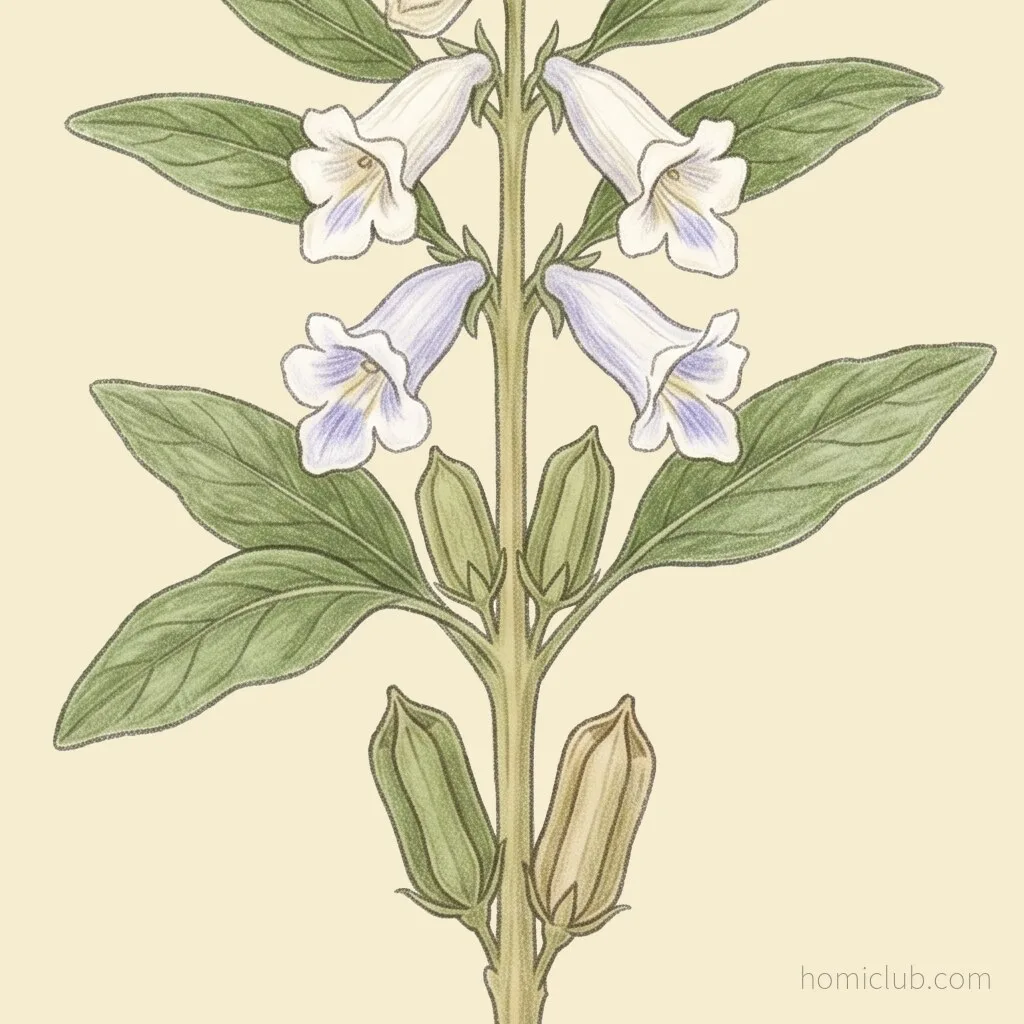
## Sesame (胡마, homa)
Nature and flavor. In Korean and Chinese medicine, every herb is classified by its nature (warming, cooling, or neutral) and its flavor (sweet, bitter, sour, salty, pungent), which together predict how it will act in the body. The Shennong Bencao Jing, the foundational Chinese materia medica, places sesame — both the pale and the black variety — in the highest grade of medicines, calling it sweet in flavor and neutral in nature. A neutral herb is considered safe for long-term use because it neither heats nor cools the system.
Organs it acts on. Korean medicine maps each herb to specific internal organ systems (the so-called meridian tropism, or gwigyeong). Sesame is said to nourish the "five viscera" — heart, liver, spleen, lungs, and kidneys — meaning it has a broad, restorative action across the whole body. Black sesame in particular is traditionally linked to the liver and kidneys, the organ pair that Korean medicine associates with vitality, reproduction, and the health of hair and bones.
Main effects. Classical sources credit sesame with replenishing depleted energy, filling out the flesh, and nourishing the marrow. For these reasons it was prescribed over long periods to people who were weak, convalescent, or simply aging, as a gentle tonic rather than a quick remedy. Black sesame carries an additional reputation for keeping the hair dark — a sign, in traditional terms, of well-nourished kidney essence.
How it was used. Because sesame was considered mild and safe, it was taken regularly as food-as-medicine: ground into powder, mixed with honey into pills, or simply eaten as part of the diet over months and years. The expectation was slow, cumulative benefit, not immediate effect.
A modern note. Sesame contains lignans — sesamin and sesamol — that are strong antioxidants. Human meta-analyses have reported modest reductions in total cholesterol, LDL, and systolic blood pressure with sesame intake, though results vary across studies. A balanced reading is that sesame is a useful supportive food rather than a standalone treatment.
Cautions. The classical texts treat sesame as safe for extended use, and no specific contraindications are recorded in this entry. Readers today should keep in mind that sesame is a common allergen and that any therapeutic use should fit alongside, not replace, modern medical care.
Related Crop
Sesame →
Readings are Homiclub’s own. Consult a professional for medical decisions. · 동의보감(자체 풀이)