탕액편 · Vegetables
蔓菁 순무 (만청)
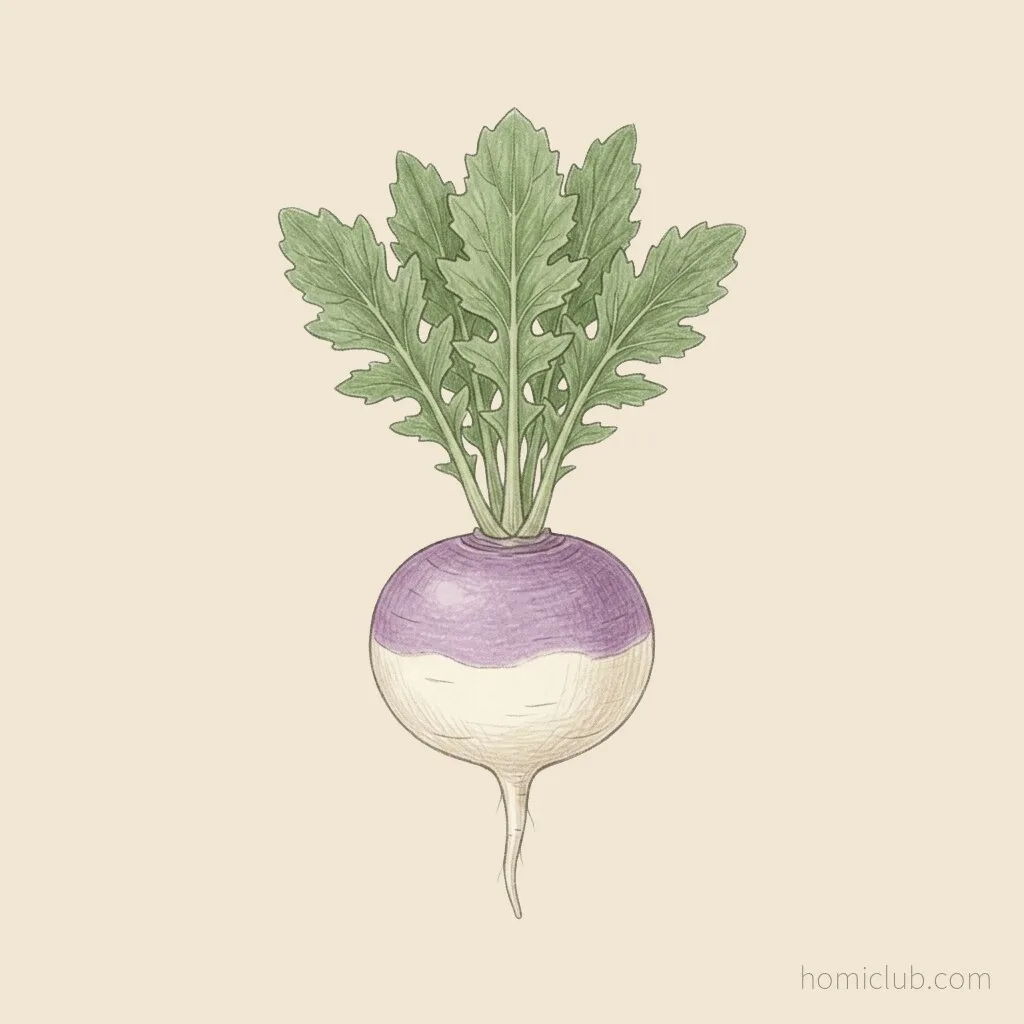 Related Crop · Turnip (Sunmu) →
Original, read line by line 東醫寶鑑 · 탕액편 권2
-
性溫, 味甘, 無毒.
성온, 미감, 무독.
Turnip is warm in nature, sweet in taste, and non-toxic. In traditional Korean medicine, a 'warm' property means it gently heats the body and promotes the flow of qi, making it a safe vegetable for almost anyone.
-
主利五藏, 消食下氣.
주리오장, 소식하기.
It benefits all five viscera, aids digestion, and brings rising qi downward. In practical terms, it helps when one feels sluggish digestion or bloating in the upper body.
-
療黃疸, 輕身益氣.
요황달, 경신익기.
It treats jaundice, makes the body feel lighter, and replenishes vital energy. Regular consumption is said to leave one feeling agile rather than heavy.
-
四時皆有, 春食苗, 夏食葉, 秋食莖, 冬食根.
사시개유, 춘식묘, 하식엽, 추식경, 동식근.
Turnip is available in all four seasons: sprouts in spring, leaves in summer, stems in autumn, and roots in winter. A single crop generously offers a different edible part each season.
-
亦可以備飢歲.
역가이비기세.
It also serves as a famine-relief crop, a reliable food source in lean years, reflecting old farmers' wisdom about food security.
-
菜中之最有益者.
채중지최유익자.
Among all vegetables, it is considered the most beneficial. Classical physicians ranked it at the very top of leafy and root crops.
-
根在地下, 經冬不枯, 至春復生.
근재지하, 경동불고, 지춘부생.
Its root stays underground through winter without withering and sprouts again in spring. Ancient writers saw this resilience as a vitality that could be passed on to those who eat it.
-
常食之, 令人肥健.
상식지, 영인비건.
Eaten regularly, it makes a person well-fed and strong. Here 'plump' does not mean obese but rather filling out a thin frame with healthy vigor.
-
諸菜之中, 有益無損, 最宜長服. 《本草》
제채지중, 유익무손, 최의장복. 《본초》
Among all vegetables, it brings benefit without harm, making it most suitable for long-term consumption. From the Bencao Gangmu.
-
子
자.
The following section concerns the seeds of the turnip (manjeongja).
-
性溫.
성온.
The seeds are also warm in nature, carrying the same body-warming quality as the root.
-
下氣明目.
하기명목.
It directs qi downward and brightens the eyes. The seeds have long been valued as a remedy for failing eyesight.
-
療黃疸, 利小便.
요황달, 이소변.
It treats jaundice and promotes urination, helping the body clear out dampness and waste.
-
蒸暴, 久服長生. 《本草》
증포, 구복장생. 《본초》
Steamed and sun-dried, then taken over a long period, it is said to prolong life. This reflects the traditional principle of carefully processed herbs taken consistently for longevity, as recorded in the Bencao Gangmu.
Related Crop
Turnip (Sunmu) →
Readings are Homiclub’s own. Consult a professional for medical decisions. · 동의보감(자체 풀이)