탕액편 · Vegetables
桔梗 도라지 (길경)
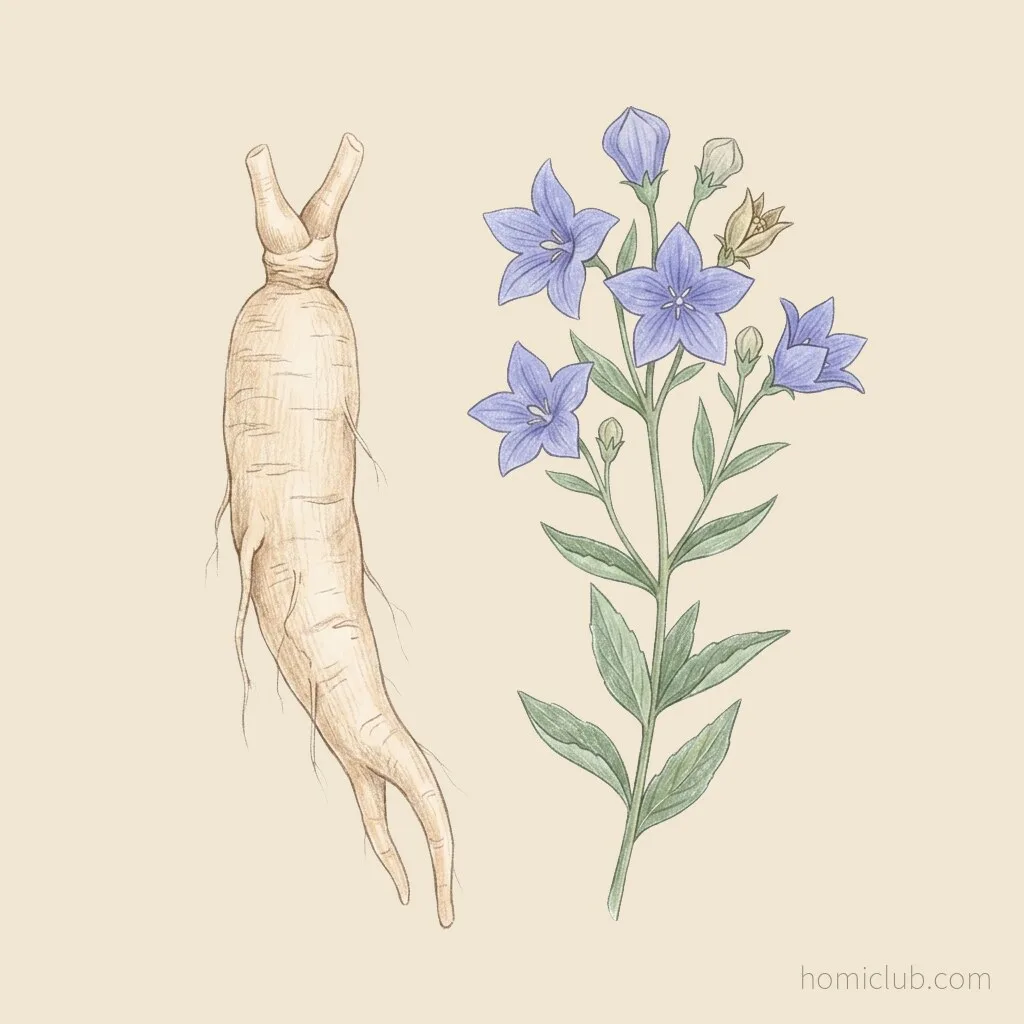 Related Crop · Balloon Flower Root (Doraji) →
Original, read line by line 東醫寶鑑 · 탕액편 권2
-
性微溫一云平, 味辛苦, 有小毒.
성미온일운평, 미신고, 유소독.
Its nature is slightly warm (some sources say neutral), the flavor is pungent and bitter, and it carries a mild toxicity. This is the basic pharmacological profile in traditional Korean medicine.
-
治肺氣喘促, 下一切氣, 療咽喉痛, 及胸脇諸痛, 下蠱毒.
치폐기천촉, 하일체기, 요인후통, 급흉협제통, 하고독.
It treats wheezing and shortness of breath caused by stagnant lung qi, descends all kinds of blocked qi, relieves sore throat and various pains in the chest and flanks, and dispels gu poison (parasitic toxin). This passage explains why platycodon has long been valued as a remedy for coughs and throat inflammation.
-
處處有之, 生山中.
처처유지, 생산중.
It grows everywhere, mainly in the mountains. In other words, it was a familiar herb close to daily life.
-
二月八月採根, 暴乾. 《本草》
이월팔월채근, 폭건. 《본초》
The roots are dug in the second and eighth lunar months and dried in the sun. These are the seasons when the medicinal potency is at its peak. From Bencao.
-
桔梗能載諸藥, 使不下沈, 升提氣血, 爲舟楫之劑.
길경능재제약, 사불하침, 승제기혈, 위주즙지제.
Platycodon carries other medicines upward and keeps them from sinking, lifting qi and blood like a boat with its oars. The metaphor describes its role as a guiding herb that delivers the effects of other ingredients to the lungs and upper body.
-
手太陰引經藥也. 《丹心》
수태음인경약야. 《단심》
It is a guiding herb that channels medicinal energy into the Hand Taiyin Lung meridian, accurately directing other herbs to the lung pathway. From Danxin.
-
今人作菜茹, 四時長食之物也. 《俗方》
금인작채여, 사시장식지물야. 《속방》
People today prepare it as a side dish and eat it throughout all four seasons. The note shows that platycodon served as both medicine and everyday food. From Sokbang.
Related Crop
Balloon Flower Root (Doraji) →
Readings are Homiclub’s own. Consult a professional for medical decisions. · 동의보감(자체 풀이)