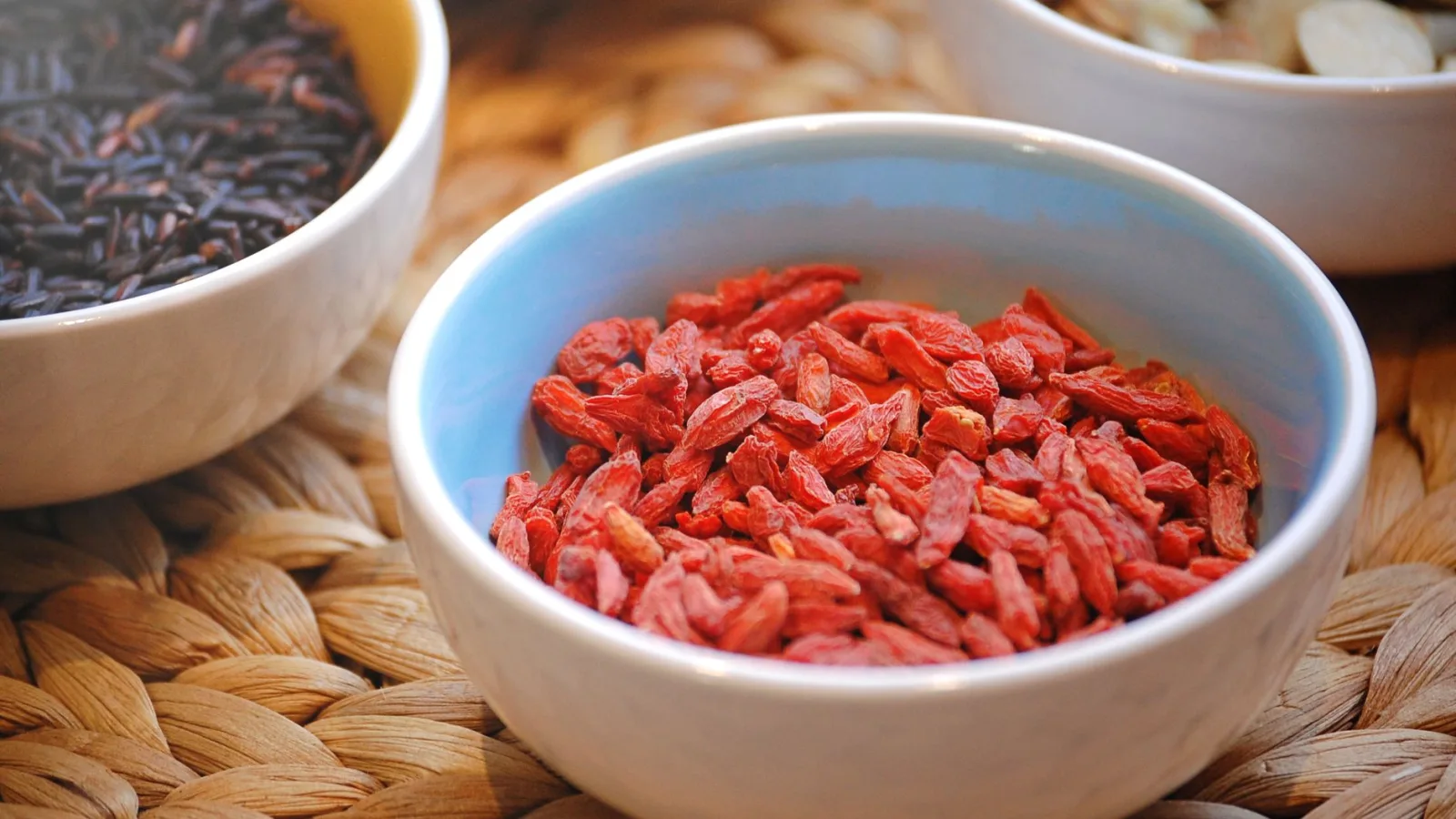
August is the month when red berries appear along every drooping branch. Goji is a deciduous shrub in the nightshade family, so once it settles in, it fruits year after year. You don't need a yard — a pot at least 30 cm (12 in) across will do. From August through October, pick a few at a time as they ripen. Chew a freshly picked berry on its own and you get a faint sweetness crossed with bitterness, and not much else. So how should you eat them?
Steeping with Jujube and Ginger
A common combination is dried goji steeped together with jujube (Korean red date) and ginger. The berry's mild sweetness layers under the deeper sweetness of the jujube, and the ginger tidies up the finish. Left in boiling water too long, the liquid turns cloudy, so try steeping at around 80°C (176°F) for about 10 minutes. On a day when you've only gathered a few berries, halve the jujubes before adding them — the sweetness comes out faster.
Cooking Them in Oil
The reddish orange of goji comes from carotenoid pigments. There's research analyzing the carotenoids in dried goji, and the finding is that zeaxanthin dipalmitate accounts for most of them. Those pigments are fat-soluble, so they release their color far better in cooking that uses oil than in a plain water soak. Toss a handful into fried rice, or sauté them briefly in an oiled pan and spoon them over porridge. One caveat: analyses like these generally use the fruit of the Ningxia wolfberry (Lycium barbarum). The traditional goji commonly grown in Korea is Lycium chinense — a different species. There are also records showing that how and at what temperature the berries are dried changes how much of the pigment survives. This concerns composition only, and has nothing to do with preventing or treating disease.
Blanch the Spring Shoots and Dress Them
The young leaves that push out in March and April in the Northern Hemisphere are called gugisun, goji shoots, and they're eaten as a namul side dish. Blanch them briefly, then dress them with doenjang (fermented soybean paste) or sesame oil. They carry some bitterness, so discard the blanching water and give them one rinse in cold water. If the plant is one you're counting on for fruit, take only a little from the branch tips and leave the rest. Strip too many leaves and that year's berry crop shrinks.
What Steeps Out, and What the Old Books Say
Steep the berries in water long enough and the liquid thickens slightly. That's because a mucilaginous component leaches out. Polysaccharides of this family are known as LBP (Lycium barbarum polysaccharide). Studies have isolated these polysaccharides from Ningxia wolfberry and measured antioxidant markers at the test-tube and animal stage. These are not results in humans. Nor do they mean the findings carry over unchanged to the traditional Korean goji, a different species, or to the berries on your own plant. Beyond that, betaine is commonly quantified as a marker compound, and the fruit contains micronutrients such as vitamin C and iron.
The Donguibogam, the seventeenth-century Korean medical compendium, lists goji (枸杞子) in its Wood section. Its nature is described in some places as cold and in others as neutral. Its taste is called bitter by some accounts and sweet by others, and it is recorded as non-toxic. The same entry names the stem gugi (枸杞) and the root jigol (地骨). Stem bark, root bark, and the red fruit were each used differently — one plant splitting into three separate uses. The text even distinguishes their natures: the stem bark cold, the root bark intensely cold, the fruit slightly cold. This is a record from an old medical text and differs from the judgments of modern medicine.
What to Do Today
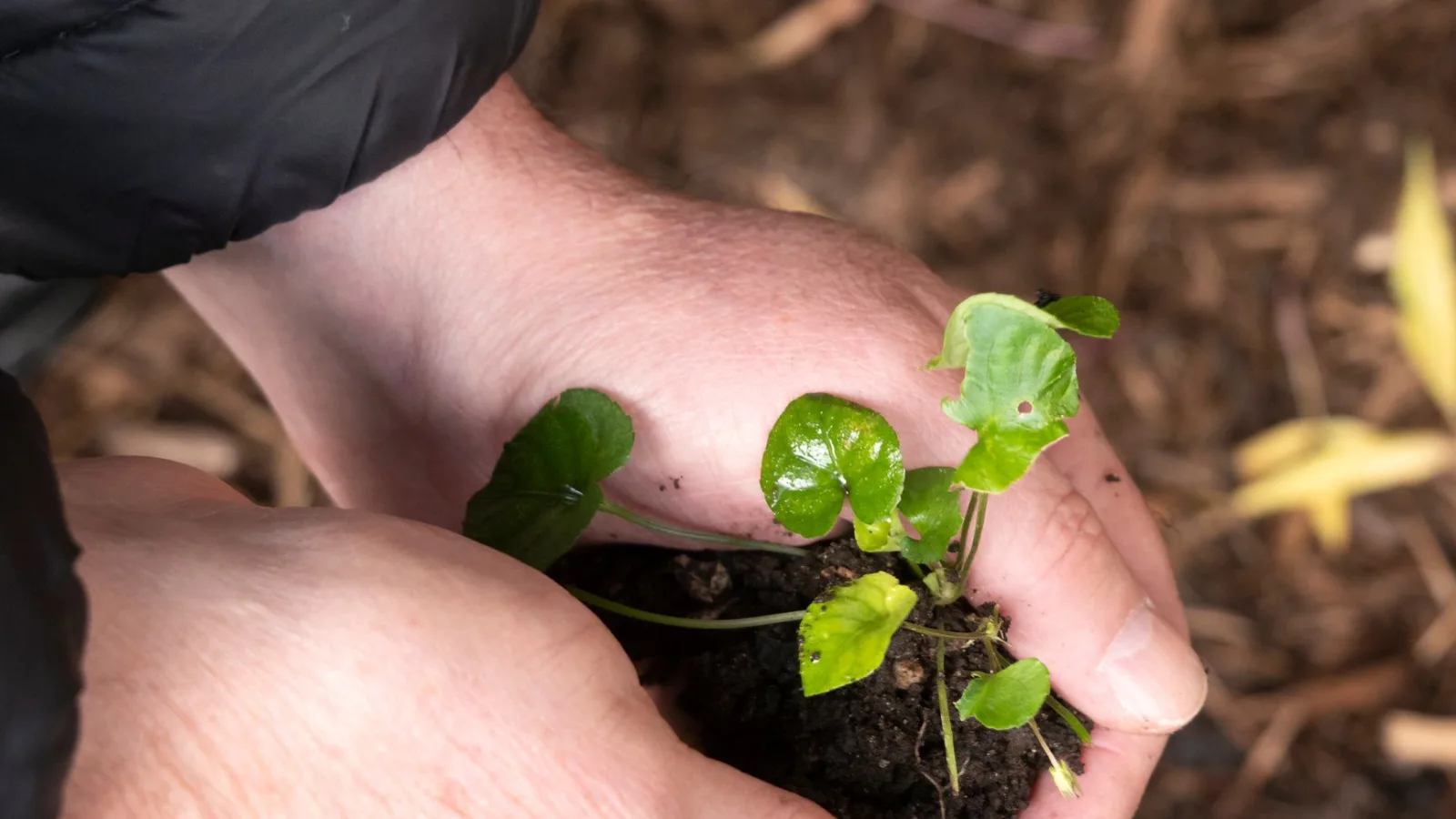
If today's harvest amounts to a single handful, dry it in the shade, then steep it with a few jujubes in 80°C (176°F) water. If you don't have a plant yet, set out a seedling in November or the following March or April in the Northern Hemisphere. The ideal growing range is 20–25°C (68–77°F), and the shrub will grow anywhere between 0 and 35°C (32–95°F). Being a deciduous shrub that shrugs off winter cold, it also handles summer heat and dry ground well. Standing water is another matter — the roots rot first — so start by choosing a spot that drains. China is the main production area, the plant is widely grown in Korea, and it grows wild in Japan.
Sources: Donguibogam, Wood section, goji (枸杞子) · Rural Development Administration, Nongsaro · National Institute of Horticultural and Herbal Science, medicinal crops