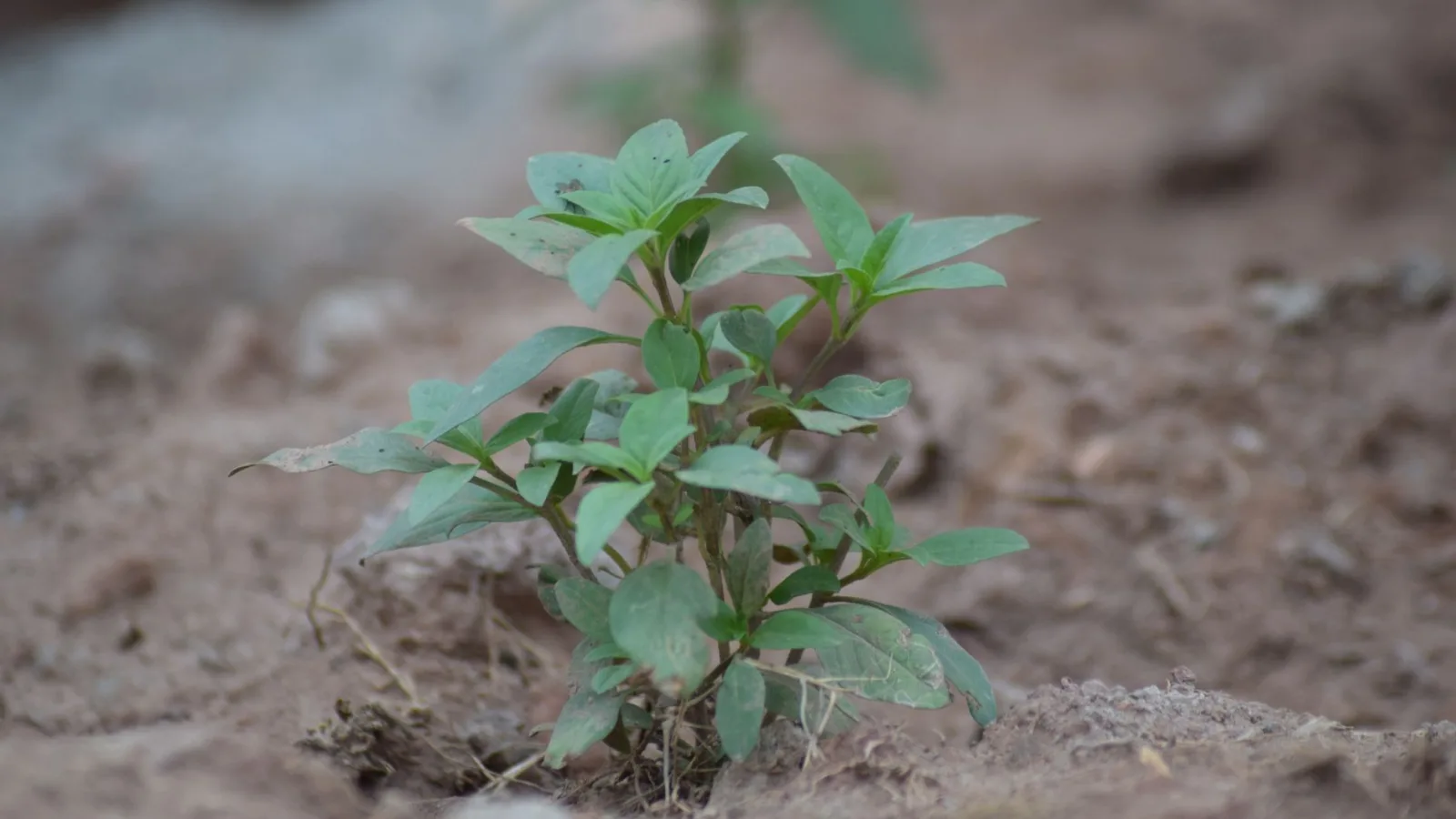
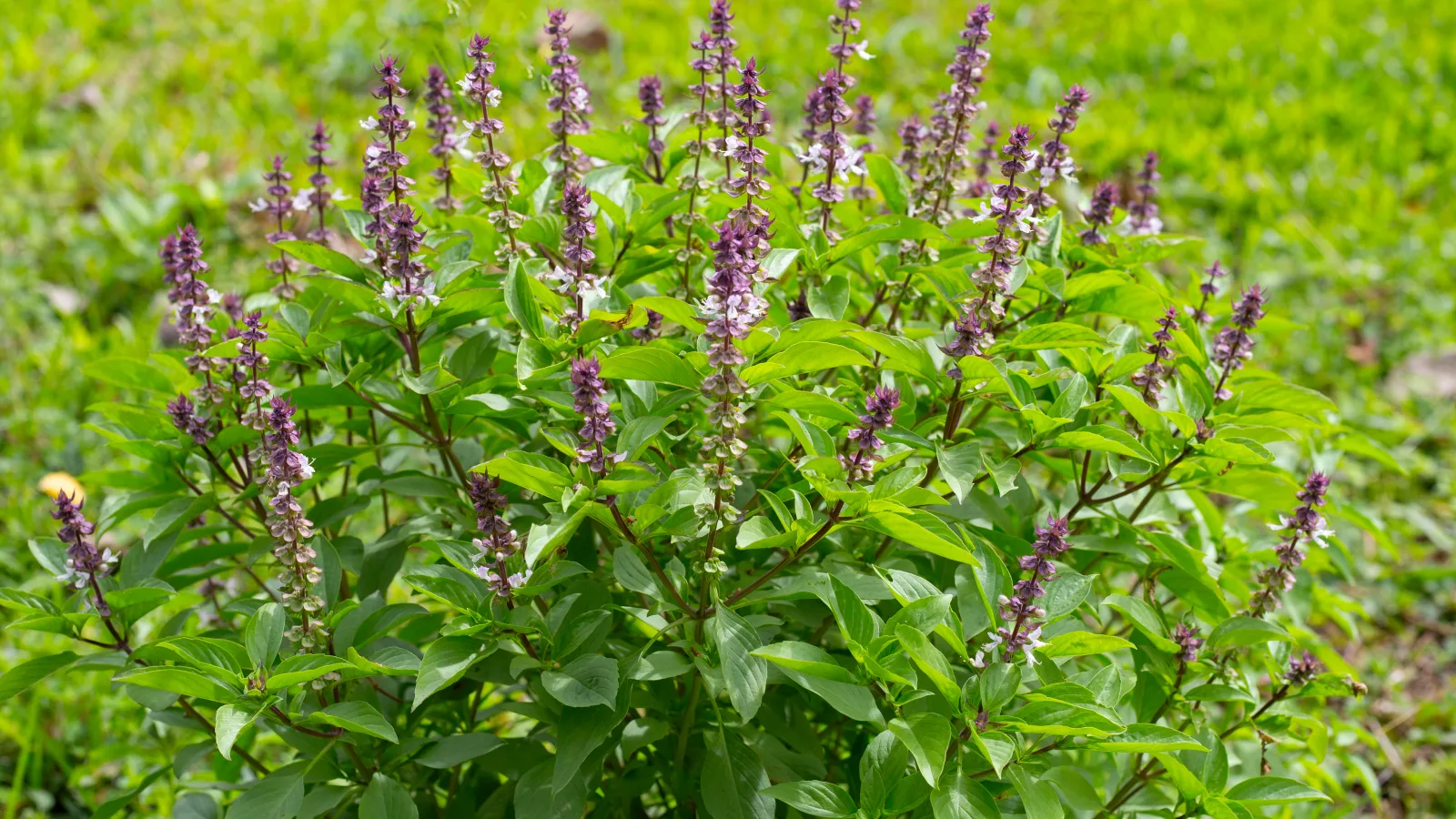
Rub a holy basil leaf from the pot on your balcony between your fingers and something close to clove rises off it. Same seed, same soil — and yet the leaves you pick in midsummer can smell different from the ones you pick after the weather turns cool. It isn't your imagination. The temperatures the plant lived through in the days before harvest change what's inside the leaves.
A cool 18°C: the leaves stockpile antioxidants
In one study, red holy basil — tulsi, as it's known in India — was grown indoors for 12 days under identical conditions, with only the temperature changed. The plants held at 18°C put up long, leggy stems, and their leaves gained phenolics, flavonoids, and anthocyanins, the red pigments. Their antioxidant capacity — how well they mop up free radicals — climbed right along with them. Total phenolic content peaked on day 9 of the cooler treatment. Leaf and stem weight, on the other hand, barely budged. When things turn cool, the plant answers not by growing more but by banking defensive compounds in its leaves.
Around 25°C: the leaves grow the most
Plants grown at 25°C put on the most weight above ground. Aroma compounds kept building, too: linalool, the source of holy basil's sweet note, and eugenol, the clove-scented one, both rose steadily across all 12 days. If you want a generous harvest and that familiar fragrance along with it, this is the easy range to aim for. In spring and early fall, most balconies sit right about here.
At 32°C, the aroma profile changes
At 32°C the first few days looked excellent: photosynthesis ran high, the leaf pores opened wide, and the plants moved plenty of water out through their leaves. Readings for leaf greenness and overall vigor were strong early on as well. But as the days wore on, the aroma profile shifted. Toward the end of the run, beta-caryophyllene and alpha-humulene increased — the compounds behind the heavy, resinous smell of black pepper and hops. If the leaves you pick on a hot day come across as a little sharp and weighty, this may be why.
So when should you cut?
Pick your timing based on what you're after.
- For antioxidants, wait for early fall, when nights fall to around 18°C, and give the plant a week or so before you harvest. It overlaps with the stretch when the leaves deepen toward red.
- For cooking aroma, harvest in summer, once the heat has fully settled in.
- For the most leaves, hold daytime temperatures near 25°C. On midsummer afternoons, move the pot into partial shade.
Harvest in the morning, once the dew has dried, and cut just above a node with scissors — that's what brings the side shoots back. Steep the dried leaves in hot water for 3–4 minutes and you have holy basil tea, the way it has long been drunk in India, and reports continue to link the antioxidants in the leaves to a lighter oxidative load on the body. That said, there isn't enough evidence to say it treats any particular condition. Enjoy it as a daily cup rather than a stand-in for medicine.
Today, shift your pot a hand's width over to a cooler spot, and check back in a week to see how the color and the scent have changed.
Source — Scientific Reports, a study on preharvest temperature treatment in red holy basil