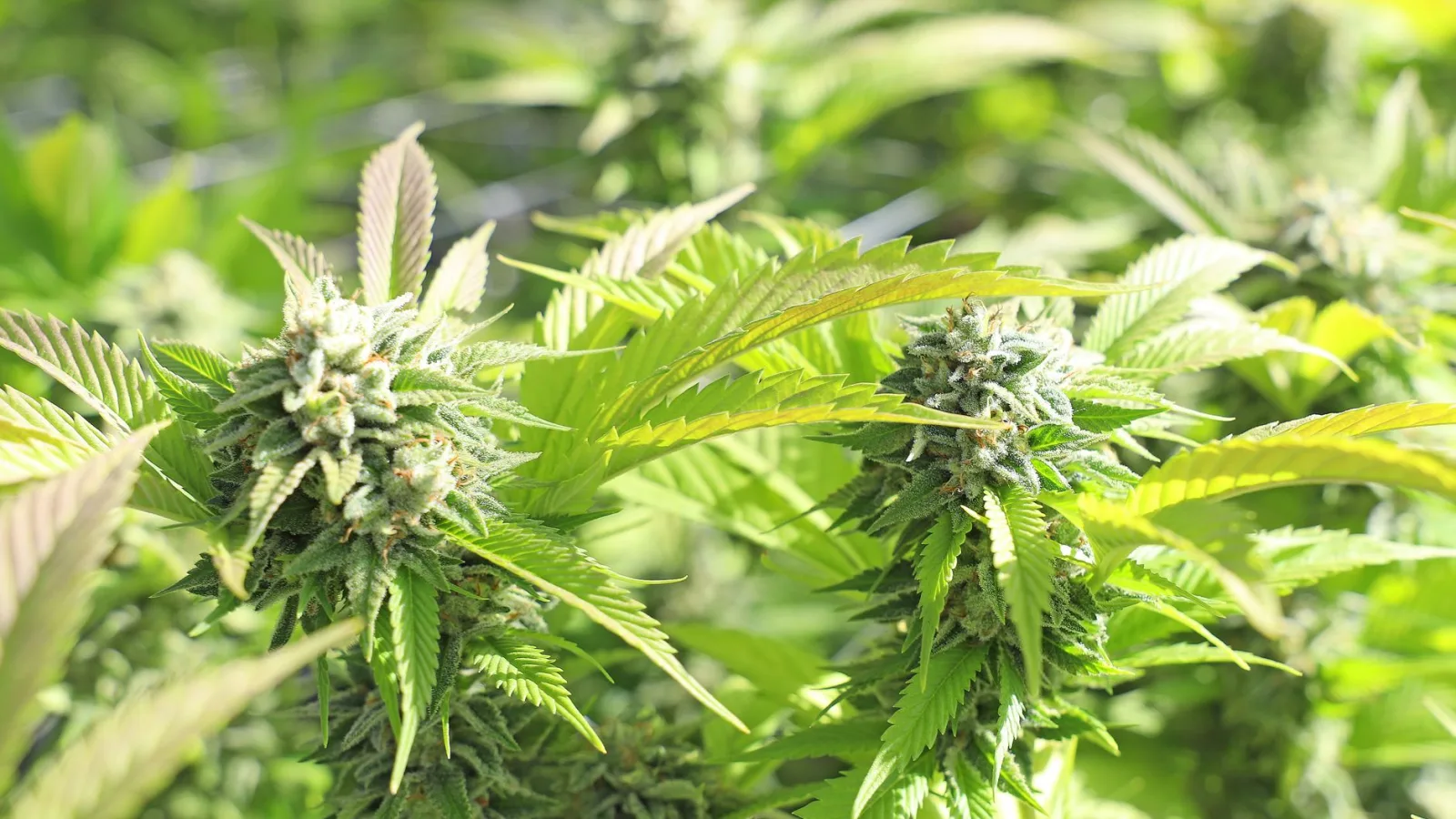
In the September garden, the harvest and the cleanup run into each other. The perilla (deulkkae, a mint-family herb Koreans grow for its leaves and nutty seeds) is still ripening, and you've already picked the rows that come out before the first frost. If you go grocery shopping around now, you'll find small bags of tiny pale-green kernels in the nut aisle. They're sold as hemp seeds or hemp hearts, and they're hemp seeds with the hard outer shell removed. It's a crop you'll never see in the garden that still makes it to the table: hemp.
Not a Garden Crop
In Korea, you need a permit to grow hemp. The country's Narcotics Control Act regulates cannabis and its resin, but it exempts the seeds, the roots, the mature stalks, and products made from them. That exemption is why shelled seeds can be sold as food. Rules vary from country to country, so check the law where you live first.
If you look only at what it needs to grow, hemp is a summer annual. It germinates at 8–10°C (46–50°F), grows straight and tall at 20–25°C (68–77°F), and dies at the first frost. It does best at 18–27°C (64–81°F). Hemp is a short-day plant that flowers in late summer as the days shorten. Because of that, the same variety can flower at very different times and grow to very different heights depending on latitude. In the Northern Hemisphere, seed sown in April or May is ready to harvest in August or September. China and France grow the most, and Canada and the United States are also major producers. Korea has grown hemp for a long time. People there once wove its fibers into a cloth called sambe.
What's Inside the Seed
The storage protein in hemp seed is edestin. The seed stores it up to use when it sprouts, and you get it when you eat the shelled kernels. Most of the fat is unsaturated. When the oil's fatty acids are analyzed, linoleic acid comes out on top, and alpha-linolenic acid and gamma-linolenic acid (GLA) are there too. GLA is one of the omega-6 fatty acids. The seeds also contain magnesium.
Keep in mind that this analysis only measures what the seed is made of. It doesn't mean hemp seeds prevent or cure disease. And because they're so high in unsaturated fat, they also go rancid quickly. When you actually eat them, that matters more than the nutrition label. Oil that's turning loses its nutty flavor first.
Hemp Seed in an Old Medical Classic
The Donguibogam, Korea's great medical encyclopedia from 1613, lists hemp seed in its grains section under the name maja (麻子). It records the Korean name in the old spelling, samssi. The entry says the seed is neutral in nature, sweet in taste, and not toxic, though some sources call it cold. Seed from hemp sown in early spring was called chunmaja and was thought to be small and toxic. Seed from hemp sown in late spring was called chumaja and was considered better for medicine. The entry also warns against eating too much. This is a historical record and doesn't reflect how we'd judge these things today.
The same entry also explains how to prepare the seeds. The shells were very hard to remove, so people soaked the seeds in water for two or three days until the shells split. Then they dried them in the sun, rubbed them on a new roof tile, and picked out the kernels. Machines now do that work for the kernels you buy in bags. But the basic fact hasn't changed in several hundred years: you have to shell hemp seeds before you can eat them.
How to Eat Them: Raw, Not Toasted
Don't toast shelled hemp seeds. Just sprinkle them on as they are. They taste nutty, a bit like pine nuts, and they're soft and easy to chew.
- Sprinkle a spoonful or so over yogurt or a salad. They're best in dishes you don't heat.
- Blend them into misugaru (a Korean roasted multigrain drink) or a smoothie. You'll get a nutty flavor without any bits to chew. Ground seeds go rancid quickly, so grind only what you need each time.
- Hemp seed oil has a low smoke point, so don't cook with it. Try it in salad dressings or muchim (Korean seasoned vegetable side dishes). Once you open the bottle, keep it in the fridge and use it within a few months.
The same goes for an opened bag of kernels. Don't leave it at room temperature. Put it in the fridge. And since the old medical text warned against eating too much, a spoonful or so a day is plenty.
Try sprinkling a spoonful over your yogurt tonight. You may not be able to plant hemp in your garden, but you can still eat its seeds this way. And don't forget to put the rest of the bag in the fridge.
Sources: Donguibogam, Grains section, entry on maja (麻子) · Korea's Narcotics Control Act