
- Type
- Tubers & Storage Roots
- Difficulty
- Hard
- Season
- Spring
- Sowing
- Seed tuber
Chinese Yam (Ma / Sanyak)
Dioscorea polystachya
Mucilage and starch, in a tuber that turns sticky when grated
Chinese yam appears in old medical texts under the names sanyak and seoyeo, and the Shennong Bencao Jing placed it in the highest of its three grades. Those are old records; what is established today stops at composition, a tuber high in starch that releases a sticky mucilage when grated. It is grated raw into juice or mixed into rice as ma-bap, or simply roasted. Peeling it bare-handed can leave the hands itching, because of the calcium oxalate crystals in the mucilage, so wear gloves and rinse rather than rub if it makes contact. Some people find their mouth itches with the raw grated root, so start with a small amount. Seed tubers go in during April and the harvest comes in October and November.
Year-Round Calendar
- 1
- 2
- 3
- 4
- 5
- 6
- 7
- 8
- 9
- 10
- 11
- 12
- 4
- 10
- 11
Where It Grows
- Origin China is both the crop's place of origin and the world's largest producer. The best-known source is the "Huai shanyao" grown around Jiaozuo in Henan, and it is also widely cultivated in Shandong and Hebei.
- Main producer Known in Japan as nagaimo, it is grown above all in southern Aomori, which accounts for more than 40% of the country's production. Hokkaido and Nagano come next.
-
Major producer
Andong and Yeongju in North Gyeongsang are the main producing areas. Harvest October, November
- 10
- 11
Native to East Asia, the crop branched off in China and spread to Korea and Japan. A note of caution applies to the FAO's yam statistics. Most of that figure covers different species grown in West Africa (such as Dioscorea rotundata), so it does not map one-to-one onto Chinese yam production — which is why countries such as Nigeria and Ghana are not listed among the producing regions here.
- Optimum
- 20~28℃
- Range
- 10~35℃
- Hardiness
- Hardy
The vines dry up as soon as frost hits them, but the underground tubers overwinter (survive the winter in place) at a depth where the ground does not freeze. The roots grow thick where summers are hot and rainfall is even, and they rot in ground where water collects.
In Korea Nationwide
It can be grown anywhere in the country given deep, well-drained sandy loam, and the known commercial growing areas are Andong and Yeongju in North Gyeongsang and Jinju in South Gyeongsang.
How to grow
- Light
- Somewhere sunny
- Soil and depth
- 50cm deep or more and loose. Some people bury a pipe or a long trough on its side
- Spacing
- 30cm
- Watering
- Moderate
- Feeding
- Generous base dressing
- Harvest
- Lift once frost has dried the vine
What makes the difference. The root is long and snaps easily. Bury a pipe at an angle and grow it inside — lifting becomes far simpler
Why this one is harder. The root is deep and brittle, which makes lifting genuinely difficult
This page describes how a crop is grown and used. It does not claim health effects for any food, nor is it intended to prevent or treat disease. Component and study notes are references only and do not mean the same result occurs in people. Consult a medical professional about health concerns.
Health Benefits
What the old record says. Old medical texts handled this root under the names sanyak and seoyeo, and the Shennong Bencao Jing placed it in the highest of its three grades. These are records from old texts, not modern medical judgements, and a long life in the record is not by itself evidence for today.
What today's evidence shows. What is established stops at composition: the tuber is high in starch and releases a sticky mucilage when grated. Reports on diosgenin come mostly from cell and animal work, or from the isolated compound, and cannot be carried over to the root as a food. Human studies are scarce.
Nutrition
- Mucilage (The sticky slime released when the tuber is grated) — Often called mucin, though it is not the same substance as animal mucin
- Starch (The main constituent of the tuber) — A carbohydrate that softens with cooking
- Amylase (An enzyme present in the tuber) — An enzyme that breaks starch down
- Diosgenin (A steroidal saponin reported in Dioscorea roots) — A compound handled in laboratory research
- Calcium oxalate raphides (Needle-shaped crystals mixed into the mucilage) — Cause itching when the root is handled bare-handed
Mucilage The sticky viscosity that appears when Chinese yam is grated comes from a mucilage of polysaccharides and glycoproteins. It is commonly called mucin, but it is not the same substance as the mucin of animal membranes. Heating thins it, which is why the root is often grated raw.
Starch and amylase Chinese yam is a starch-rich tuber and also contains amylase, the enzyme that breaks starch down. That composition is the extent of what is established.
Diosgenin A steroidal saponin reported in Dioscorea roots and a frequent subject of research. The reports, however, come mostly from cell and animal work or from the isolated compound, so they do not describe the root as it reaches the table.
Calcium oxalate raphides (handling) The mucilage of the tuber carries needle-shaped calcium oxalate crystals. Peeling it bare-handed can leave the skin itching or stinging, so wear gloves, and if it makes contact rinse under running water rather than rubbing. Some people find their mouth itches with the raw grated root, so it is worth starting with a small amount.
Pairings
○ Milk or honey (yam juice) — Grating raw yam and stirring it into milk or honey softens its stickiness, making a nourishing morning drink that goes down easily.
○ Rice (ma-bap) — Diced yam cooked into rice makes a light, nourishing meal.
○ Tuna or eel — In the Japanese style, grated yam served alongside tuna sashimi or grilled eel aids digestion and adds texture.
Varieties
- Jangma (long-tuber type) (Tuber) — Long, deep tubers; the most widely planted type, but the bed must be dug deep and they snap easily.
- Danma (short-tuber type) (Tuber) — Short, thick tubers lift easily from a shallow bed, which makes this the usual home-garden choice.
- Dunggeunma (round-tuber type) (Tuber) — Tubers swell into a ball, so digging is simple, and it is increased from cut pieces like potatoes.
Source: Rural Development Administration (Nongsaro) · Shennong Bencao Jing (Divine Farmer's Classic of Materia Medica)
Stories about Chinese Yam (Ma / Sanyak)

The Village That Mapped What Its River Gave
In South Africa's Kat River catchment, 54 residents mapped what their river gives them and traced how those gifts have dwindled since around 2000. Their story shows how a gardener's everyday notes can become a valuable environmental record.
Chinese Yam: What the *Donguibogam* Saw in It
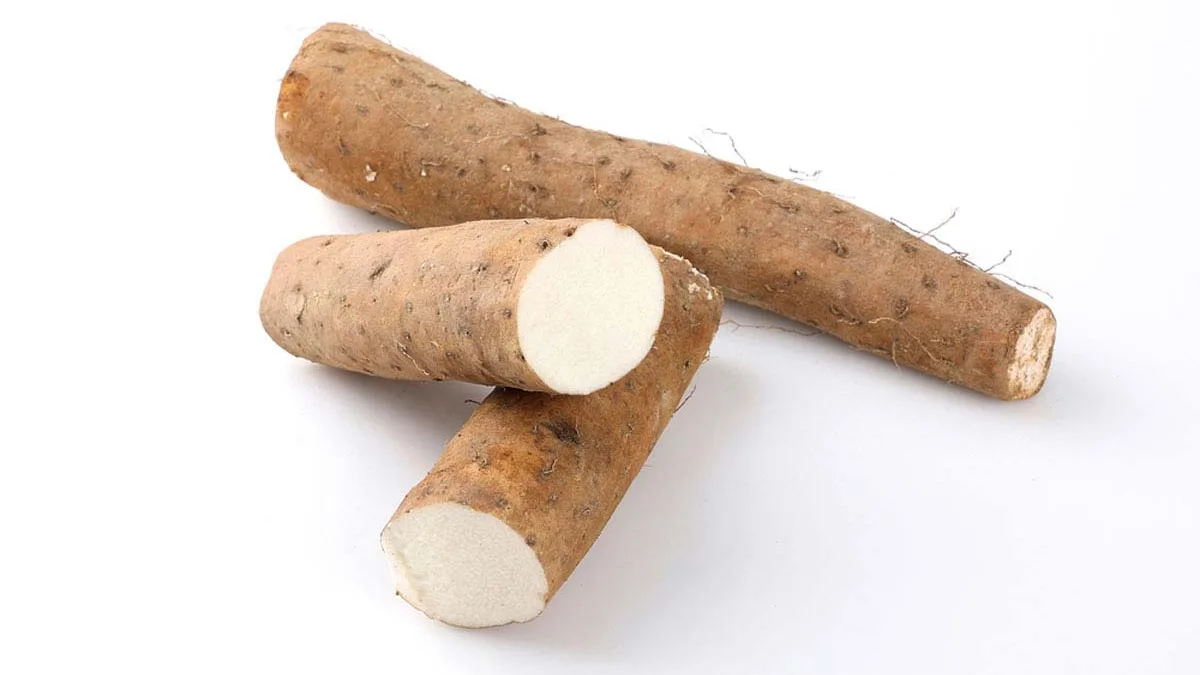
A humble garden root that classical Korean medicine once prized as a top-grade tonic, the Chinese yam was valued not for a quick cure but as an everyday food to be eaten steadily. Here's how the old herbals saw it, how modern nutrition compares, and how to bring it from your garden to your table.