
- Type
- Roots & Stems
- Difficulty
- Easy
- Season
- Spring·Fall
- Sowing
- From seed
Beet
Beta vulgaris
Betalain pigment and nitrate — a root that is red all the way through
Beet is grown for its red root, and that red comes from a pigment called betalain. Betaine, often introduced as the red pigment, is in fact colorless and has nothing to do with the color. Beet carries a lot of nitrate for a vegetable, along with dietary fiber, folate and potassium. Juice it, shave it thin over a salad, or roast it to deepen the sweetness. The color is strong enough to lend a dish a naturally vivid red. Sow seeds directly in spring (March to April) or fall (July to August).
Year-Round Calendar
- 1
- 2
- 3
- 4
- 5
- 6
- 7
- 8
- 9
- 10
- 11
- 12
- 4
- 8
- 6
- 10
Where It Grows
- Main producer It grows — and eats — more red beet than any other country. Production centers on the black-earth belt, including Krasnodar, Belgorod, and Voronezh.
- Major producer Wisconsin, New York, and Oregon grow large volumes for canning and juice processing.
- Major producer The Hauts-de-France area in the north produces large quantities of beets sold ready-cooked.
- Major producer A winter storage vegetable of the barszcz (borscht) culture, it is planted over a wide field area.
- Major producer It is grown as an autumn and winter vegetable under the name Rote Bete.
The crop originates from the wild sea beet (Beta vulgaris subsp. maritima) of the Mediterranean and Europe's Atlantic coast; since it cannot be pinned to a single country, no origin row is given. The form eaten as a thick red root was developed in Europe and became a fixture of winter tables in Eastern Europe and Russia. A caution — the FAO has no separate entry for red beet, and sugar beet, which looms large in the statistics, is a different crop of the same species, so production rankings must not be mixed together. Chard, grown for its leaves, and fodder beet also belong to the same species.
- Optimum
- 15~21℃
- Range
- 5~30℃
- Hardiness
- Half-hardy
Beets form fine, well-shaped roots in a cool climate. The plants tolerate light frost, but young seedlings exposed to prolonged cold will bolt — send up flower stalks — that same year. When heat above 25℃ persists, white rings appear in the roots and the flesh turns coarse.
In Korea Nationwide
A field crop sown twice a year, in spring and autumn, it has no standout main growing region. Summer heat coarsens the roots, so midsummer supply comes from the highland (cool upland farming) areas of Gangwon Province.
How to grow
- Light
- Somewhere sunny
- Soil and depth
- 25cm deep
- Spacing
- 15cm
- Watering
- Steady
- Feeding
- Base dressing plus one feed
- Harvest
- At 5 to 7cm across; bigger is tough. The young leaves are worth eating too
What makes the difference. One beet seed is a cluster and gives several seedlings. Thin to one without fail
This page describes how a crop is grown and used. It does not claim health effects for any food, nor is it intended to prevent or treat disease. Component and study notes are references only and do not mean the same result occurs in people. Consult a medical professional about health concerns.
Health Benefits
The path nitrate takes in the body. Beet carries nitrate in amounts that are high for a vegetable, and the path it takes after being eaten — converted through nitrite in the mouth and stomach into nitric oxide — is established. The composition and that pathway are as far as the plain statement goes.
The research was done on concentrated juice supplements. Studies on blood pressure and exercise performance were mostly supplementation trials feeding a measured dose of concentrated beet juice over a set period, which is a different set of conditions from eating beet as a side dish or in a salad. Those results cannot be carried over to the beet on the table.
Red urine (beeturia). Urine or stool can look red after a meal of beet. It is understood to happen when the betalain pigment passes through undegraded rather than being broken down, and it appears in some people and not others.
What has been confirmed in people. Studies looking at people eating beet as a food are scarce. What has been confirmed in modern terms goes only as far as its nutrient composition, and it has nothing to do with preventing or treating disease.
Nutrition
- Nitrate (High for a vegetable) — A water-soluble inorganic nitrogen compound
- Betalain (Red pigment) — The pigment that gives beet its red color
- Folate and iron (Present) — A water-soluble B vitamin and a mineral
Betalains Betalains are the pigments behind the color of beet, dividing into the red betacyanins and the yellow betaxanthins. They are a class of compounds whose antioxidant activity is frequently taken up in laboratory research, and they are also used industrially as a natural food coloring (E162).
Nitrate (NO₃⁻) Beet sits among the vegetables that carry a lot of nitrate. After it is eaten, the nitrate is converted through nitrite in the mouth and stomach into nitric oxide (NO), and that conversion is the single most studied aspect of the crop. Beet juice and beet purée, however, are not given to infants under six months.
Dietary fiber It contains about 2.8 g of dietary fiber per 100 g, above the average among vegetables. Both soluble and insoluble fiber are present in the mix.
Folate It contains about 110 μg of folate per 100 g. Folate is a water-soluble vitamin classified as necessary for cell and blood formation and for the normal development of the fetal neural tube.
Manganese, potassium, iron & vitamin C Minerals such as manganese, potassium and iron sit alongside vitamin C. Potassium is classified as necessary for the body's water and electrolyte balance, iron for oxygen transport and blood formation, and manganese for protecting cells from reactive oxygen.
Pairings
○ Apple and Carrot — ABC juice — apple, beet, and carrot blended together — is a classic detox drink. All three are rich in antioxidants, and their sweet, tart, and mellow flavors blend naturally into something easy to drink. Carrot
○ Yogurt, Feta, and Goat Cheese — A salad of roasted beets with yogurt, feta, and goat cheese is a classic combination that balances sweet and salty. The added probiotics and protein round out the nutrition, while the vivid betalain color leaves a striking visual impression.
○ Walnuts and Pine Nuts — When the unsaturated fats and polyphenols of nuts like walnuts and pine nuts meet betalains, an antioxidant synergy is expected. The toasty flavor of the nuts softens the earthy note of beets and brings the flavors into balance. Korean Pine Nut · Walnut
○ Lemon and Balsamic — The acidity of lemon and balsamic stabilizes betalains, slowing the browning of the color while brightening the flavor. Adding a touch of acid to a beet salad is almost a given.
○ Sour Cream and Dill — In Eastern European borscht, the classic approach is to top the soup with a spoonful of sour cream and some dill. The tang of the fermented dairy and the aroma of the dill gently wrap around the earthy note of the beet, creating a deep, layered flavor.
○ Olive Oil — The fat in olive oil enhances the absorption of fat-soluble carotenoids such as beta-carotene. Coating beets in olive oil before roasting deepens their flavor and offers a nutritional advantage as well.
○ Pre-Workout Drink — Drinking beet juice one to two hours before exercise improves the efficiency of oxygen consumption through the nitric oxide pathway, enhancing endurance and high-intensity performance — a finding consistently confirmed across numerous randomized controlled trials.
△ Infants under six months — Beet sits among the vegetables that carry a lot of nitrate, so beet juice and beet purée are not given to infants under six months. When nitrate is converted to nitrite in the body, methaemoglobinaemia — blood left less able to carry oxygen — has been reported in infants of that age. Even once solids have started, keep the amount given at one time small.
△ Kidney stones — Beets are relatively high in oxalates, so anyone with a history of calcium oxalate stones should avoid eating them in large amounts. Cooking beets, or pairing them with calcium-rich foods, can reduce oxalate absorption.
△ Low blood pressure and PDE5 inhibitors — The nitrates in beets are potent vasodilators that lower blood pressure, so people who already run low or who take PDE5 inhibitors such as Viagra may see their blood pressure drop too far. Get medical advice and adjust your intake accordingly.
△ Kidney failure — Because people with kidney failure need to manage potassium and phosphorus, they should avoid large amounts of potassium-rich beets. The safe move is to set an appropriate serving size with your medical team.
Varieties
- Detroit Dark Red (Seed) — Deep red all the way through, round-rooted, and forgiving on a first attempt.
- Golden beet (yellow type) (Seed) — Orange flesh that barely stains hands or board; less earthy, with the sweetness up front.
- Chioggia (ringed type) (Seed) — Cut open it shows alternating red and white rings; cooking fades them, so slice it raw.
Source: Food and nutrition references
Stories about Beet
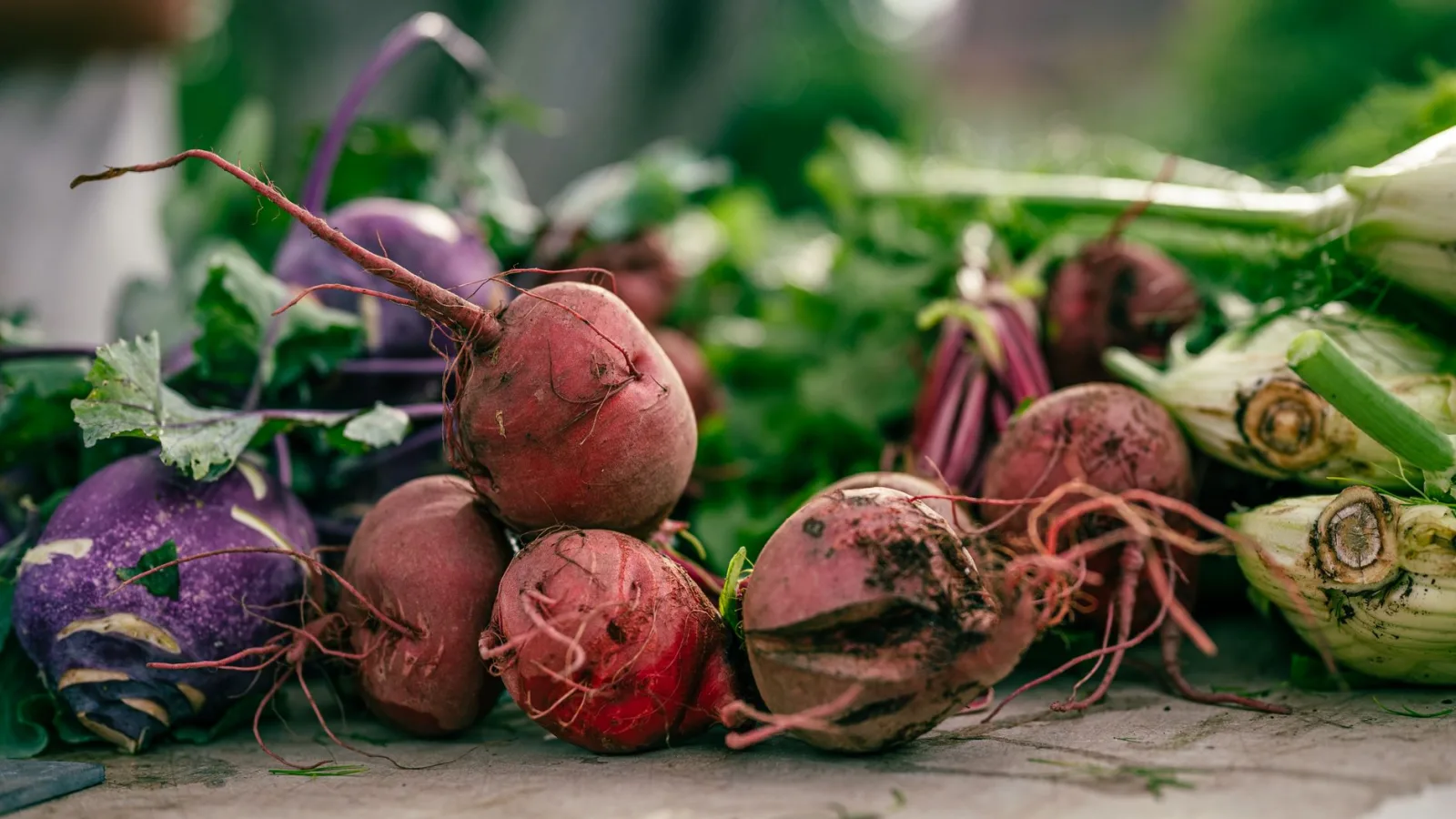
The Tiny Wasp Under Your Beet Leaves Just Got Hemingway's Name
Researchers surveying sugar beet fields in Xinjiang named a newly described wasp after Ernest Hemingway — then found it preys not on the crop's pest, but on the wasp that controls the pest. The same four-link chain plays out in home gardens, which is why a light hand with the sprayer matters.
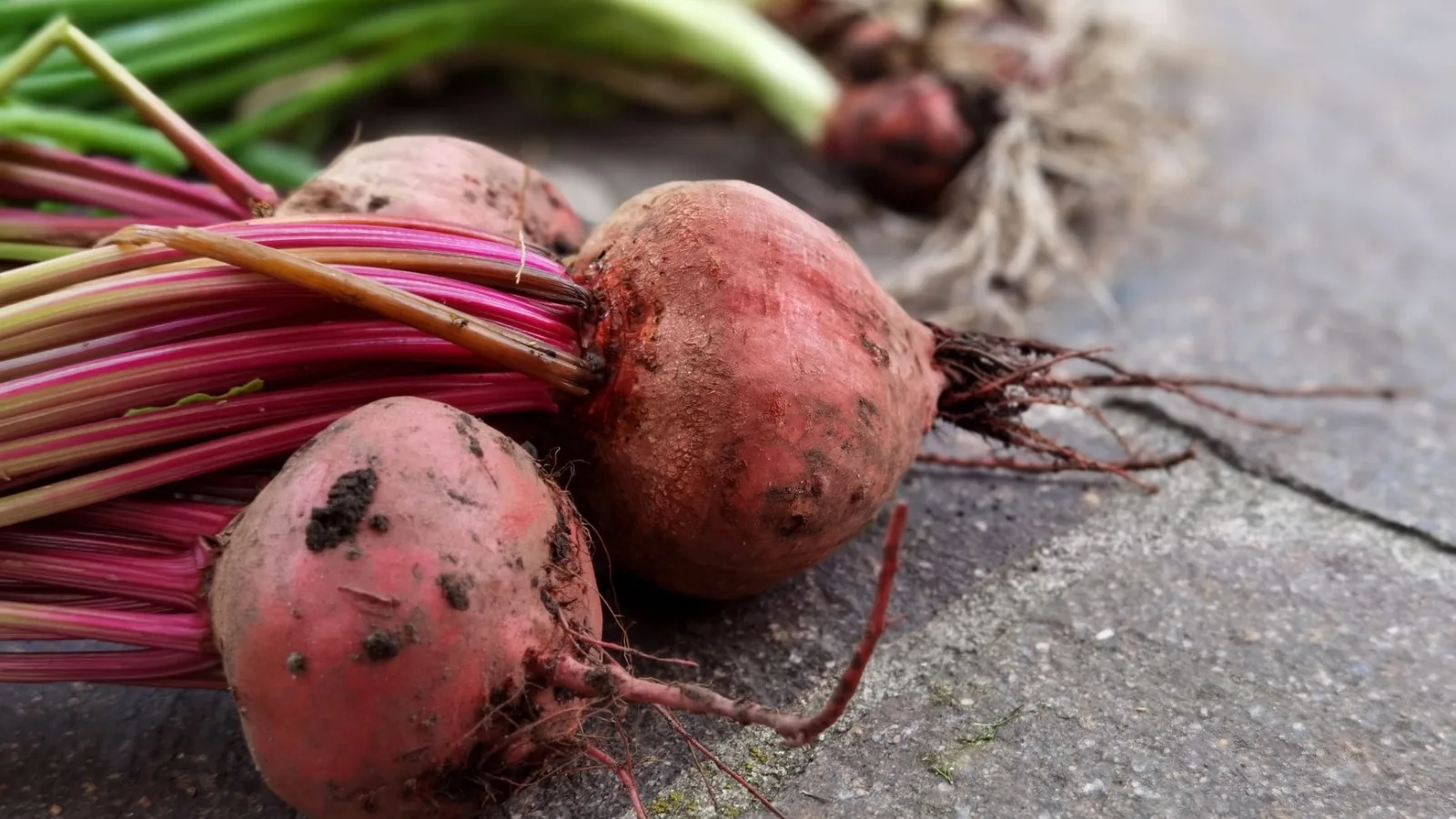
Can Beets and a Stick of Gum Lower Your Blood Pressure?
Nitrate-rich vegetables like beets, spinach, and arugula can nudge blood pressure down for a few hours, but only after mouth bacteria convert that nitrate into nitrite. One clinical study found that chewing gum after a nitrate-rich meal amplified the effect.