Tangaek — Decoctions · Herbs
通草 Akebia (Chocolate Vine)
 Related Crop · Akebia (Chocolate Vine) →
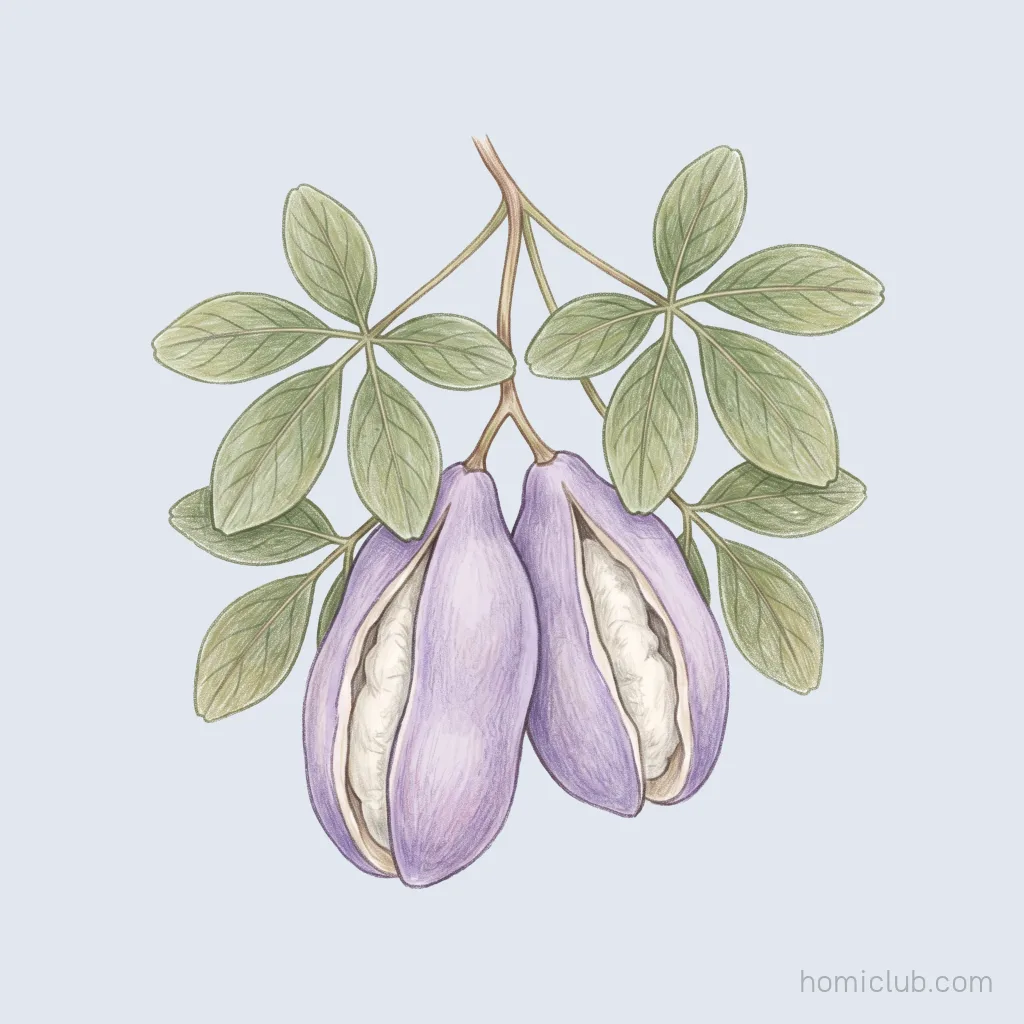
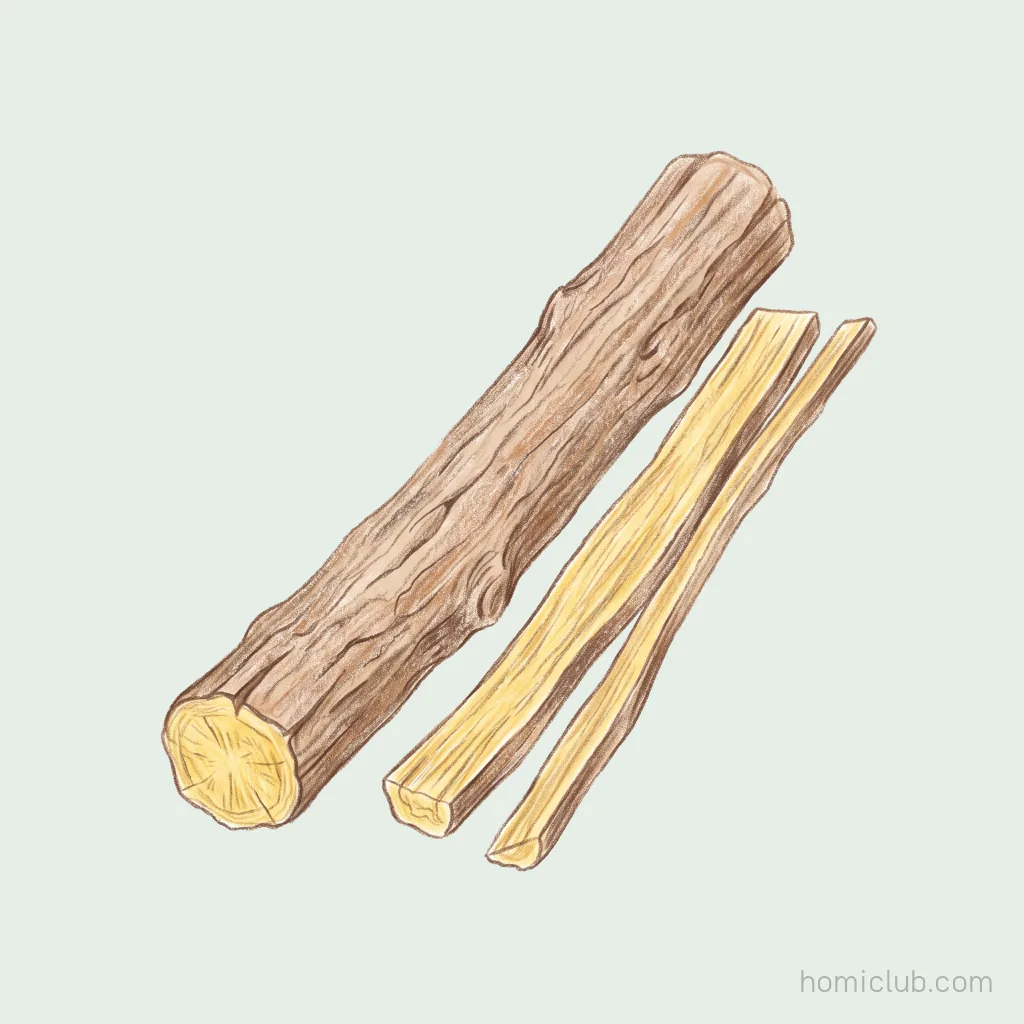
Tongcho is the stem of the akebia vine, hollow at the core and open end to end. It is the same plant as the akebia in the crop guide, whose autumn pods split open and were eaten sweet as yeonbokja. The text records it under the name moktong as well.
Original, read line by line 東醫寶鑑 · Tangaek — Decoctions vol. 3
-
性平一云微寒, 味辛甘, 無毒. 治五淋, 利小便, 開關格.
Its nature is neutral, though one account calls it slightly cold; its taste is pungent and sweet, and it is non-toxic. It treats the oreum (五淋, five kinds of strangury), frees the urine, and opens gwangyeok (關格, blockage above and below).
HomiclubTongcho is the stem of the akebia vine that climbs on wooded hillsides. Common in Korean mountains, it bears purplish flowers in spring, and in autumn its ripe fruit splits lengthwise to reveal the white pulp inside.
-
治水腫, 除煩熱, 通利九竅, 出音聲. 療脾疸常欲眠, 墮胎, 去三蟲.
It treats water swelling, removes vexing heat, frees the nine orifices, and brings forth the voice. It treats bidal (脾疸, spleen jaundice) with constant drowsiness, drops the foetus, and expels the samchung (三蟲, three kinds of parasitic worms).
-
生山中, 作藤蔓, 大如指. 每節有二三枝, 枝頭出五葉, 結實如小木瓜, 核黑瓤白, 食之甘美. 謂之鷰覆子. 正月二月採枝, 陰乾.
It grows in the mountains and forms a vine as thick as a finger. At each node there are two or three branchlets, and at the tip of a branchlet five leaflets emerge; it sets fruit like a small quince, with black seeds and white pulp, sweet and good to eat. This is called yeonbokja (鷰覆子). Cut the branches in the first or second month and dry them in the shade.
HomiclubFive leaflets spread from the tip of each branchlet like fingers of a hand — the readiest way to recognise akebia. Yeonbokja in the text is the name for its autumn fruit.
-
莖有細孔, 兩頭皆通, 含一頭吹之, 則氣出彼頭者, 良. 《本草》
The stem has a fine bore running through so that both ends are open; the good ones are those which, when you hold one end in the mouth and blow, let the air out at the far end. 《Boncho (本草)》
-
通草卽木通也. 心空有瓣, 輕白可愛. 去皮節生用. 通行十二經, 故名爲通草. 《入門》
Tongcho is the same as moktong. Its core is hollow with radiating partitions, and it is light and white and pleasing to look at. Remove the bark and the nodes and use it raw. Because it opens a passage through all twelve channels, it is named tongcho (通草, the passing-through herb). 《Immun (入門)》
-
木通, 性平味甘而淡. 主小便不利. 導小腸熱, 通經利竅. 《湯液》
Moktong is neutral in nature, sweet and bland in taste. It governs difficult urination. It draws off heat from the small intestine, opens the channels, and frees the orifices. 《Tangaek (湯液)》
-
木通通草, 乃一物也. 處處有之. 江原道出一種藤, 名爲木通, 色黃味苦, 瀉濕熱, 通水道, 有效. 治瘡亦效, 別是一物也. 或云, 名爲木防己, 瀉濕爲最. 《俗方》
Moktong and tongcho are one and the same thing. It is found everywhere. In Gangwon-do there grows a certain vine also called moktong, yellow in colour and bitter in taste, effective in draining damp-heat and freeing the waterways. It is likewise effective for treating sores, but it is a separate thing. Some say it is called mokbanggi (木防己) and is foremost at draining dampness. 《Sokbang (俗方)》
HomiclubHere the text explicitly flags the Gangwon-do vine as a separate plant. It records how vines of different genera circulated under one and the same drug name.
Related Crop
Akebia (Chocolate Vine) →
Reading on Akebia (Chocolate Vine)
Herbs — more entries
This is a cultural and historical record from a classical text, not a claim about any food’s effects. Nothing here is a health supplement or intended to prevent or treat disease. Consult a medical professional about health concerns. · Text: Korean Medicine Classics DB · Reading: Homiclub