Tangaek — Decoctions · Herbs
蘆根 Galdae Ppuri (갈대 뿌리)
Nogeun is the rhizome of the common reed. The Donguibogam describes bamboo-like leaves and white plumes, and is particular about sourcing: only rhizomes lifted from under the water were kept, never those left exposed above it. The flower head appears under the name bongnong.
Original, read line by line 東醫寶鑑 · Tangaek — Decoctions vol. 3
-
性寒, 味甘, 無毒. 主消渴客熱. 開胃, 治噎噦, 療孕婦心熱及痢渴.
Its nature is cold, its taste sweet, and it is non-toxic. It governs wasting thirst and visiting heat. It opens the stomach, treats dysphagia and hiccup, and treats chest heat in pregnant women and thirst from dysentery.
HomiclubNogeun is the rhizome of the common reed. Reed is a tall grass that grows in dense stands along rivers and tidal flats; the reed beds of Suncheon Bay and the Nakdong River estuary are the best known in Korea.
-
生水中, 葉似竹, 花白. 葦比蘆差大, 蘆與葦皆可通用.
It grows in water, its leaves resemble bamboo, and its flowers are white. Wi (葦) is somewhat larger than no (蘆), and the two may be used interchangeably.
-
凡使須要逆水蘆, 其根逆水生者. 又云, 當拯取水底甘辛者, 其露出浮水者, 不堪用. 《本草》
Whenever it is used one must take yeoksuro (逆水蘆), that is, the kind whose root grows against the current. It is also said that one should take the sweet and pungent kind fished up from the water's bottom, and that what is exposed and floating on the surface cannot be used. 《Boncho (本草)》
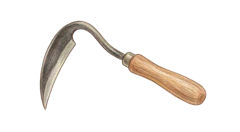
HomiclubThis passage insists on taking only the rhizome submerged below the water. Reed spreads by long horizontal rhizomes to form its stands, so gatherers groped beneath the water to dig it out.
Herbs — more entries
This is a cultural and historical record from a classical text, not a claim about any food’s effects. Nothing here is a health supplement or intended to prevent or treat disease. Consult a medical professional about health concerns. · Text: Korean Medicine Classics DB · Reading: Homiclub