Tangaek — Decoctions · Herbs
雀麥 Oat
 Related Crop · Oat →
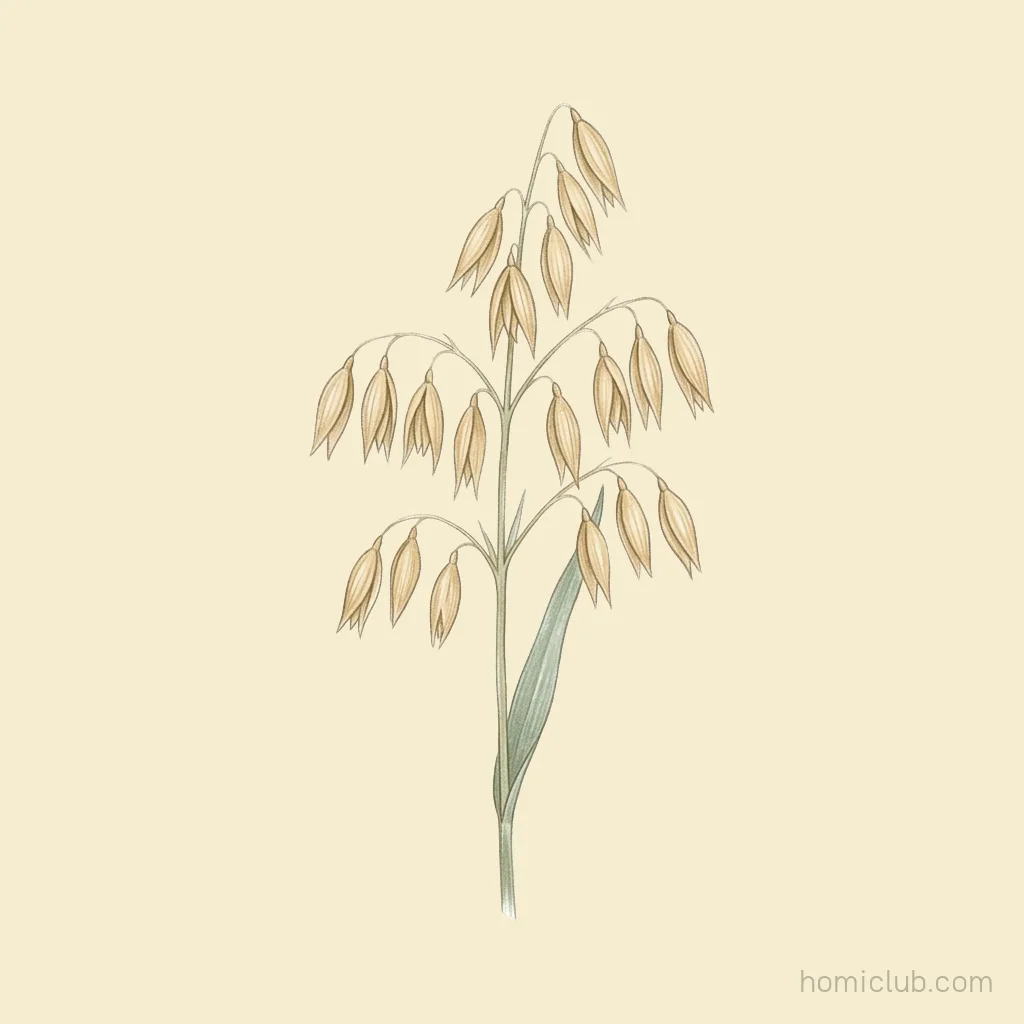
Jakmaek is a wild oat grass, glossed in old Korean as gwibori. Also called yeonmaek, it stands behind the oat in the crop guide. Its shoots resemble wheat but run thinner, and the spike is slender, long, and sparsely set with grain.
Original, read line by line 東醫寶鑑 · Tangaek — Decoctions vol. 3
-
性平, 味甘, 無毒.
Its nature is balanced and neutral, its taste sweet, and it carries no toxicity.
-
主産難.
It chiefly treats difficult childbirth, helping mothers when labor stalls or progresses with great difficulty.
-
煮汁服.
It is prepared by boiling the grain and drinking the resulting decoction, a simple method of administering it to the mother.
-
一名燕麥.
It is also called yeonmaek, the swallow-grain, a name pointing to its wild and common presence across open fields.
-
苗似小麥而弱,
Its young shoots resemble those of wheat but grow more slender and weak, looking like a frailer cousin tucked among the grain.
-
實似穬麥而細.
Its grain resembles that of hulled barley but is finer and smaller, too meager to harvest as a staple crop.
-
但穗細長而疏. 《本草》
Only its spike stands out, slender and long with sparsely set grains, a feature noted in the Bencao.
Related Crop
Oat →
Herbs — more entries
This is a cultural and historical record from a classical text, not a claim about any food’s effects. Nothing here is a health supplement or intended to prevent or treat disease. Consult a medical professional about health concerns. · Text: Korean Medicine Classics DB · Reading: Homiclub