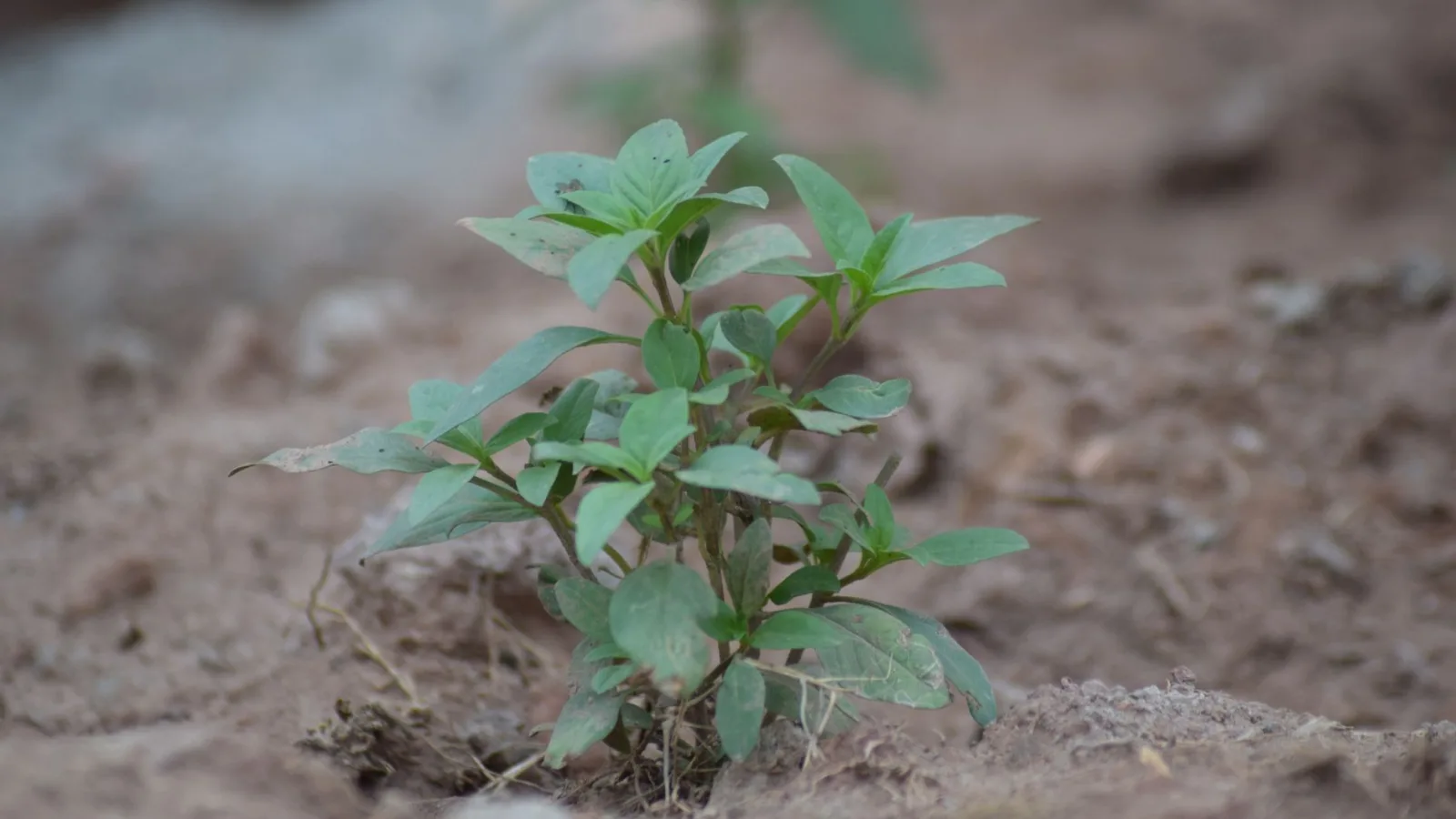
By mid-September, the round, bushy plants along the edge of the garden start to turn red at the tips. This is kochia (Bassia scoparia), sown back in spring. Its branches are packed with tiny seeds, and the whole plant turns red as fall goes on. Old medical texts listed the seeds under a medicinal name, and people bound the stems into brooms for sweeping the yard. A single plant gave a household both food and a tool.
Jibuja in the Donguibogam
The Donguibogam, Korea's classic medical encyclopedia, lists kochia seed in its herbs section (草部) as jibuja (地膚子). It also gives an old Korean name for it, "daepsari yeoreum." In old Korean, "yeoreum" meant fruit. The text describes the seed as cold in nature, bitter in taste, and nontoxic, and notes that the plant grows just about everywhere.
According to the entry, the plant has red stems and green leaves and is about the size of hyeonggae (荊芥, schizonepeta, a fragrant herb in the mint family). Its flowers are yellowish white. Its seeds are greenish white and look like the droppings of silkworms that have just finished their first molt. Because the plant was good for making brooms, it was called nakchuja (落箒子), and the entry also lists another name, cheonduja (千頭子). The seeds were to be gathered in the eighth and ninth lunar months and dried in the shade.
This description comes from a medical text published in the early 17th century. Its notes on nature and taste belong to the classification system of traditional medicine and are not a basis for treating illness today. You can read the entry and its commentary alongside the original text in Homiclub's Donguibogam entry for jibuja.
Source: Heo Jun, Donguibogam, herbs section (草部), entry "Jibuja (地膚子)."
How Modern Analysis Compares
Studies of kochia seeds have found saponin compounds. Saponins are glycosides (compounds bound to sugars) that foam when steeped in water. Oxalic acid is the reason kochia gets blanched and rinsed. Because it dissolves in water, blanching the plant and rinsing it in cold water lowers the amount. The texture you notice when you chew the seeds comes from dietary fiber. The red color the plant takes on in fall appears as its chlorophyll breaks down and red pigments show through.
Here is where the old record and modern analysis agree, and where they differ.
- Where they agree: The old text calls the seed bitter. Saponins usually taste bitter, so that note fits the finding that the seeds contain saponins. The long custom of boiling and rinsing the seeds probably began as a way to reduce that bitterness and foam.
- Where they differ: The old text says the plant is nontoxic. Now that we know it contains saponins and oxalic acid, though, we don't eat it raw. We eat it only after blanching or boiling and rinsing. Also, these studies show what the plant contains. They do not show what those compounds do in the body.
Sow in Spring, Harvest in Fall
Kochia is an annual, so you'll need to sow fresh seed every year. In the Northern Hemisphere, sow it in April or May (October or November in the Southern Hemisphere) in a spot that gets plenty of sun. The plants spread into wide, rounded mounds, so leave plenty of room between them and nearby crops. While the plants are young, pick the tender leaves to use as namul (seasoned greens).
In the Northern Hemisphere, harvest the seeds in August or September. The eighth and ninth lunar months named in the Donguibogam fall roughly in September and October on the modern calendar, so the old text's timing is about a month later. Cut the branches that carry seeds, let them dry, and beat them to knock the seeds loose. Don't throw out the stems once the seeds are off. Dry them completely in the shade and tie them together at the base. If you wait until they are fully dry before tying, you'll get a yard broom that keeps its shape. The old name described a plant good for making brooms, and people still use it that way today. For sowing and harvest dates, see the kochia entry in Homiclub's crop guide.
Cooking with the Young Leaves and Seeds
Blanch the young leaves in boiling water, rinse them in cold water, and gently squeeze out the extra water. Toss them by hand with doenjang (Korean fermented soybean paste) and perilla oil. The seasoning coats the leaves evenly and tones down their raw, grassy taste.
For the seeds, boil them, rub them between your hands to remove the husks, and rinse several times. Drain them well, spoon them over freshly cooked rice, and drizzle with soy sauce to bring out their pleasant pop. Grated Chinese yam or an egg yolk also goes well with them. Keep the prepared seeds in the refrigerator and eat them within a few days. Because the plant contains saponins and oxalic acid, eat it as one small side dish rather than in large helpings.
If you're growing kochia, run your fingers along the branch tips today and check whether the seeds are ripe.