September opens up empty beds where the summer crops used to be. Pull the last cucumber vine, pick the final pepper, and if all that's left is bare soil, now is the time to set shallots. In the Northern Hemisphere they go in during September or October and come out the following June or July — and through the winter in between, they ask almost nothing of you.
Split the bulb, plant the cloves
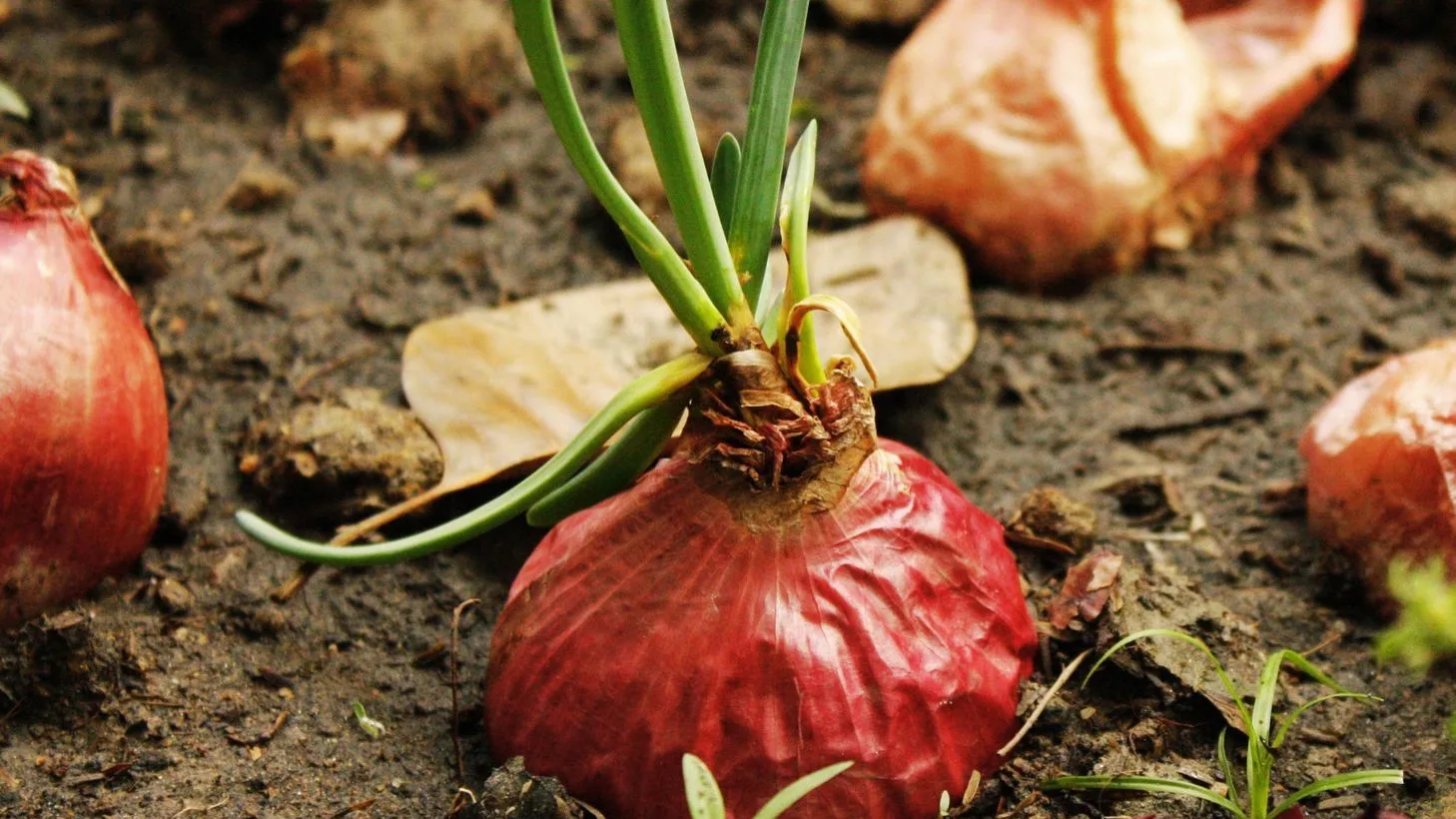
Shallots aren't grown from seed; you plant sets. Like garlic, a single bulb holds several cloves — peel off the dry papery skin and separate them one by one. Plant each clove pointed end up, covered just deeply enough that the tip still shows above the soil. Bury them too deep and the bulbs take longer to size up.
- Choosing: use only firm cloves with a live growing tip. Set aside anything soft or moldy.
- Spacing: 15–20cm between plants, 25–30cm between rows. Each set multiplies into a cluster of bulbs, so crowd them and nothing will size up.
- Drainage: shallots are half-hardy and take a fair amount of winter cold. Standing water is another matter — it rots the sets. If your bed drains poorly, mound the soil about 10cm.
Through the winter, then bulbs form as the days lengthen
They do best between 15–25℃ and will grow anywhere from 5 to 30℃. While it stays cool, the plant only puts on leaves; as the days stretch out, bulbs begin to set underground. The strains grown in temperate regions are long-day types that need more than 13 to 14 hours of daylight before the bulbs fatten. Tropical strains have diverged the other way, sizing up under shorter days. Indonesia and India grow the most, and shallots are widely planted in Vietnam, Thailand, and France as well. Pick a type suited to your latitude.
In winter, a thin layer of straw or fallen leaves keeps frost heave from lifting the ground. When the leaves come back up in spring, rake the mulch off, and stop side-dressing once the bulbs start to form. Feeding while they size up gives you lush tops and bulbs that won't keep after harvest.
When the tops fall over, dig and cure
In early summer the leaves yellow and flop toward the ground. That flop is your signal to dig. The Donguibogam, the 17th-century Korean medical compendium, also puts the digging in the fifth and sixth lunar months. Lift them on a clear morning, shake off the soil, and leave the tops on — don't trim them — while they dry for several days. Once the skins rustle, braid the tops together and hang the bunch. Keep it out of the sun in a dry spot with air moving through, or the bulbs will go soft.
Set aside a few of the biggest, best-shaped bulbs. They go straight back into the ground as next fall's sets.
After the harvest, in the kitchen
Cooked, the sweetness arrives before anything else — sooner than it does with onion. Mince them fine and sweat them slowly in butter over low heat until the sharpness settles; they make a fine base for a sauce. Or let the mince sit in vinegar for about ten minutes, then stir in olive oil — what's left is aroma alone, and it suits a salad. Toss them into the pan you just seared meat in, cook them in the fat left behind, then pour in wine or stock; the browned bits stuck to the bottom will dissolve right off.
Alliums carry sulfur compounds of the alliin family. When the tissue is broken, enzymes go to work and convert them into the compounds behind that aroma and bite, and heat shifts the mix again. Quercetin and its glycosides concentrate in the papery skin and the outer scales, so it's worth not peeling too far in. The red in the skin and outer scales comes from anthocyanin pigments. The bulb itself stores fructans — carbohydrates built from chains of fructose.
The vegetable section (菜部) of the Donguibogam lists an allium called hochong (胡葱). It gives the Korean name as jachong-i and describes it as resembling garlic but with a small round bulb, red skin, and a tip somewhat longer and more pointed. The text holds it to be warm in nature and pungent in taste, and adds a caution against eating it over a long stretch of time. Whether that name points to what we call a shallot today is not certain. Descriptions in old medical texts don't map cleanly onto modern categories.
Head out to the garden today and start by checking whether water pools where the summer crops came out. If the bed drains well, split a bulb into cloves and get them in this week — you're not late.
Sources — Donguibogam, vegetable section, "hochong" · analytical reports on allium constituents