One Bulb of Garlic in the Corner of the Plot
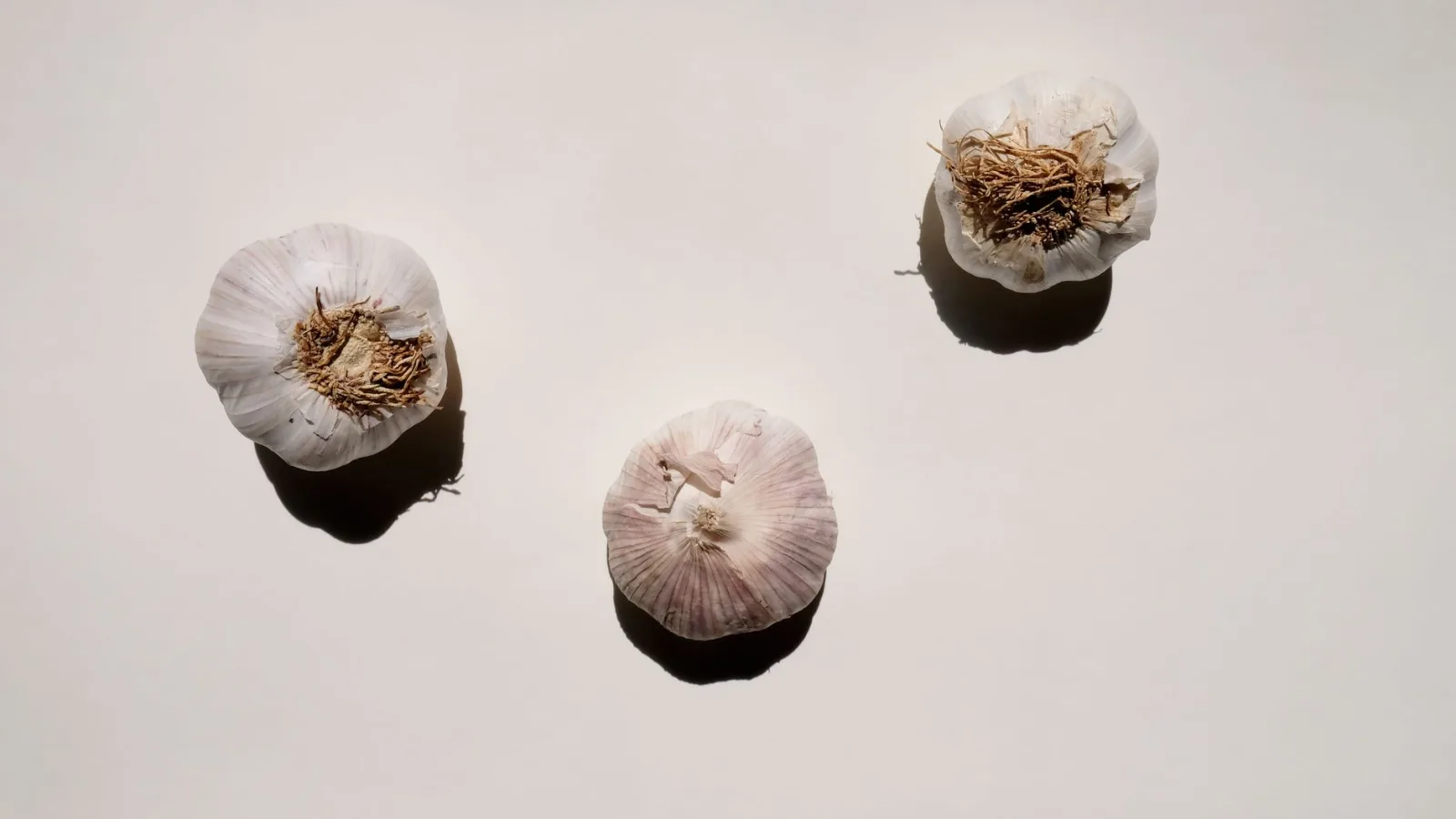
Garlic is the crop you plant as separate cloves in autumn, leave to sit through winter, and harvest the following early summer. In your own plot it will hold down a corner without asking for much, and then, once the leaves have yellowed and dried, you lift the soil and a plump bulb comes up with it. The Donguibogam — the Treasured Mirror of Eastern Medicine, Korea's great seventeenth-century medical compendium — noted that garlic "is planted in both open fields and kitchen gardens, and the ones that have passed a full year are best (經年者良)." In other words, garlic given time to cure was valued above garlic pulled a season early. Once harvested, it turns up everywhere on the Korean table: a pot of soup, a plate of dressed vegetables, a small dish of seasoning sauce. So how did the old physicians read this most ordinary of crops?
What the Donguibogam Says
The Donguibogam classified garlic (마늘, 蒜) as warm in nature (性溫), pungent in flavor (味辛), and "toxic" (有毒). That last word is better understood not as toxicity in the modern sense but as a marker of how strongly stimulating the plant is. Its medicinal force, the text held, travels to the spleen (脾, digestion and immunity) and the stomach (胃).
Here are the principal uses on record. The Donguibogam held that garlic warms the center (溫中), easing the abdominal pain, diarrhea, and indigestion brought on by cold food or cold weather. It was said to help digest rich and raw foods, and it was used for the stomach cramps of food poisoning. For boils and abscesses — 옹저 (癰疽) and malignant sores — garlic was pounded to a paste and applied, or its juice brushed on. It also served as a vermifuge (殺蟲) against intestinal parasites such as roundworms and pinworms, and as a respiratory remedy, warming away the cough and phlegm that came from a chill.
Alongside garlic proper, the Donguibogam entered two relatives: small garlic (小蒜) and wild garlic (野蒜, also called 랑괴). Small garlic was likewise warm in nature and pungent in flavor, with its medicinal force traveling to the spleen (脾) and the kidneys (腎). It warmed the center (溫中) and broke down food (消穀), settled the violent vomiting and diarrhea known as 곽란, and was applied to snake and insect bites. Wild garlic was recorded as roughly the same in nature, flavor, and use as small garlic, only slimmer, since it grew on its own out in the fields — and people dug it up to eat. Even among pungent remedies, in other words, the old text drew distinctions by size and by where a plant had grown.
The cautions are just as plain. The Donguibogam held that garlic, "eaten over a long time, injures the liver and damages the eyes (久食傷肝損目)." A remedy that potent, the old record warns, should not be taken in quantity or for long stretches. The text also singles out the single-clove bulb (獨頭蒜) — garlic that has grown as one solid head — and notes that it was frequently used to treat boils.
Set Against Today's Nutrition Science
What's intriguing is that the antiparasitic effect the Donguibogam described finds partial support in modern pharmacology. Allicin, the compound behind garlic's distinctive bite, has been shown in research to have antiparasitic and antibacterial activity — which brushes up against one thread of the old record. And the notion that garlic warms the center and aids digestion isn't far from the everyday experience of a pungent flavor waking up the appetite and helping a meal go down.
None of which means an old text can be read straight across as a modern claim of therapeutic effect. The Donguibogam's "toxic," and its warning about the liver and the eyes, make the most sense as cautions from an era when garlic was used in medicinal quantities. The old view saw garlic as a warm, strongly stimulating medicine; modern nutrition treats it as a vegetable that lends aroma and depth. Rather than setting the two at odds, it's more useful to see them as two languages describing the same plant.
The same goes for 온중 (溫中), the idea of warming the center. The old physicians saw garlic as a remedy that scatters cold and warms the digestive tract; at today's table, that carries over naturally into the way its sharp aroma sharpens the appetite and cuts through the smell of fish and meat. The pleasure here isn't in declaring what garlic does — it's in noticing where an account written from lived, bodily experience meets the explanation we'd give now.
From the Garden to the Table
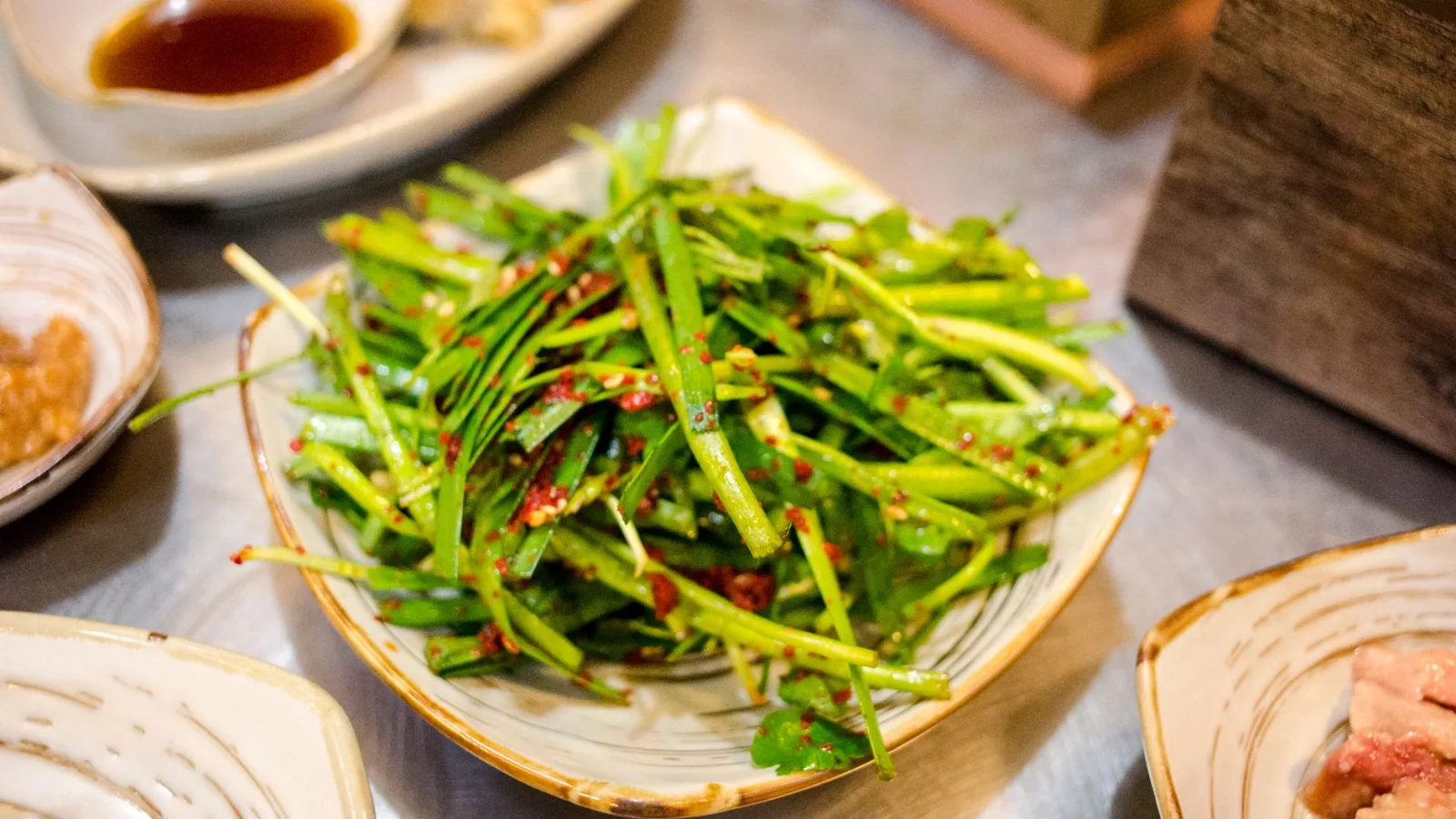
Harvested garlic can be eaten raw, roasted, or cooked into a dish. In the Donguibogam's day, all of these were in use: eating it raw, roasting it, pounding it for topical application, and steeping it in vinegar. In our own kitchens, a spoonful of minced garlic is the foundation of soups and dressed vegetables, while a whole roasted head turns sweet enough to eat on its own. Even the vinegar-steeped black garlic pickles you see today are a continuation of that old preserving method.
Still, keeping the Donguibogam's caution in mind, moderation sits easiest in daily life. If your constitution runs toward yin deficiency (陰虛) or excess heat, or if you have a delicate stomach lining, it's worth avoiding large amounts of raw garlic in one sitting. Cooking softens the sharpness considerably, so if your stomach is on the sensitive side, start with a few cloves of roasted garlic alongside the meal. May the bulb you grew and cured yourself find its way into a warm plate on your table.