
- Type
- Leafy Greens
- Difficulty
- Easy
- Season
- Spring·Fall
- Sowing
- From seed
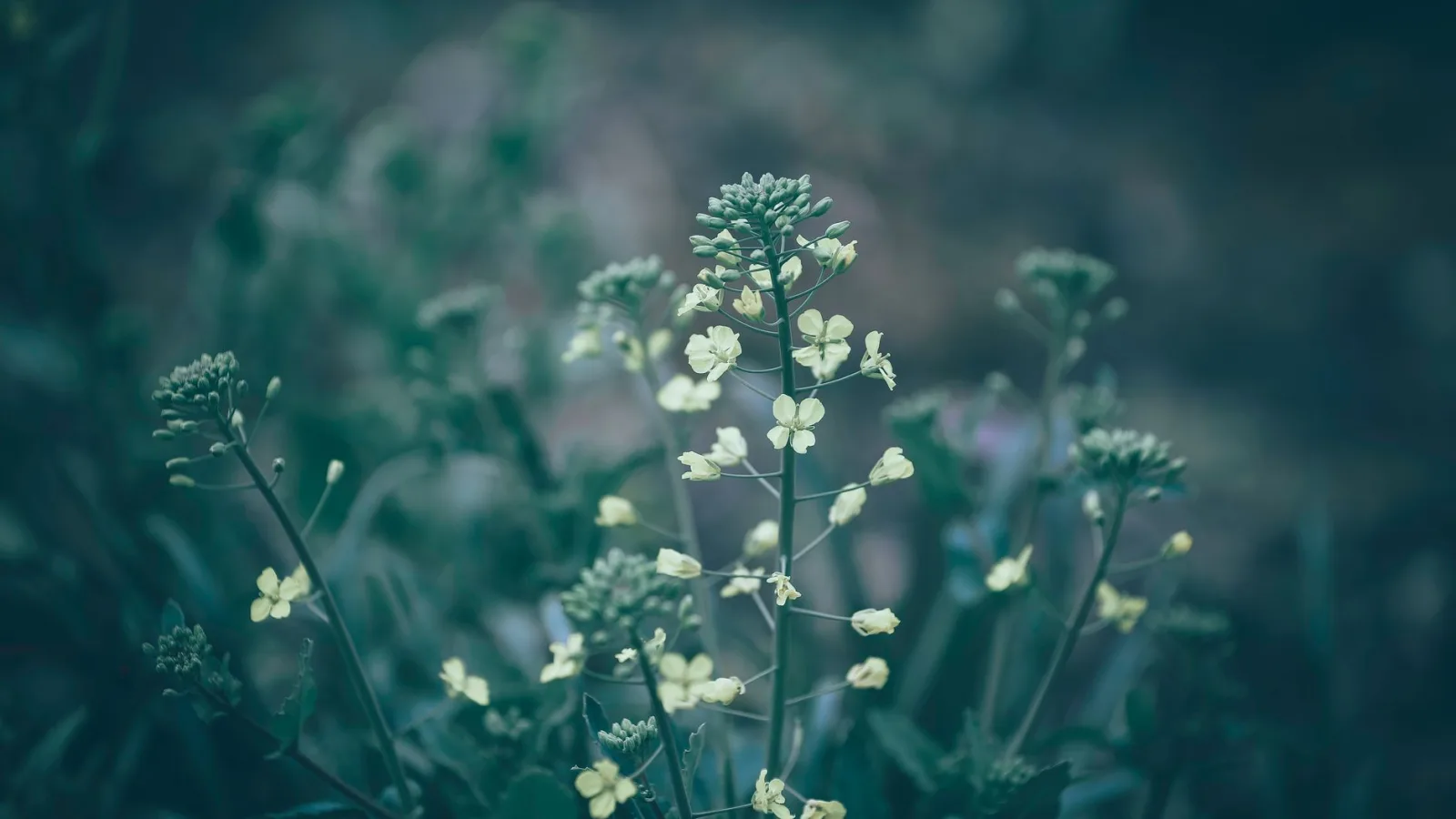
Shepherd's Purse (Naengi)
Capsella bursa-pastoris
Vitamins, iron and calcium - a spring green eaten root and all
Shepherd's purse (naengi) is one of Korea's signature spring wild greens, prized because both its fragrant root and its leaves are eaten together. The vegetable section of the Donguibogam sets it down under the name jechae (薺菜), warm in nature and sweet in taste - a record from an old medical text that differs from present-day judgement. It holds vitamins A and C along with iron and calcium, and cooks trim it carefully, root and all, to enjoy in doenjang (soybean-paste) soup or as a seasoned side dish.
Year-Round Calendar
- 1
- 2
- 3
- 4
- 5
- 6
- 7
- 8
- 9
- 10
- 11
- 12
- 9
- 10
- 3
- 4
Where It Grows
- Main producer Known as jicai, it is grown as a vegetable around Shanghai and Jiangsu.
-
Major producer
Open-field overwintering cultivation (the crop stands through winter in the field) along the south coast, in places such as Sinan and Jindo in South Jeolla, supplies the market volume, while the wild-dug crop comes in during March and April. Harvest February, March, April
- 2
- 3
- 4
- Wild population It is common on paddy banks and in open fields, and as one of the seven herbs of spring it is gathered in early spring. Commercial cultivation is limited.
It appears to be native to the region running from the eastern Mediterranean into West Asia, and, carried along by human movement, it is now a weed spread across the whole temperate world apart from Antarctica. It grows anywhere, but the places that harvest it as a leaf vegetable and send it to market are almost entirely confined to East Asia — Korea, China and Japan — making this a crop whose native range and production map diverge sharply.
- Optimum
- 10~20℃
- Range
- 2~25℃
- Hardiness
- Hardy
It sprouts in autumn and passes the winter as a cushion-shaped rosette of leaves pressed flat to the ground, then puts on growth in early spring as the frozen soil thaws. Once temperatures rise, a flower stalk soon goes up and the leaves and root turn tough, so the harvest season is short.
In Korea Nationwide
It springs up on its own along field banks, paddy banks and roadsides throughout the country. Most of what reaches the market comes from open-field overwintering cultivation on the south coast, in places such as Sinan and Jindo in South Jeolla, while the wild-dug crop comes in during March and April as the frozen ground thaws.
How to grow
- Light
- Somewhere sunny
- Soil and depth
- 15cm deep. Poor soil is fine
- Spacing
- 10cm
- Watering
- Sparingly. Too much water and the scent fades
- Feeding
- Barely any needed
- Harvest
- Lift whole, root and all, before it flowers. Half the flavour is in the root
What makes the difference. Sow in autumn, let it overwinter, dig in early spring. Sown in spring it flowers almost at once
This page describes how a crop is grown and used. It does not claim health effects for any food, nor is it intended to prevent or treat disease. Component and study notes are references only and do not mean the same result occurs in people. Consult a medical professional about health concerns.
Health Benefits
What the Donguibogam recorded. The vegetable section of the Donguibogam sets down shepherd's purse under the name jechae (薺菜), describing it as warm in nature, sweet in taste and without toxicity. It is a record from an old medical text and differs from present-day judgement.
What is known today. Composition analyses show that shepherd's purse holds vitamins A and C along with iron and calcium. Studies in people are scarce, so what can be said for now stops at composition.
Nutrition
- Vitamins and minerals (iron, calcium) (Present in leaf and root) — Minerals common to spring greens
- Dietary fiber and choline (Present in leaf and root) — Constituents of the leaf and root
Vitamins, iron & calcium Among spring greens, shepherd's purse (naengi) is known to hold comparatively high levels of vitamins A and C along with iron and calcium. It came to the table in the season when fresh leaves were hard to come by.
Dietary fiber The root and the leaves hold dietary fiber, a component that passes undigested to the large intestine and adds bulk there.
Pairings
○ Doenjang (naengi doenjang-guk) — Adding shepherd's purse to doenjang-guk, a soybean-paste soup, makes a classic spring soup in which the green's aroma and the paste's savory depth come together.
○ Tofu — Simmered or tossed with mild tofu, it balances out with a good dose of protein.
○ Sesame oil and doenjang dressing (muchim) — Blanched shepherd's purse tossed with doenjang and sesame oil makes a fragrant spring-green side dish (muchim). Sesame
Varieties
- Wild naengi (self-sown) (Seed) — Comes up on its own along field edges; small leaves and a strong root scent suit soups.
- Sown naengi (garden-grown) (Seed) — Sown in rows it makes larger, softer leaves and a tenderer root that cleans up easily.
Source: Rural Development Administration (Nongsaro) · Donguibogam (classic Korean medical text)