Tangaek — Decoctions · Vegetables
羅勒 Basil
 Related Crop · Basil →
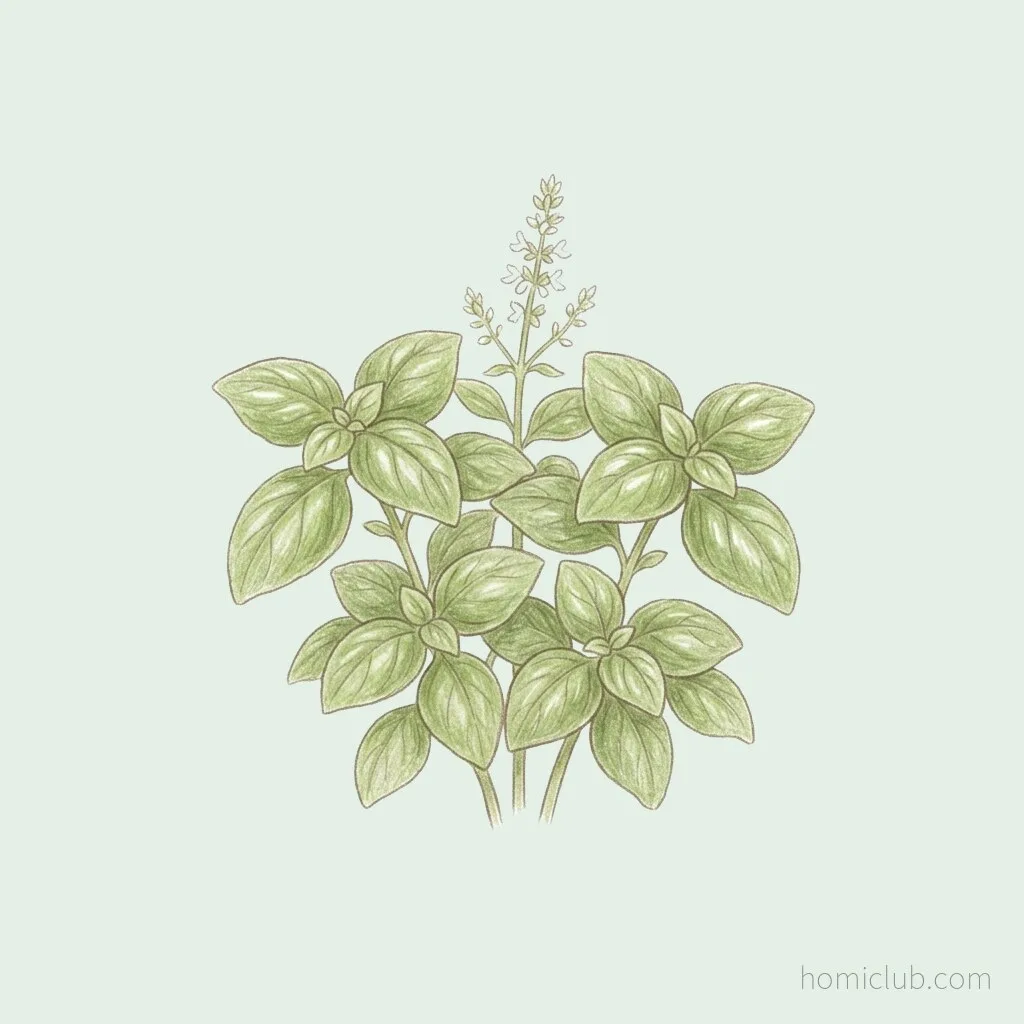
Nareuk is the old name for basil, an annual of the mint family and the same herb in the crop guide. It is the leaf that goes into pasta and pesto today. The text notes that in the north it was called nanhyang, to avoid the given name of Shi Le, ruler of Later Zhao.
Original, read line by line 東醫寶鑑 · Tangaek — Decoctions vol. 2
-
性溫, 味辛, 微毒.
Its nature is warm, its taste is pungent, and it is slightly toxic.
HomiclubNareuk is basil, an annual of the mint family. Rubbing the leaves releases a sweet, sharp scent; these are the leaves used to make pesto in Western cooking.
-
調中消食, 去惡氣. 宜生食之, 然不可多食.
It harmonizes the center, digests food, and removes malign qi. It is fitting to eat it raw, but it must not be eaten in quantity.
-
北方號爲蘭香, 爲石勒諱也. 《本草》
In the north it was called nanhyang (蘭香), because the name of Seok Reuk (石勒) was taboo. 《Boncho (本草)》
HomiclubSeok Reuk founded the Later Zhao state in fourth-century China. Avoiding a character that appeared in a ruler's name by substituting another word was called name-taboo, and the record of that substitution survives inside the entry itself.
Related Crop
Basil →
Reading on Basil
Vegetables — more entries
This is a cultural and historical record from a classical text, not a claim about any food’s effects. Nothing here is a health supplement or intended to prevent or treat disease. Consult a medical professional about health concerns. · Text: Korean Medicine Classics DB · Reading: Homiclub