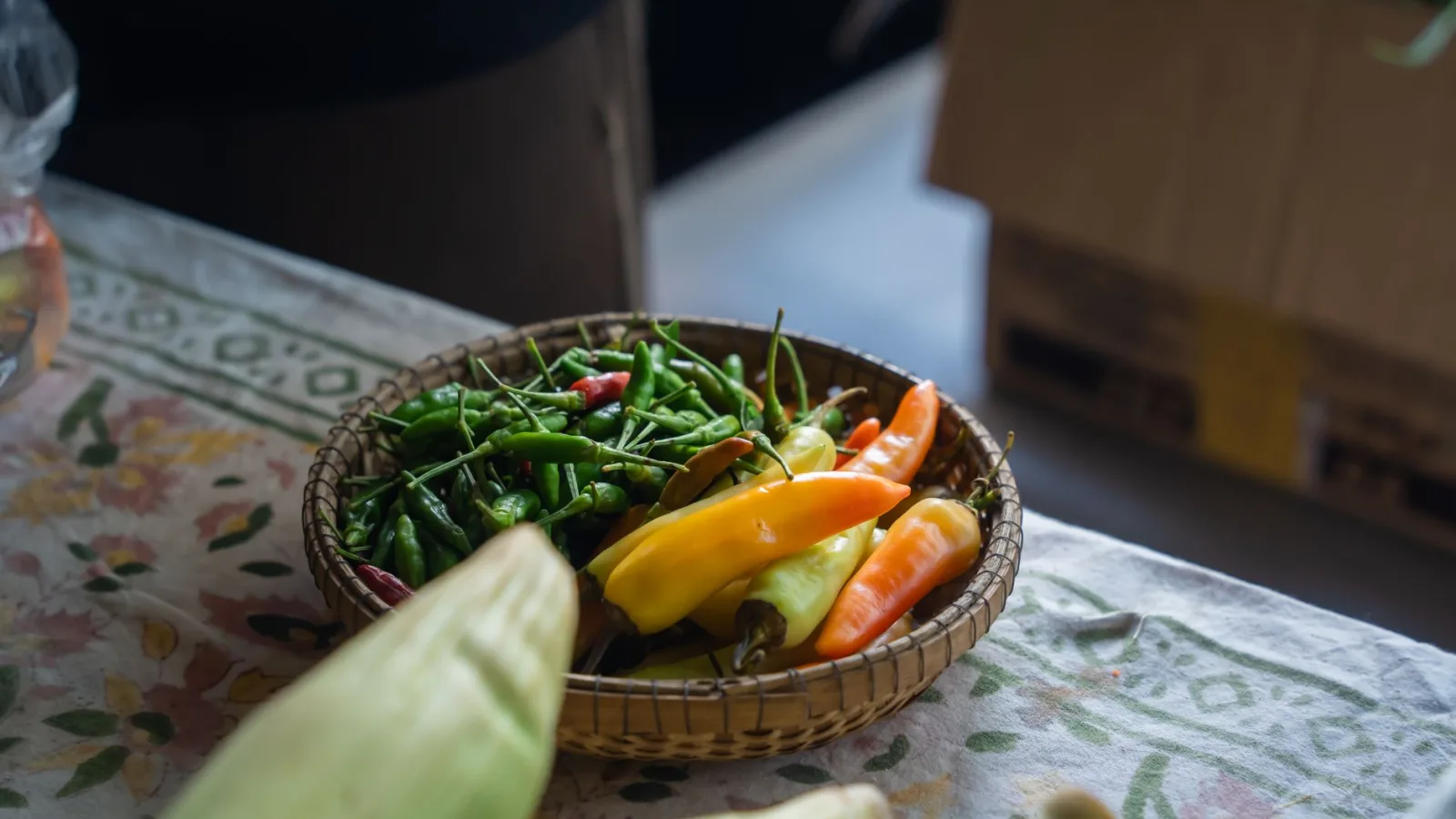
September in the garden means peppers turning red and perilla seed filling out. In that same season, a cinnamon tree is quietly growing in a pot. One frost kills it, so anywhere winter arrives, it can't be left in the ground. Even so, a single pot will give you bark to harvest for years.
The evergreen we grow for its bark
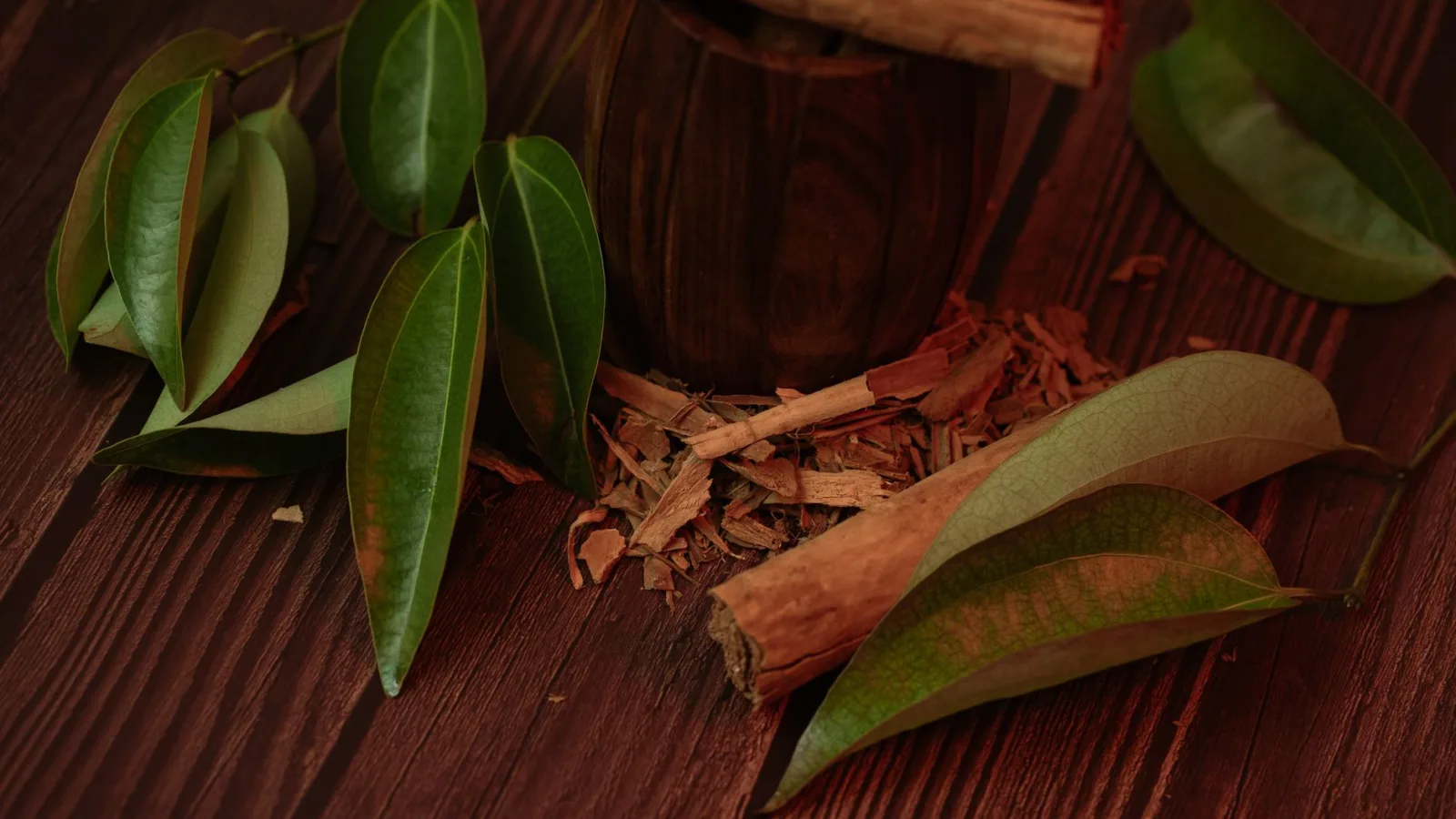
Cinnamon is the bark of a tree in the laurel family (Lauraceae), peeled and dried into a spice. Unlike crops you pick leaves or fruit from, this one you strip from the branches. The tree is native to China, and today most of the world's cinnamon is grown in Indonesia, Vietnam, Sri Lanka, and India — all warm, rainy lowlands, year-round.
The whole quills sold in most stores are cassia: thick bark rolled into a single hard curl. Ceylon cinnamon is thin bark layered in many folds; it crumbles between your fingers and tastes gentler. The compound behind the aroma and the warm bite is cinnamaldehyde, and both kinds have it. What separates them is coumarin — cassia carries a lot of it, Ceylon almost none. The bark also contains proanthocyanidins, a class of polyphenol.
Planting — start with a seedling, not seed
Every guide says the same thing: transplant a young tree. In the Northern Hemisphere, that means April or May, once night temperatures stop dipping below 15°C. The tree grows best between 22 and 30°C.
Pick a deep pot and a fast-draining mix. This is a tree from rainy country, but water standing in a pot will rot the roots. It won't put on much size the first year, so start small and move it up one pot size each year.
Care — 15°C is the dividing line
It grows in the range of 15 to 35°C. Below 15°C, growth slows; one frost kills it outright. So when autumn nights start creeping toward 15°C, bring the pot indoors — mid-October, more or less, in central Korea.
Through winter, keep it at a sunny window and water when the surface of the soil dries out. A heated room is dry air, so mist the leaves. This tree comes from humid lowlands, and low indoor humidity shows up first as damaged foliage.
Harvesting — when the sap is running
With leafy greens, day length and temperature tell you when to harvest. Cinnamon is grown for its bark, so day length doesn't set the schedule. Bark peels cleanest when the sap is running, in the rainy season. In a pot, the nearest equivalent is the stretch when you're watering generously and new leaves are pushing out.
After several years, once the branches have thickened, cut one at a time and strip the bark. Lay the strips out in the shade and they'll curl into quills on their own as they dry. The Donguibogam, the classic Korean medical compendium, lists cinnamon in its Wood section (목부, 木部) as gyepi (계피, 桂皮): peel the bark in the second, eighth, and tenth lunar months, dry it in the shade, and scrape off the rough outer layer before use. Drying in the shade and scraping the outer bark are exactly what we still do.
How much is too much?
The European Food Safety Authority (EFSA) sets a tolerable daily intake for coumarin at 0.1 mg per kilogram of body weight. At 60 kg, that works out to 6 mg a day. Don't eat ground cinnamon by the spoonful, day after day. Used the way a spice is meant to be used — for aroma — you stay comfortably inside that line.
- For sujeonggwa, the Korean cinnamon-and-ginger punch, simmer the whole quills and the ginger separately, then combine them. Boil them together from the start and the ginger's heat takes over, burying the cinnamon. Float a dried persimmon on top at the end.
- In coffee or warm milk, a pinch is plenty. Pre-ground cinnamon loses its aroma quickly, so grate what you need from a whole quill as you go.
- For braised meat or curry, drop in one piece of whole cinnamon at the start and let it bloom in the oil. Fish it out when the dish is done.
Old texts record that cinnamon softens when it meets scallion — simmer it in scallion juice, they say, and it turns to water. They also list a caution against it during pregnancy. These are entries from historical medical writing, and they don't reflect what we know today.
Today, all you have to do is choose the spot. Leave one sunny winter window free, and the seedling you bring home in April or May will make it through its first year.
Sources: Donguibogam, Wood section (木部), gyepi (桂皮) · European Food Safety Authority (EFSA) coumarin evaluation