Tangaek — Decoctions · Herbs
惡實 Burdock (Ueong)
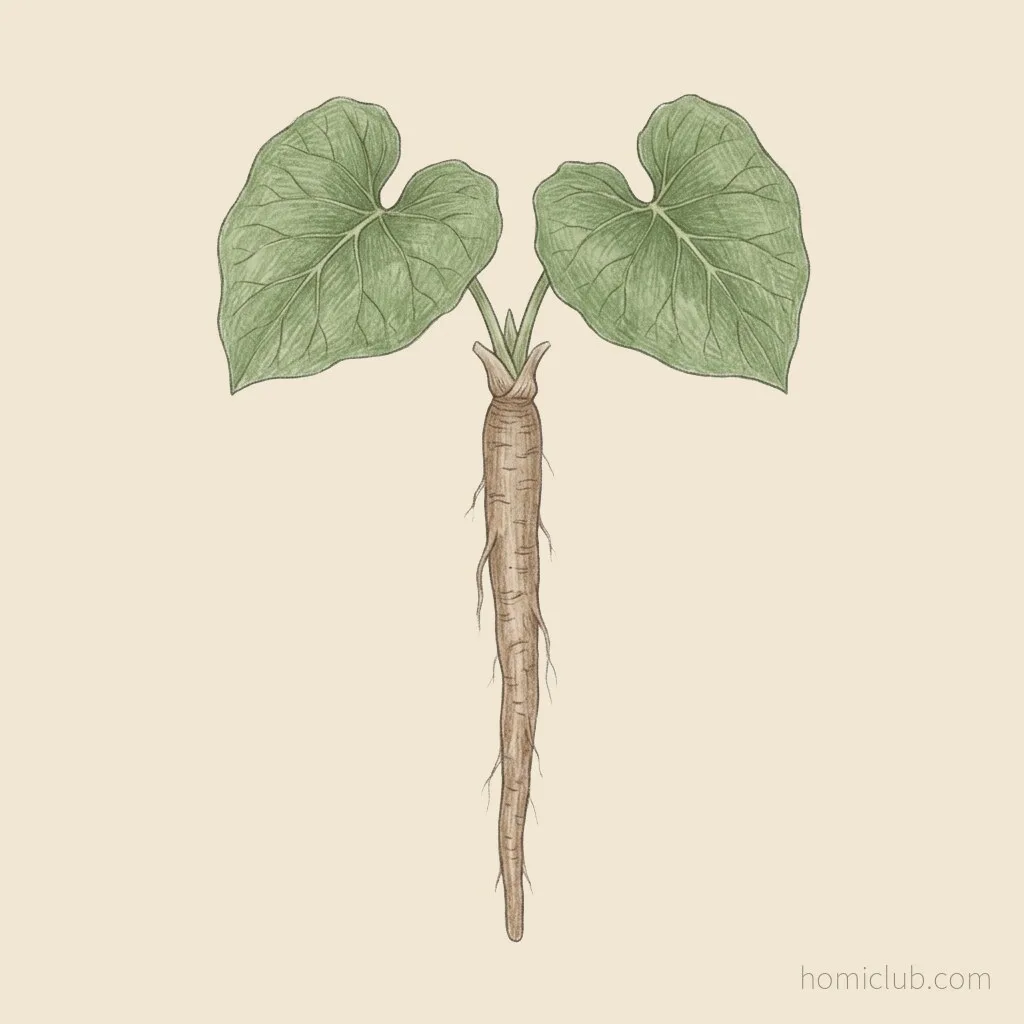 Related Crop · Burdock (Ueong) →
Aksil is burdock seed, also called ubangja, seojeomja, and daeryeokja. The burred husk clings to any mouse that brushes past, which is where the name seojeomja comes from. The root is the same burdock as in the crop guide, still eaten braised and as namul.
Original, read line by line 東醫寶鑑 · Tangaek — Decoctions vol. 3
-
性平一云溫, 味辛一云甘, 無毒. 主明目, 除風傷. 《本草》
Its nature is neutral, though one account calls it warm; its taste is pungent, though one account calls it sweet, and it is non-toxic. It governs brightening the eyes and removes injury from wind. 《Boncho (本草)》
HomiclubAksil is the seed of burdock, a biennial of the composite family. In Korea its root is a familiar vegetable, braised or dressed as namul, and the plant is widely cultivated.
-
治風毒腫, 利咽膈, 潤肺散氣, 療風熱癮疹瘡瘍. 《湯液》
It treats swelling from wind toxin, frees the throat and the gyeok (膈, diaphragm region), moistens the lung and scatters qi, and treats eunjin (癮疹, wheals) and sores from wind heat. 《Tangaek (湯液)》
-
卽牛蒡子也. 處處有之, 外殼多刺, 鼠過之則綴惹不可脫, 故亦名鼠粘子. 《本草》
This is ubangja (牛蒡子). It is found everywhere; the outer husk bristles with hooks, so that a mouse passing by is caught fast and cannot pull free, and for this reason it is also called seojeomja (鼠粘子, the mouse-sticking seed). 《Boncho (本草)》
HomiclubBurdock burs are covered with hooked bristles that cling to clothing and animal fur. It was this hook structure that inspired the invention of Velcro.
-
微炒, 搗碎用. 《入門》
Roast it lightly, pound it to pieces, and use it. 《Immun (入門)》
-
一名大力子. 《正傳》
It is also called daeryeokja (大力子). 《Jeongjeon (正傳)》
Related Crop
Burdock (Ueong) →
Reading on Burdock (Ueong)
Herbs — more entries
This is a cultural and historical record from a classical text, not a claim about any food’s effects. Nothing here is a health supplement or intended to prevent or treat disease. Consult a medical professional about health concerns. · Text: Korean Medicine Classics DB · Reading: Homiclub