Tangaek — Decoctions · Fruits
銀杏 Ginkgo Nut
 Related Crop · Ginkgo Nut →
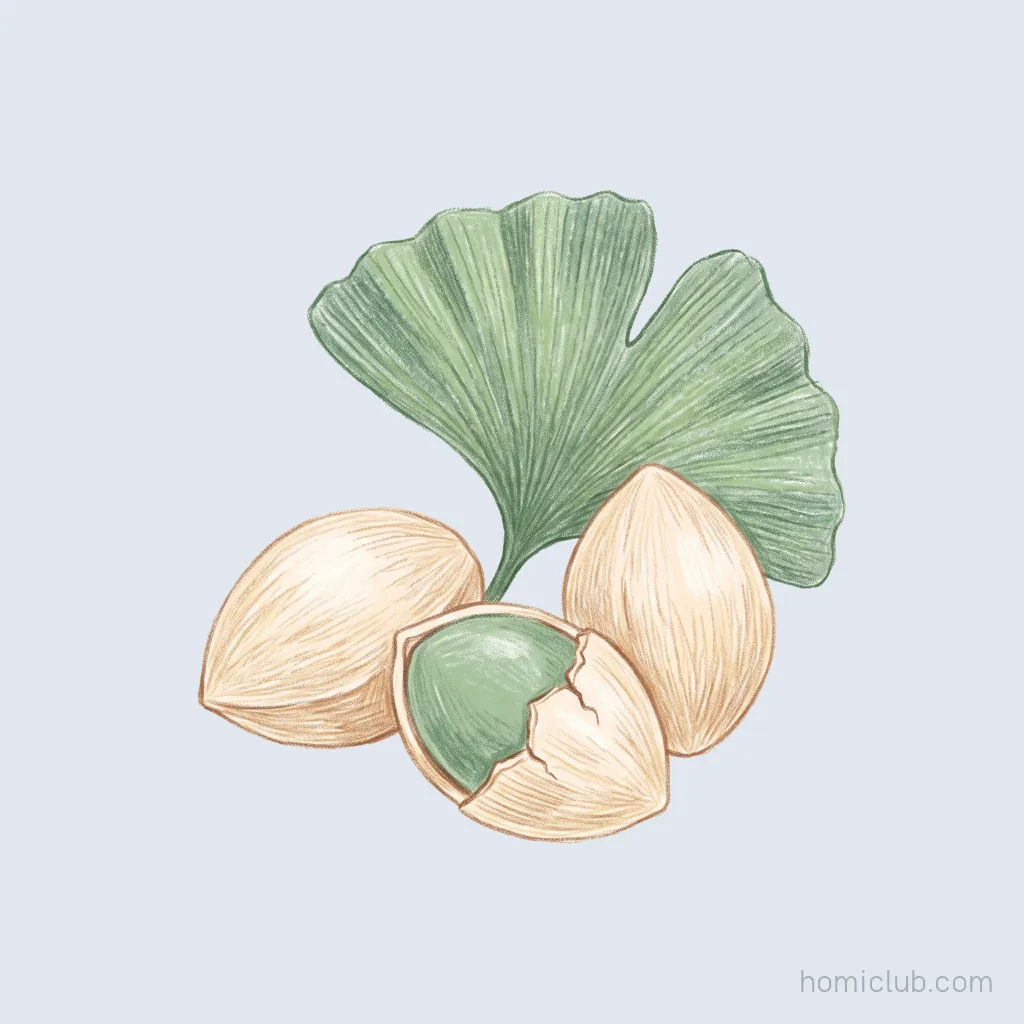
Eunhaeng is the ginkgo nut, the same as the ginkgo in the crop guide — the kernel inside the pulpy fruit that drops from street trees each autumn. The tree was called apgaksu for leaves shaped like a duck's foot, and the nut eunhaeng, silver apricot, for its shape. Raw kernels rasp the throat, so they are boiled or roasted.
Original, read line by line 東醫寶鑑 · Tangaek — Decoctions vol. 2
-
性寒, 味甘, 有毒.
Its nature is cold, its taste sweet, and it is toxic.
-
淸肺胃濁氣, 定喘止咳. 《入門》
It clears turbid qi from the lung and stomach, settles panting, and stops coughing. 《Immun (入門)》
-
一名白果, 以葉似鴨脚, 故又名鴨脚樹.
It is also called baekgwa (白果, white fruit), and because the leaf resembles a duck's foot it is also called apgaksu (鴨脚樹, duck-foot tree).
-
其樹甚高大, 子如杏子, 故名爲銀杏.
The tree is very tall and large, and the seed is like an apricot kernel, so it was named eunhaeng (銀杏, silver apricot).
-
熟則色黃, 剝去上肉, 取子, 煮食或煨熟食.
When ripe it turns yellow; strip off the outer flesh, take the seed, and eat it boiled or baked in embers.
HomiclubThe soft outer flesh gives off a powerful smell, which is why ginkgos planted along streets are chosen as male trees that bear no fruit.
-
生則戟人喉, 小兒食之發驚. 《日用》
Raw, it pricks the throat, and if a small child eats it, convulsions arise. 《Iryong (日用)》
Related Crop
Ginkgo Nut →
Fruits — more entries
This is a cultural and historical record from a classical text, not a claim about any food’s effects. Nothing here is a health supplement or intended to prevent or treat disease. Consult a medical professional about health concerns. · Text: Korean Medicine Classics DB · Reading: Homiclub