Tangaek — Decoctions · Fruits
胡桃 Walnut
 Related Crop · Walnut →
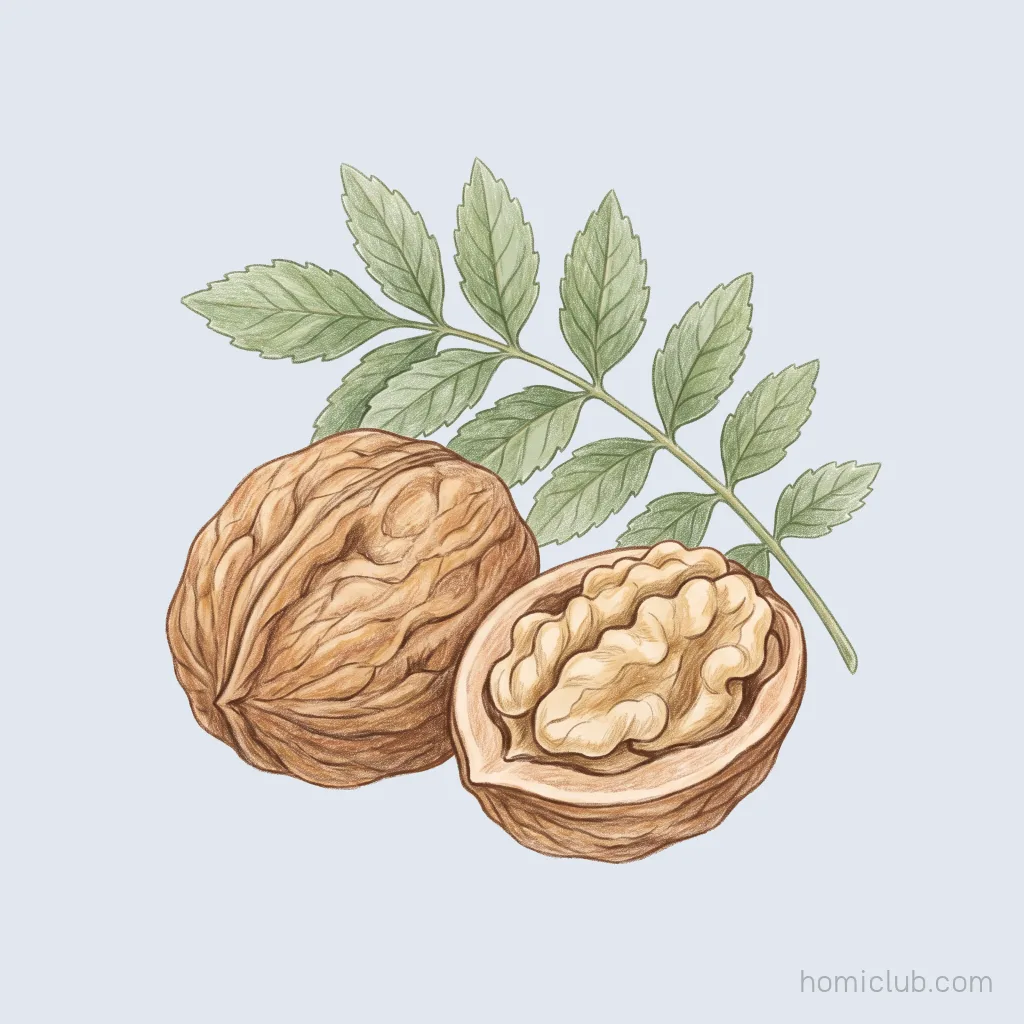
Hodu is the seed inside the fruit of a walnut tree. A green husk wraps it while it hangs on the branch, and the wrinkled kernel appears only once the hard shell is cracked. It is the same nut as the hodu in the crop guide. The Donguibogam lists it in the fruit section as hodo and says not to eat it in summer.
Original, read line by line 東醫寶鑑 · Tangaek — Decoctions vol. 2
-
性平一云熱, 味甘, 無毒. 通經脉, 潤血脉, 黑鬢髮, 令人肥健.
Its nature is neutral, though one account calls it hot; its taste is sweet, and it is non-toxic. It frees the channels, moistens the blood vessels, blackens the temple hair and the hair of the head, and makes a person plump and sturdy.
HomiclubThe walnut is the seed inside the fruit of a tree in the walnut family. Tradition holds that it was first planted in Korea near Gwangdeoksa temple in Cheonan at the end of the Goryeo period; today much of what reaches the market comes from California.
-
性熱, 不可多食, 能脫人眉, 動風故也. 入夏禁食. 雖肥人而動風.
Its nature is hot, so it must not be eaten in quantity: it can make a person's eyebrows fall out, because it stirs wind. Once summer comes, eating it is forbidden. Though it makes a person plump, it stirs wind.
-
生南方. 生實外有靑皮包之, 胡桃乃核也. 核中瓤爲胡桃肉.
It grows in the southern regions. The fresh fruit is wrapped on the outside in a green husk, and the hodo (胡桃, walnut) is the stone within. The kernel inside the stone is the hodoyuk (胡桃肉, walnut meat).
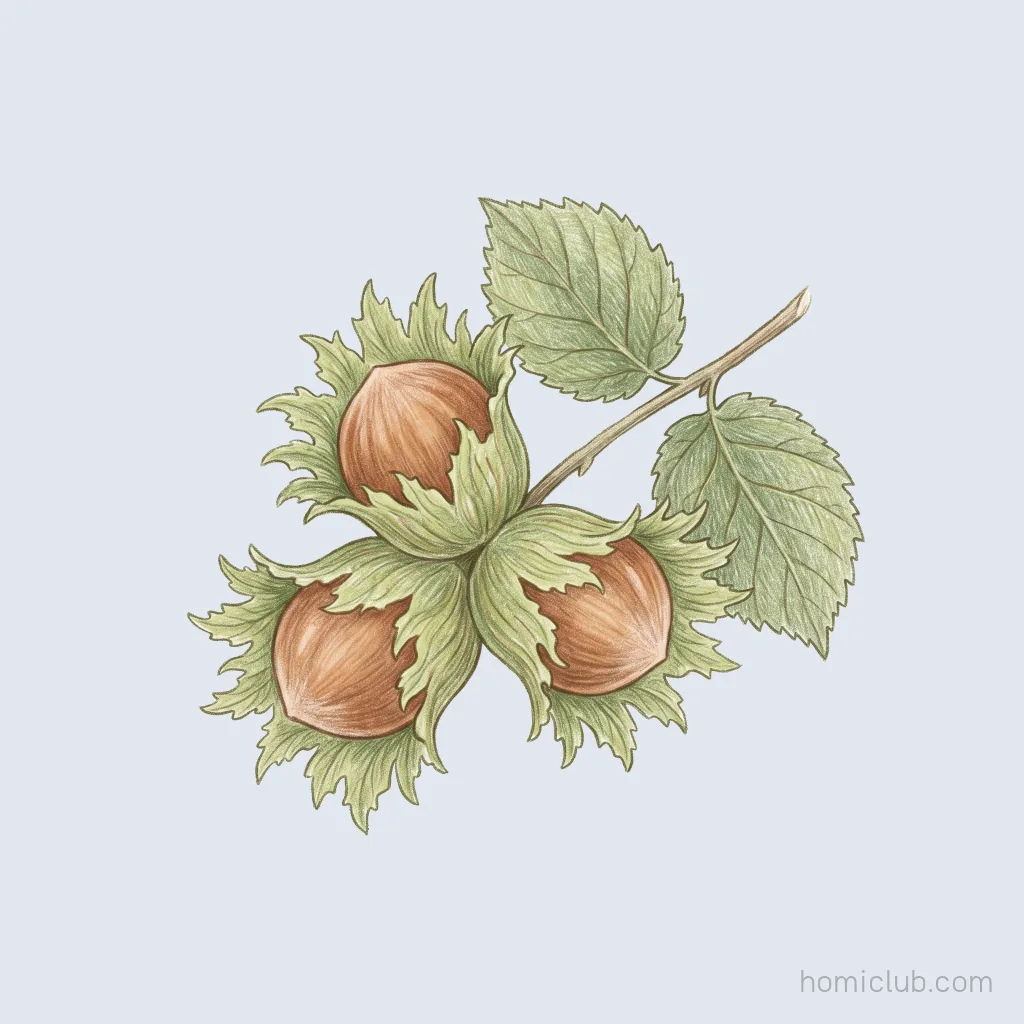
HomiclubOn the branch a walnut is wrapped in a green husk like an apricot, and inside that lies the familiar wrinkled shell. Cracking the shell releases the two-lobed kernel, the hodoyuk.
-
湯浸, 剝去肉上薄皮, 乃用.
Soak it in hot water, peel off the thin skin on the kernel, and only then use it.
-
胡桃瓤縮, 資其形以斂肺, 故能治肺氣喘促. 補腎治腰痛.
The walnut kernel is shrunken and folded; drawing on that form it gathers in the lung, and so it can treat hurried panting from lung qi. It supplements the sin (腎, kidney) and treats lumbar pain.
-
本出胡地, 生時外有靑皮, 形如桃, 故謂之胡桃. 《入門》
It originally came out of the Ho (胡) lands, and when it forms it has a green husk outside shaped like a peach, and so it is called hodo (胡桃, Ho peach). 《Immun (入門)》
HomiclubHo (胡) was the Chinese term for the peoples to the west. Names beginning with that character, such as homa (sesame) and hocho (pepper), generally mark things that arrived by way of Central Asia.
Related Crop
Walnut →
Fruits — more entries
This is a cultural and historical record from a classical text, not a claim about any food’s effects. Nothing here is a health supplement or intended to prevent or treat disease. Consult a medical professional about health concerns. · Text: Korean Medicine Classics DB · Reading: Homiclub